
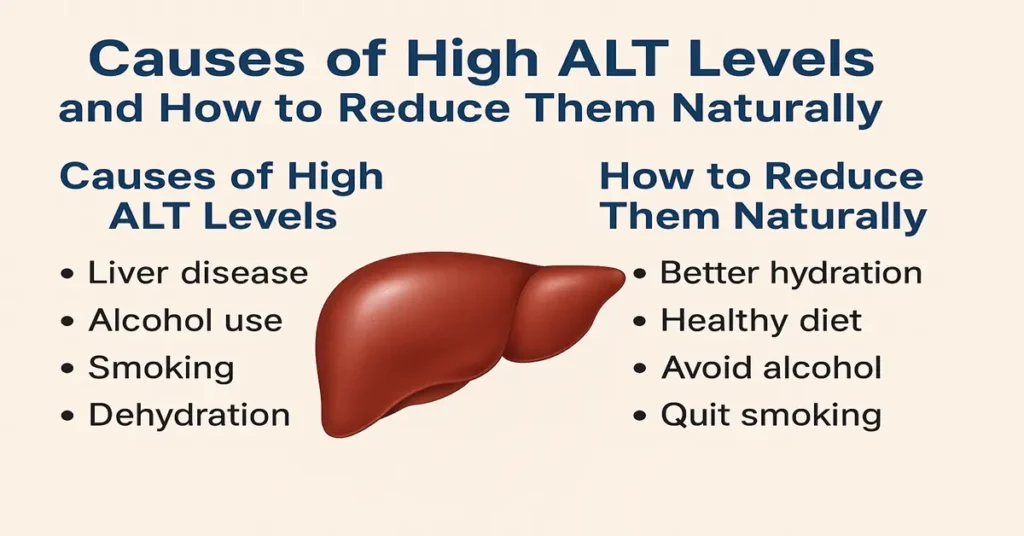
Causes of High ALT Levels and How to Reduce Them Naturally
Short Overview
ALT (Alanine Aminotransferase) is a liver enzyme involved in metabolism and energy handling inside liver cells. It is one of the most commonly used markers in Liver Function Tests (LFTs). When liver cells are irritated, inflamed, or under stress, ALT leaks into the bloodstream and the value rises.
A raised ALT does not point to one single disease. Clinically, it is treated as a signal that the liver is being affected by something—sometimes mild and reversible, sometimes more significant. Understanding the cause helps guide the next steps and prevents unnecessary worry or delayed care.
Medical Causes of High ALT Levels
ALT can increase for many reasons. Some are short-term and settle on their own, while others need closer evaluation.
Fatty liver disease
This is one of the most common reasons for raised ALT today. Fat accumulates inside liver cells and causes low-grade inflammation. Both non-alcoholic fatty liver disease and alcohol-related fatty liver commonly show ALT elevation. In routine practice, ALT may rise quietly long before symptoms appear.
Hepatitis (liver inflammation)
ALT rises sharply in liver inflammation of different causes, including viral hepatitis, autoimmune hepatitis, drug-induced injury, and acute liver infections. Among liver enzymes, ALT is often the most sensitive indicator of active liver cell injury.
Medication-related liver stress
Many commonly used medicines can irritate liver cells. Painkillers, antibiotics, anti-seizure drugs, statins, anti-tuberculosis medicines, and certain herbal products are frequent contributors. In lab follow-up, ALT often improves once the drug is adjusted or stopped under medical supervision.
Muscle injury or physical stress
Although ALT is mainly a liver enzyme, heavy physical activity, muscle trauma, prolonged workouts, or inflammatory muscle conditions can cause mild elevation. Clinically, doctors compare ALT with AST and creatine kinase to decide whether muscle stress is contributing.
Bile duct obstruction
When bile flow is blocked, pressure builds up in the liver and irritates liver cells. Gallstones, duct narrowing, infections, or external compression can raise ALT along with other liver markers.
Heart-related conditions
Severe heart stress can reduce blood flow to the liver, leading to liver congestion and enzyme elevation. ALT is not a primary heart marker, but it may rise as a secondary effect.
Liver cirrhosis
In long-standing liver damage, ALT may remain moderately elevated or fluctuate. The pattern is interpreted together with other tests rather than in isolation.
Dehydration and ALT
Dehydration can indirectly raise ALT by reducing blood flow to the liver, thickening the blood, and increasing muscle strain. In hot climates or during illness and heavy exercise, mild ALT elevation may improve simply with proper hydration.
Chronic Conditions Linked to High ALT
Some long-term conditions commonly keep ALT above normal.
Poorly controlled diabetes promotes fat buildup and inflammation in the liver.
Obesity increases liver fat and enzyme leakage.
PCOS is often associated with fatty liver-related ALT elevation in women.
Hypothyroidism slows metabolism and affects liver function.
High cholesterol and triglycerides increase liver fat load.
Advanced kidney disease can disturb liver enzymes indirectly.
Smoking and Alcohol Effects
Alcohol
Alcohol is a strong liver irritant. Regular or heavy intake leads to fatty liver, inflammation, oxidative stress, and ALT elevation. Even occasional drinking can keep ALT raised in sensitive individuals.
Smoking
Smoking increases oxidative stress, reduces oxygen delivery, and interferes with liver metabolism. In practice, smokers often show mildly abnormal liver enzymes even without obvious liver disease.
Symptoms of High ALT Levels
ALT itself does not cause symptoms. Any symptoms come from the underlying condition.
Common complaints include persistent tiredness, nausea, right-sided abdominal discomfort, heaviness or bloating, loss of appetite, muscle soreness, yellowing of the eyes or skin, dark urine, pale stools, and itching in more advanced liver involvement. Worsening symptoms often parallel rising enzyme levels.
How to Reduce High ALT Levels Naturally
ALT improves when the underlying stress on the liver improves. Natural measures support healing but do not replace medical evaluation.
Adequate hydration
Good hydration supports liver blood flow and metabolism. Many mild elevations improve once fluid intake is corrected.
Avoiding alcohol
If alcohol is contributing, stopping it is the single most effective step. In clinical follow-up, ALT often begins to fall within weeks.
Liver-supportive eating pattern
Simple, home-style meals that are low in excess fat help reduce liver inflammation. Diets rich in vegetables, fruits, and natural antioxidants support enzyme recovery.
Reducing fatty and processed foods
Avoiding fried foods, sugary snacks, bakery items, and excess oil is especially helpful in fatty liver-related ALT elevation.
Weight management
Even modest, gradual weight loss improves fatty liver and lowers ALT significantly.
Moderate physical activity
Gentle, regular exercise supports liver health. Very intense workouts are best avoided until ALT normalizes.
Managing diabetes and thyroid disorders
Better metabolic control reduces ongoing liver stress.
Avoiding unnecessary supplements
Many gym and herbal products strain the liver. Clinically, stopping non-essential supplements often leads to improvement.
Medication review
If a drug is contributing, doctors may adjust or replace it. Medicines should never be stopped without advice.
When High ALT Levels Become Dangerous
Doctors look at the degree, duration, and associated findings.
ALT more than two to three times the upper limit suggests active liver inflammation.
Persistent elevation over months indicates chronic liver stress.
Very high levels, often above 300–500 U/L, may be seen in acute hepatitis, toxic injury, severe fatty liver flare, or medication toxicity.
High ALT with jaundice symptoms signals declining liver function.
Any ALT rise during pregnancy requires urgent evaluation.
Test Preparation
ALT testing usually does not require fasting. Alcohol should be avoided for at least 48 hours before testing. Heavy exercise should be avoided for 24 hours. Staying hydrated, eating light meals, and informing the doctor about all medicines and supplements helps ensure accurate results.
When to See a Doctor
Medical advice is important if ALT remains high on repeated tests, if jaundice or abdominal pain appears, if urine darkens or stools become pale, if fatigue is severe, or if risk factors such as fatty liver, diabetes, obesity, or regular alcohol intake are present. Early evaluation helps prevent long-term liver damage.
Important Word Explanations
ALT: Liver enzyme released when liver cells are injured
Hepatitis: Inflammation of the liver
Oxidative stress: Cell damage caused by toxins or alcohol
Cholestasis: Reduced or blocked bile flow
Metabolic syndrome: Cluster of conditions increasing liver stress
Steatosis: Fat accumulation in liver cells
People Also Ask
Is a high ALT result always serious?
Not always. Mild or temporary rises are common and often reversible.
Can ALT increase temporarily?
Yes. Infections, dehydration, alcohol intake, exercise, or short-term medication effects can raise ALT briefly.
Does high ALT always mean liver disease?
Usually it reflects liver stress, but the cause may be mild, temporary, or related to metabolism rather than permanent disease.
When do doctors usually worry about ALT?
When it stays high, rises rapidly, or appears with symptoms and other abnormal liver tests.
Is repeat ALT testing common?
Yes. Repeat tests help confirm trends and assess recovery.
Can ALT return to normal naturally?
In many cases, yes—once the underlying cause is corrected and the liver recovers.
~END~
Nice Post.