Immunology & Antibodies

The Immunology & Antibodies category explains tests that measure immune responses — including antibody detection, autoimmune markers, allergy testing, and immunodeficiency panels.

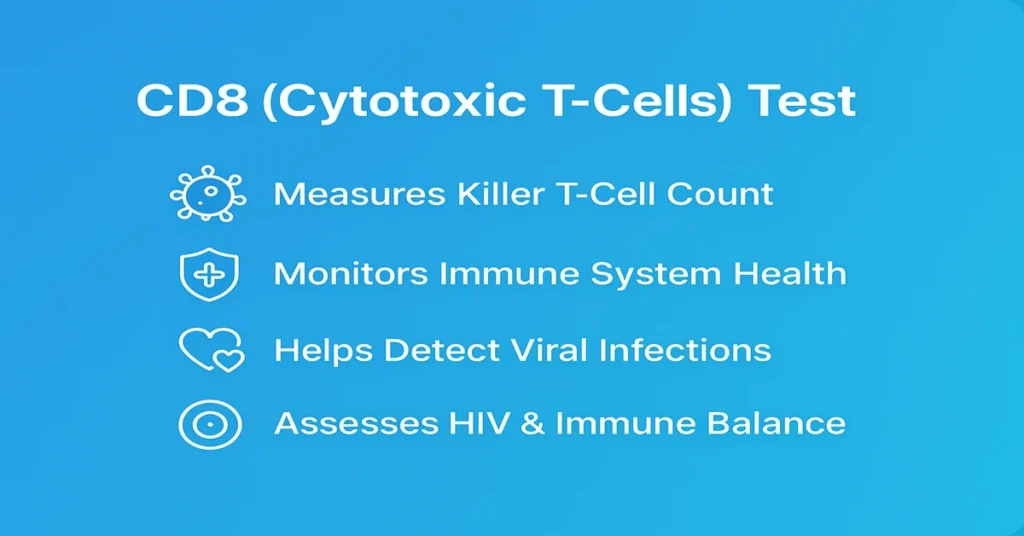
CD8 (Cytotoxic T-Cells) Test – measures killer T-cell count, monitors immune health, detects viral infections, and assesses HIV and immune balance.

CD8 (Cytotoxic T-Cells) Test – Purpose, Normal Range, and Results

The CD8 (Cytotoxic T-Cells) Test measures the number of killer T-cells in the blood. It helps assess immune strength, detect viral infections, monitor HIV, and evaluate immune disorders. Normal CD8 counts range from 150–1,000 cells/µL with a CD4:CD8 ratio between 1.0 and 3.0.

CD8 (Cytotoxic T-Cells) Test – Purpose, Normal Range, and Results Read More »

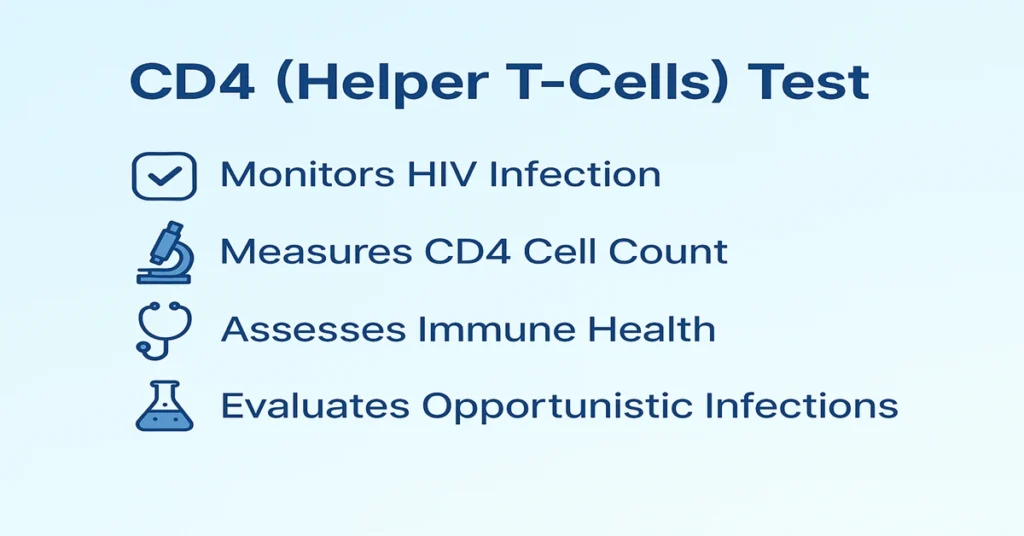
CD4 (Helper T-Cells) Test – measures helper T-cell count, evaluates immune strength, monitors HIV infection, and helps track treatment response.

CD4 (Helper T-Cells) Test – Purpose, Normal Range, and Results

The CD4 (Helper T-Cells) Test measures the number of CD4 immune cells in the blood. It helps assess immune strength and is vital in monitoring HIV infection and treatment response. Normal CD4 count is 500–1,500 cells/µL, while levels below 200 indicate severe immune suppression.

CD4 (Helper T-Cells) Test – Purpose, Normal Range, and Results Read More »

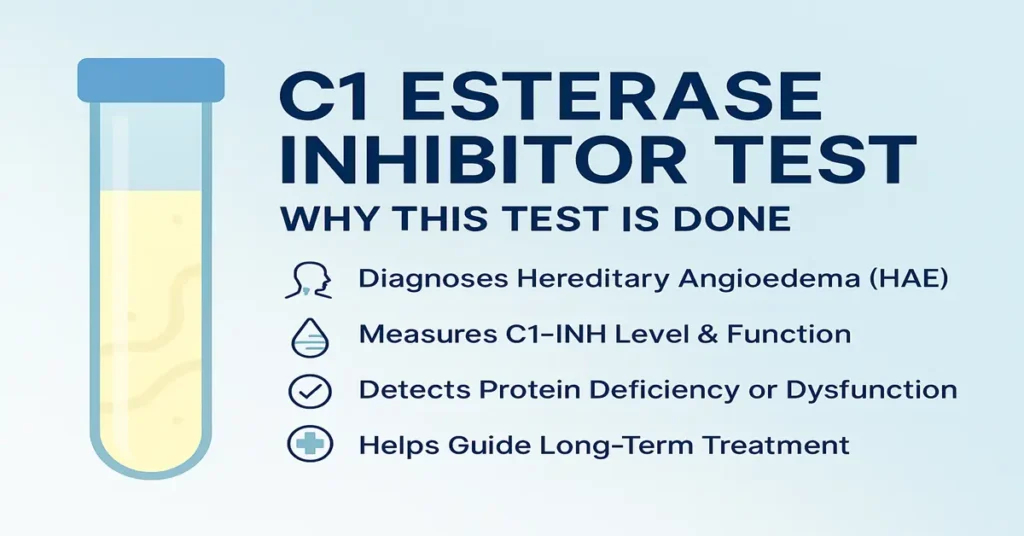
C1 Esterase Inhibitor Test – diagnoses hereditary angioedema, measures C1-INH level and function, detects deficiency, and guides treatment.

C1 Esterase Inhibitor Test – Purpose, Normal Range, and Results

The C1 Esterase Inhibitor (C1-INH) Test checks the blood level and activity of a key protein that regulates swelling and inflammation. It helps diagnose hereditary angioedema (HAE), a condition causing severe swelling in the skin, gut, or airways due to low or non-functional C1-INH.

C1 Esterase Inhibitor Test – Purpose, Normal Range, and Results Read More »