Hormones

The Hormones category explains laboratory tests that assess endocrine function—TSH, Free T4/T3, cortisol, ACTH, LH, FSH, estradiol, testosterone, prolactin, insulin, and more—helping diagnose and monitor hormonal disorders.

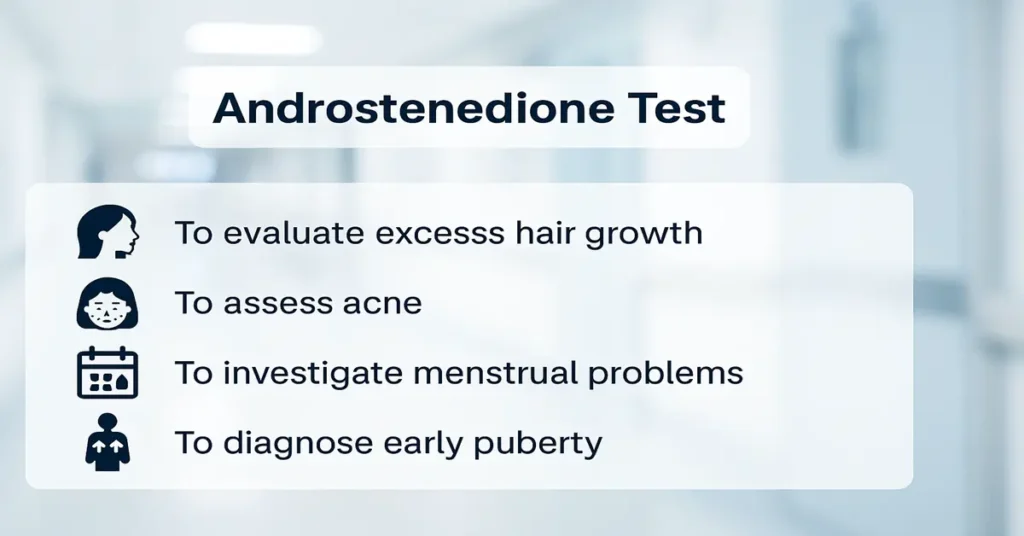
Infographic about the Androstenedione Test showing its uses: to evaluate excess hair growth, assess acne, investigate menstrual problems, and diagnose early puberty.

Androstenedione Test – Purpose, Function, Normal Range, and Results

The Androstenedione Test measures a steroid hormone that acts as a precursor to testosterone and estrogen. It helps detect hormone imbalances, PCOS, adrenal disorders, and puberty-related issues. Learn about its purpose, function, causes of high or low levels, and normal range here.

Androstenedione Test – Purpose, Function, Normal Range, and Results Read More »

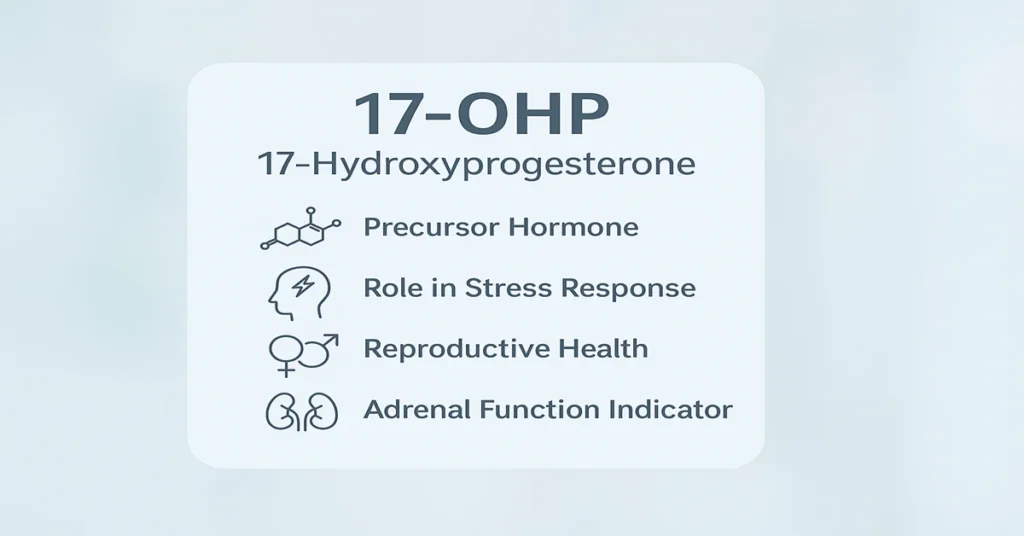
Medical infographic showing 17-OHP (17-Hydroxyprogesterone) with four key points: precursor hormone, role in stress response, reproductive health, and adrenal function indicator.

17-OHP (17-Hydroxyprogesterone) Test – Meaning, Function, Normal Range, and Clinical Importance

The 17-OHP (17-Hydroxyprogesterone) test measures a hormone produced by the adrenal glands and gonads. It helps diagnose congenital adrenal hyperplasia (CAH) and other adrenal disorders. Learn about its function, normal range, causes of high or low levels, and clinical significance.

17-OHP (17-Hydroxyprogesterone) Test – Meaning, Function, Normal Range, and Clinical Importance Read More »

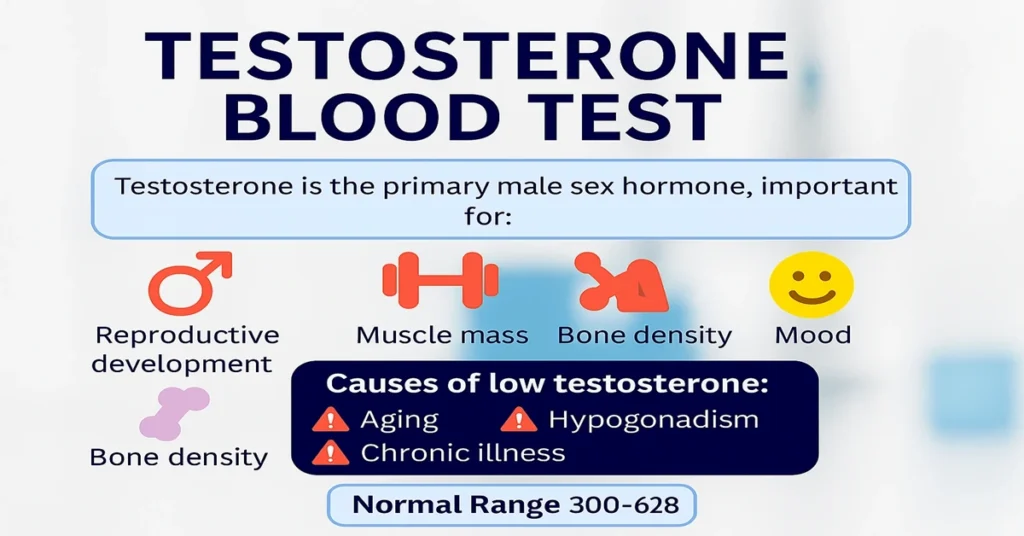
Testosterone Blood Test infographic showing hormone roles, causes of low testosterone, and normal range in men and women.

Testosterone Blood Test – Purpose, Procedure, Normal Range, and Result Meaning

The Testosterone Blood Test measures the level of the primary male sex hormone, testosterone, in your blood. This hormone supports reproductive health, muscle mass, bone density, mood, and sexual function in both men and women. The test helps diagnose hormonal imbalances, infertility, erectile dysfunction, and conditions like PCOS or hypogonadism. Morning samples are preferred for accurate results, and normal testosterone ranges differ for men and women.

Testosterone Blood Test – Purpose, Procedure, Normal Range, and Result Meaning Read More »

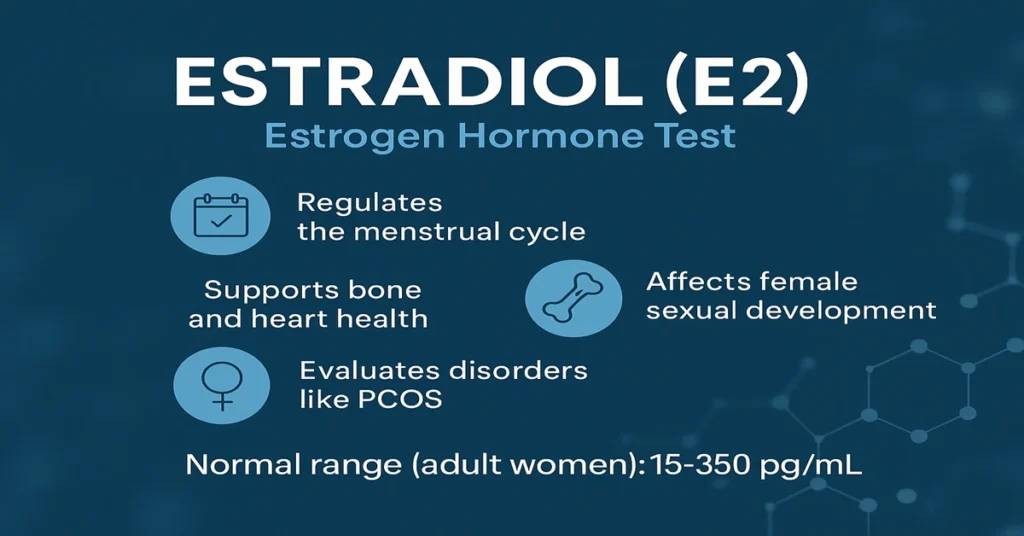
Infographic showing Estradiol (E2) blood test details, key hormone functions, and normal ranges in men and women on a professional navy-blue medical background.

Estradiol (E2) Blood Test – Normal Range, Function, and Hormonal Importance

The Estradiol (E2) blood test measures estrogen levels in the blood to assess fertility, menstrual health, and hormone balance. It helps diagnose conditions like PCOS, menopause, and ovarian disorders. Learn about normal ranges, functions, and causes of high or low estradiol levels.

Estradiol (E2) Blood Test – Normal Range, Function, and Hormonal Importance Read More »