
Overview
The Carbamazepine Level Test (also called the Tegretol Level Test or CBZ Level Test) is a blood test that measures how much carbamazepine is present in the bloodstream at a given time.
Carbamazepine is a widely used prescription medicine for conditions such as epilepsy (seizure disorders), trigeminal neuralgia (severe facial nerve pain), and bipolar disorder as a mood stabilizer. Because this drug has a narrow therapeutic window, the difference between an effective dose and a harmful dose can be small.
From a clinical perspective, this test helps confirm that the drug level is high enough to work, but not so high that it causes unwanted or dangerous effects. It is therefore an essential part of safe, long-term treatment.
Where It Is Synthesized or Produced in the Body
Carbamazepine is not produced by the body. It is a synthetic medication taken by mouth in tablet or liquid form.
After ingestion, it is absorbed through the gastrointestinal tract and then processed mainly by the liver. From there, it circulates in the blood to exert its effect on the nervous system. The level measured in this test reflects how much active drug is currently available in the bloodstream.
Because liver metabolism plays such a central role, individual differences in liver function or drug interactions can significantly affect carbamazepine levels.
Main Functions and Importance of the Test
This is a therapeutic drug monitoring test rather than a diagnostic test for disease. Its role is to support safe and effective treatment.
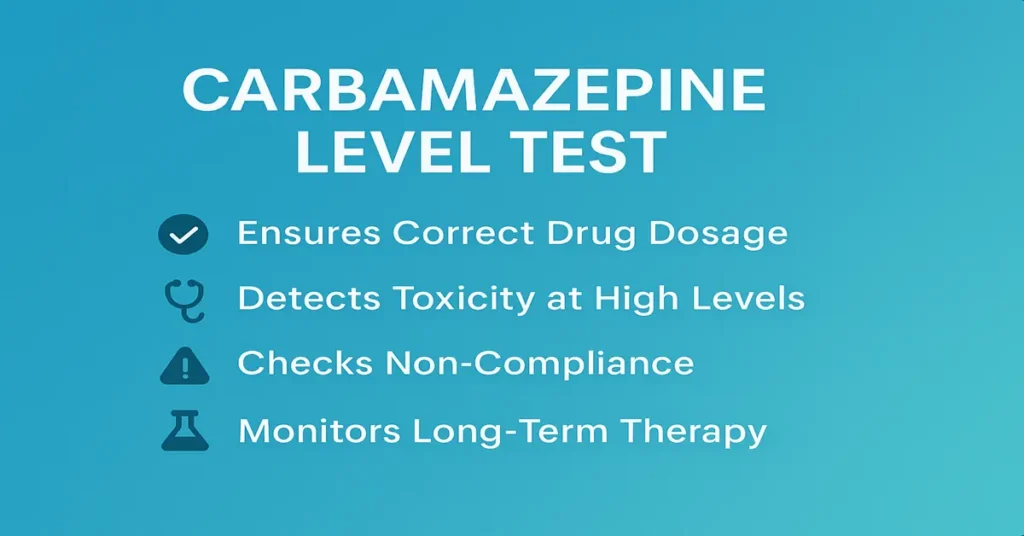
In routine practice, the test is used to:
- Confirm effective dosing, ensuring the drug concentration is within the therapeutic range needed for seizure or pain control.
- Detect potential toxicity before serious side effects develop.
- Assess adherence, especially when treatment response is unexpected.
- Monitor long-term therapy, particularly in children, older adults, or patients with liver or kidney conditions, where drug handling may change over time.
Clinically, it allows doctors to adjust doses thoughtfully rather than relying on symptoms alone.
Causes of Low Carbamazepine Levels
A low carbamazepine level usually suggests that the body is receiving less active drug than intended. Common contributing factors include missed or irregular doses, reduced absorption from the gut, or faster-than-expected drug metabolism.
Certain medications can also increase the breakdown of carbamazepine in the liver, lowering its blood concentration. In some individuals, natural metabolic variation leads to quicker clearance even with correct dosing.
Symptoms of Low Carbamazepine Levels
When carbamazepine levels fall below the effective range, the medication may not provide adequate control. Clinically, this can appear as breakthrough seizures, return of nerve pain, or reduced mood stability in patients being treated for bipolar disorder.
Such findings often prompt a careful review of dosing, timing, and possible interactions rather than immediate concern.
Causes of High Carbamazepine Levels
Elevated carbamazepine levels indicate that the drug is accumulating in the body. This may happen due to excessive dosing, reduced liver metabolism, dehydration, or interactions with other medicines that slow carbamazepine breakdown.
From a laboratory viewpoint, rising levels are particularly important in patients with liver disease or those recently started on new medications.
Symptoms of High Carbamazepine Levels (Toxicity)
When carbamazepine levels rise above the safe range, effects are usually neurological and dose-related.
Early signs may include drowsiness, dizziness, blurred or double vision, nausea, or unsteady walking. With higher levels, confusion, tremors, abnormal heart rhythms, or even seizures can occur, despite the drug being an anti-seizure medication.
These findings require prompt medical assessment, as they reflect drug toxicity rather than disease progression.
Reference Ranges
Although ranges can vary slightly by laboratory, commonly accepted values are:
- Therapeutic range: 4–12 µg/mL
- Potential toxicity: Above 15 µg/mL
Results are always interpreted alongside symptoms, dosing history, and clinical context rather than in isolation.
Sample Type and Collection
The test is performed on a blood sample (serum or plasma) collected from a vein in the arm.
In most cases, the sample is drawn just before the next scheduled dose. This timing, known as the trough level, gives the most consistent and clinically useful measurement.
Laboratories use methods such as immunoassay or chromatographic techniques to ensure accurate measurement.
Test Preparation
Fasting is not required for this test. Patients are usually advised to continue taking carbamazepine exactly as prescribed unless specifically told otherwise.
It is important to inform the doctor or laboratory about all other medications being taken, as interactions can influence test interpretation. If the dose has recently been changed, testing is often delayed until a stable level is expected.
When to Consult a Doctor
Medical advice should be sought if seizures recur, nerve pain returns, or new side effects such as dizziness, visual changes, or confusion appear. These clinical cues often guide the decision to check or repeat carbamazepine levels.
Doctors may respond by adjusting the dose, reviewing interacting medications, or monitoring liver and kidney function as part of ongoing care.
Important Word Explanations
- Carbamazepine: A medication used for seizures, nerve pain, and mood stabilization.
- Therapeutic Range: The blood level at which a drug is effective without being harmful.
- Trough Level: The lowest drug concentration, measured just before the next dose.
- Toxicity: Harmful effects caused by excessive drug levels.
- Metabolism: The process by which the body, mainly the liver, breaks down and clears drugs.
~END~
Related Posts
None found