
Overview
CA19-9, also known as Cancer Antigen 19-9, is a protein that can be measured in the blood and is commonly referred to as a tumor marker. In clinical practice, it is most closely associated with cancers of the pancreas and biliary system. However, CA19-9 levels may also rise in other gastrointestinal cancers and in several non-cancerous liver and digestive conditions.
Doctors do not use the CA19-9 test as a general screening tool. Instead, it is mainly used to monitor disease activity, assess response to treatment, and watch for recurrence in people who already have a diagnosed condition. The value of CA19-9 lies in understanding trends over time rather than relying on a single result.
What is CA19-9?
CA19-9 is a glycoprotein, meaning it is a protein combined with carbohydrate molecules. It is released into the bloodstream by certain cells of the digestive tract. Since its identification in the early 1980s, CA19-9 has become a widely used laboratory marker in pancreatic and biliary diseases.
As a tumor marker, CA19-9 reflects abnormal cellular activity, but it is not specific for cancer. Elevated levels alone cannot confirm malignancy. For this reason, results are always interpreted alongside imaging studies, clinical findings, and the patient’s overall history.
Where is CA19-9 Produced in the Body?
CA19-9 is produced by epithelial cells lining several organs of the digestive and biliary systems, including:
- Pancreas, which is the primary source
- Bile ducts, responsible for bile transport
- Gallbladder
- Stomach
- Colon and intestines
- Salivary glands, in smaller amounts
CA19-9 is also present in gastrointestinal mucus. When these tissues are affected by inflammation, obstruction, or disease, increased amounts of CA19-9 may enter the bloodstream.
Functions and Clinical Importance of CA19-9
CA19-9 does not have a known functional role in normal body physiology. Its importance is entirely clinical.
Cancer Monitoring
CA19-9 is commonly used to follow pancreatic cancer during treatment. Changes in levels over time help doctors assess whether disease activity is increasing or decreasing.
Diagnostic Support
In people with symptoms or imaging findings suggestive of pancreatic or biliary disease, CA19-9 provides supportive information when interpreted with scans such as CT, MRI, or ultrasound.
Disease Progression Indicator
A rising trend may suggest disease progression, while stable or falling values often indicate controlled disease activity.
Non-Cancer Conditions
Elevated CA19-9 can also be seen in bile duct obstruction, gallbladder disease, and liver inflammation, which is why results must be interpreted carefully.
Low or Normal CA19-9 Levels
Causes of Low Levels
Low or normal CA19-9 levels are commonly seen in healthy individuals.
In patients undergoing treatment, decreasing levels often suggest that disease activity is responding to therapy.
Some individuals genetically lack the Lewis antigen, which is required for CA19-9 production. In such cases, CA19-9 may remain low even in the presence of disease, limiting the usefulness of the test.
Symptoms of Low CA19-9
Low or normal CA19-9 levels do not cause symptoms. They simply reflect low marker activity in the bloodstream.
High CA19-9 Levels (Elevated CA19-9)
Elevated CA19-9 levels can occur in both malignant and benign conditions.
Cancer-Related Causes
CA19-9 may rise in:
- Pancreatic cancer
- Bile duct cancer (cholangiocarcinoma)
- Gallbladder cancer
- Stomach cancer
- Colorectal cancer
- Liver cancer (less commonly)
Among these, pancreatic cancer shows the strongest and most consistent association.
Non-Cancerous (Benign) Causes
CA19-9 can also increase in:
- Acute or chronic pancreatitis
- Gallstones or bile duct obstruction
- Hepatitis or liver cirrhosis
- Cystic fibrosis
- Inflammatory bowel disease
Because of this overlap, an elevated CA19-9 level is not diagnostic on its own.
Symptoms of High CA19-9
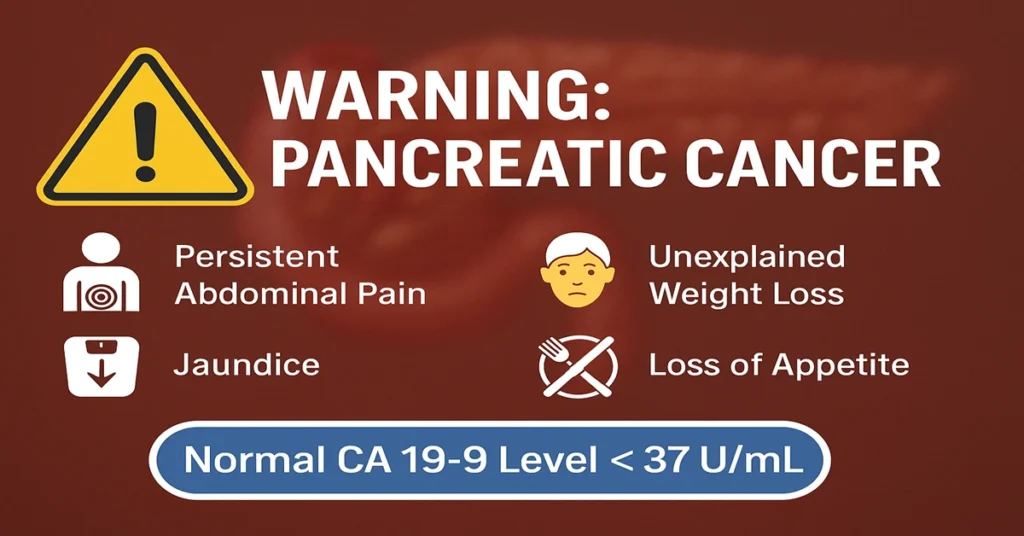
CA19-9 itself does not cause symptoms. Any symptoms present are related to the underlying condition and may include abdominal discomfort, jaundice, appetite changes, weight loss, nausea, or fatigue.
Persistent or progressive symptoms should always be evaluated clinically, regardless of CA19-9 value.
CA19-9 Reference Ranges (Blood Levels)
- Normal: < 37 U/mL
- Borderline: 37 – 100 U/mL
- High: > 100 U/mL
Single readings are less meaningful than trends. Doctors often repeat testing to observe changes over time.
Sample Type and Collection
- Sample Type: Serum (blood sample)
- Tube Used: Red-top (plain) tube
- Fasting Required: No
- Processing Time: Usually 1–2 days
The test may be repeated at intervals to monitor disease activity or treatment response.
Test Preparation
No special preparation is required.
It is helpful to inform the doctor about recent infections, surgeries, or symptoms of bile obstruction, as these factors may temporarily influence CA19-9 levels.
When to Consult a Doctor
Medical consultation is advised if you experience:
- Persistent upper abdominal discomfort
- Yellowing of skin or eyes
- Unexplained weight or appetite changes
- Ongoing digestive symptoms
- A family history of pancreatic or gastrointestinal cancers
Follow-up is especially important if CA19-9 levels remain elevated or show a rising trend.
Important Word Explanations
- Tumor Marker: A substance released into the blood during certain cancers or tissue conditions
- Pancreatic Cancer: Cancer originating in the pancreas
- Bile Ducts: Channels that transport bile from the liver and gallbladder
- Jaundice: Yellow discoloration due to bile pigment buildup
- Cirrhosis: Long-term scarring of the liver
- Cystic Fibrosis: Genetic disorder affecting mucus production and digestion
- Benign: Non-cancerous condition
- Recurrence: Return of disease after a period of improvement
~END~
Related Posts
None found
I wanted to put you one little note so as to give many thanks yet again for the nice techniques you have discussed in this case. It has been tremendously generous of you to present unreservedly what exactly most of us could possibly have offered as an electronic book to help make some cash for their own end, and in particular since you might have tried it in the event you considered necessary. The points additionally worked like the easy way to know that the rest have the same keenness just like mine to find out significantly more related to this issue. I am sure there are thousands of more pleasurable sessions ahead for many who read through your blog.