
Overview
CA15-3 (Cancer Antigen 15-3) is a protein measured in the blood and commonly referred to as a tumor marker. It is most closely associated with breast cancer and is mainly used in people who already have a confirmed diagnosis. The test helps doctors monitor treatment response, assess disease activity, and identify possible recurrence or spread to other organs.
CA15-3 is not used for screening or early diagnosis of breast cancer. Levels may remain normal in early disease and may rise in some non-cancerous conditions. For this reason, the test is always interpreted in the context of clinical findings and imaging studies rather than used on its own.
What is CA15-3?
CA15-3 is a glycoprotein, meaning a protein combined with carbohydrate components. It is found on the surface of epithelial cells, particularly those of breast tissue. When these cells become cancerous, especially in breast carcinoma, increased amounts of CA15-3 can be released into the bloodstream.
Clinically, CA15-3 testing is used to:
- Follow treatment response
- Detect recurrence during follow-up
- Support assessment of metastatic disease
It is important to understand that CA15-3 is not a diagnostic test and cannot confirm or rule out cancer by itself.
Where is CA15-3 Produced in the Body?
CA15-3 is primarily produced by epithelial cells of the mammary glands. Smaller amounts may also originate from other glandular tissues, including:
- Lungs
- Ovaries
- Pancreas
- Liver
In advanced or metastatic breast cancer, tumor cells shed larger quantities of CA15-3 into the blood, which makes the marker useful for monitoring disease activity over time.
Main Functions and Importance
CA15-3 does not have a known physiological role in healthy individuals. Its importance lies entirely in its clinical application.
1. Breast Cancer Monitoring
The most common use of CA15-3 is to monitor patients with established breast cancer. Falling levels over time often suggest reduced disease activity, while rising values may indicate increasing tumor burden.
2. Metastatic Disease Detection
CA15-3 can support evaluation for metastatic spread, particularly to bones, liver, or lungs, when used alongside imaging and clinical assessment.
3. Not for Early Detection
CA15-3 has limited sensitivity in early-stage breast cancer and may remain within the normal range despite the presence of disease. This is why it is not suitable as a screening test.
4. Combined Testing
In some cases, CA15-3 is assessed together with CA27.29 or correlated with imaging studies such as mammography, ultrasound, or MRI to improve clinical interpretation.
Causes of Low or Normal CA15-3 Levels
Low CA15-3 Levels
Normal or low CA15-3 levels are common in healthy individuals.
In patients undergoing treatment for breast cancer, stable or declining levels generally indicate controlled disease activity.
Symptoms of Low CA15-3
Low or normal CA15-3 levels do not produce symptoms. They simply reflect low circulating marker activity.
Causes of High CA15-3 Levels (Elevated CA15-3)
CA15-3 may be elevated in both malignant and benign conditions.
Cancer-Related Causes
Elevated levels may be seen in:
- Breast cancer, especially advanced or metastatic disease
- Lung cancer
- Ovarian cancer
- Pancreatic cancer
- Liver cancer
Among these, breast cancer shows the strongest association.
Non-Cancerous (Benign) Causes
Mild to moderate elevation may also occur in:
- Chronic liver disease, including hepatitis or cirrhosis
- Benign breast conditions such as mastitis or fibrocystic changes
- Endometriosis
- Pelvic inflammatory disease
- Pregnancy or lactation (temporary, mild rise)
Because of this overlap, elevated CA15-3 must always be evaluated carefully.
Symptoms of High CA15-3 Levels
CA15-3 itself does not cause symptoms. Any symptoms present are related to the underlying condition and may include breast changes, fatigue, bone pain, abdominal discomfort, or unexplained weight changes.
Persistent or progressive symptoms warrant further medical evaluation.
Reference Range (Normal Blood Levels)
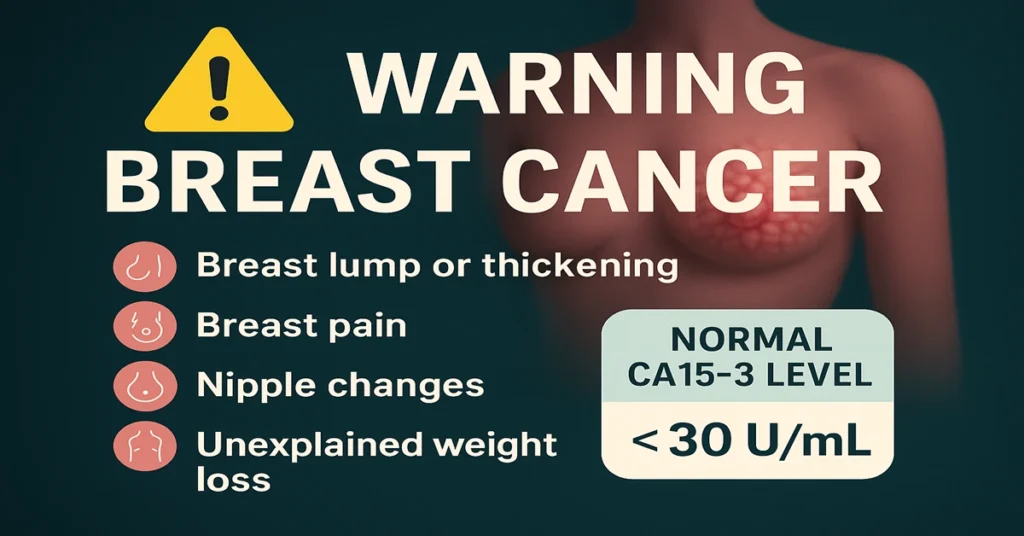
- Normal: < 30 U/mL (some laboratories use < 25 U/mL)
- Mild Elevation: 30–100 U/mL
- High Elevation: > 100 U/mL
Single values are less informative than trends. Doctors usually focus on changes over time rather than one isolated result.
Sample Type and Test Details
- Sample Type: Blood (serum)
- Tube Used: Red-top (plain) tube
- Fasting Required: No
- Report Time: Typically 1–2 days
Testing is often repeated at regular intervals during treatment or follow-up.
Test Preparation
No special preparation is required.
It is useful to inform the doctor about pregnancy, liver conditions, or recent inflammation, as these factors may influence CA15-3 levels.
When to Consult a Doctor
Medical consultation is advised if you notice:
- A new breast or underarm lump
- Changes in breast size, shape, or skin
- Persistent breast pain or nipple discharge
- Unexplained fatigue or weight loss
- Rising CA15-3 levels on repeat testing
Further evaluation may include imaging studies or additional laboratory tests to determine the underlying cause.
Important Word Explanations
- Tumor Marker: A substance found in blood that may rise with certain cancers or tissue conditions
- Metastatic: Spread of cancer from its original site to other organs
- Benign: Non-cancerous condition
- Fibrocystic Changes: Non-malignant breast lumps or cysts
- Cirrhosis: Long-term scarring of the liver
- Endometriosis: Growth of uterine-like tissue outside the uterus
- Remission: Period when disease activity is reduced or controlled
~END~
Related Posts
None found