
CA125 (Cancer Antigen 125) Test: Meaning, Functions, Normal Range & High-Low Levels Explained
Overview
CA125, short for Cancer Antigen 125, is a protein that is normally present in small amounts in the body. It circulates in the blood and can be measured with a routine blood test. In clinical practice, CA125 is best known as a tumor marker, particularly in relation to ovarian cancer.
It is important to understand that CA125 is not a cancer-specific test. Many non-cancerous conditions can also raise CA125 levels. For this reason, doctors never rely on CA125 alone to diagnose cancer. Instead, it is used alongside imaging studies such as ultrasound, CT scan, or MRI, and always interpreted in the context of symptoms and medical history.
What is CA125?
CA125 is a type of glycoprotein, meaning it is a protein combined with sugar molecules. It is produced by certain cells that line internal organs. In healthy individuals, CA125 levels remain low and stable.
When these lining cells are irritated, inflamed, stretched, or affected by disease, they may release higher amounts of CA125 into the bloodstream. This behavior makes CA125 useful as a signal marker rather than a definitive diagnostic tool. It reflects cellular activity, not a specific disease by itself.
Where is CA125 Produced in the Body?
CA125 is produced by epithelial cells that line various organs and body cavities. The most important sources include:
Ovaries
The surface layer of the ovaries is a major source of CA125. This is why the marker is closely associated with ovarian cancer.
Fallopian Tubes
The inner lining of the fallopian tubes can release CA125 when affected by inflammation or disease.
Endometrium
The uterine lining naturally produces small amounts of CA125. Levels may fluctuate during menstruation or in conditions such as endometriosis.
Peritoneum
This thin membrane covers abdominal organs. Any irritation, fluid accumulation, infection, or tumor involvement can increase CA125 release.
Pleura
The lining around the lungs can also produce CA125, especially when inflamed or involved in disease.
Because CA125 originates from multiple tissues, elevations are not specific to ovarian disease alone.
Functions and Clinical Importance of CA125
CA125 does not perform an essential biological function in the body. Its value lies almost entirely in its clinical utility.
Cancer Marker
CA125 is most commonly used in ovarian cancer, where levels often rise as tumor burden increases. While not all ovarian cancers raise CA125, many advanced cases do, making it a useful marker in the right setting.
Monitoring Treatment Response
During cancer treatment, CA125 is measured at intervals. Falling levels usually suggest that treatment is effective, while rising levels may indicate persistent or progressive disease.
Detecting Recurrence
After completion of treatment, CA125 is often followed over time. A consistent upward trend can sometimes signal recurrence before symptoms become obvious.
Supportive Diagnostic Tool
CA125 helps guide further evaluation but does not confirm or rule out cancer on its own. Doctors combine CA125 results with imaging findings and clinical assessment to make informed decisions.
Normal and Low Levels of CA125
Low or Normal CA125
Normal CA125 values generally indicate stable activity of the tissues that produce this marker. In patients already diagnosed with cancer, decreasing or consistently low levels often suggest good disease control.
Low CA125 levels do not cause symptoms and are not considered harmful. They simply reflect a normal biological state.
High Levels of CA125
An elevated CA125 level indicates increased activity or irritation of tissues that release this protein. The reason may be cancer-related or non-cancerous.
Cancer-Related Causes
CA125 may be elevated in several cancers, most notably:
- Ovarian cancer
- Endometrial cancer
- Fallopian tube cancer
- Pancreatic cancer
- Lung cancer
- Breast cancer
- Certain gastrointestinal cancers
Even in these conditions, CA125 is used for monitoring rather than as a stand-alone diagnostic test.
Non-Cancerous (Benign) Causes
Many benign and temporary conditions can raise CA125, including:
- Menstruation
- Pregnancy
- Endometriosis
- Pelvic inflammatory disease
- Uterine fibroids
- Liver disease
- Peritoneal or pleural inflammation
- Ascites (abdominal fluid accumulation)
This overlap is why context matters more than a single value.
Symptoms of High CA125 Levels
CA125 itself does not cause symptoms. Any symptoms present are due to the underlying condition responsible for the elevation.
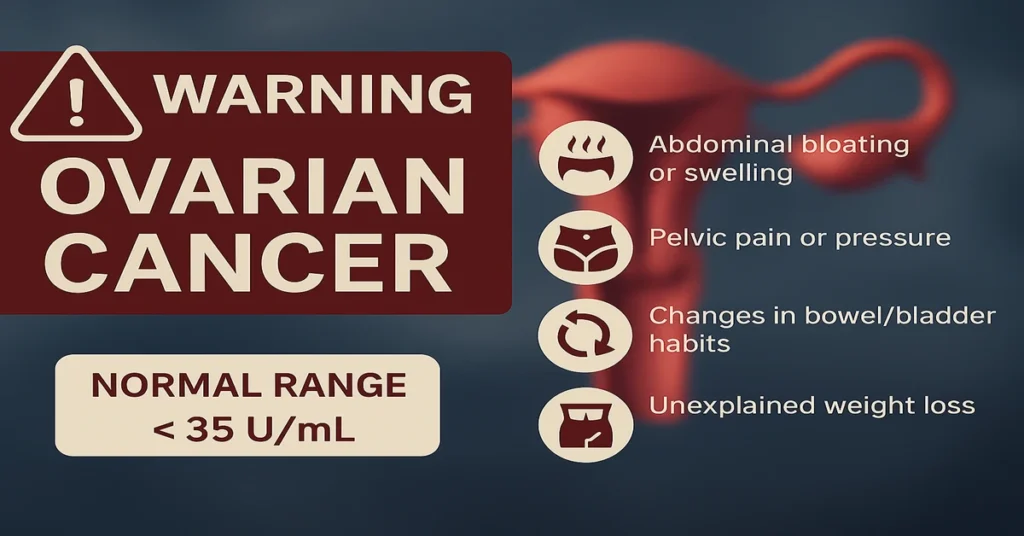
These may include abdominal discomfort, bloating, early fullness after meals, pelvic pain, bowel changes, menstrual irregularities, or unexplained fatigue. Persistent or progressive symptoms warrant medical evaluation regardless of CA125 level.
Reference Range (Normal Values)
- Normal: < 35 U/mL
- Borderline: 35 – 65 U/mL
- High: > 65 U/mL
Doctors rarely rely on one isolated result. Trends over time are far more meaningful than a single reading.
Sample and Testing Details
- Sample Type: Blood (serum)
- Tube Used: Red-top (plain) tube
- Fasting Required: No
- Report Time: Usually within 1–2 days
Repeat testing is often done to assess changes rather than absolute values.
Test Preparation
No special preparation is required.
It is helpful to inform the doctor if testing is done during menstruation, pregnancy, or shortly after surgery, as these situations may influence CA125 levels.
When to Consult a Doctor
Medical consultation is advised if:
- Pelvic or abdominal symptoms persist
- Bloating or early satiety continues
- CA125 rises unexpectedly during follow-up
- There is a strong family history of ovarian or related cancers
- Unexplained weight loss, fatigue, or menstrual changes occur
Early evaluation allows timely investigation and appropriate follow-up.
Important Word Explanations
- Tumor Marker: A substance released into the blood in certain cancers or tissue conditions
- Ovarian Cancer: Cancer arising from ovarian tissue
- Benign: Non-cancerous
- Endometriosis: Growth of uterine-like tissue outside the uterus
- Peritoneum: Lining of the abdominal cavity
- Pleura: Lining around the lungs
- Remission: Period when cancer activity decreases or disappears
~END~
Related Posts
None found