
Overview
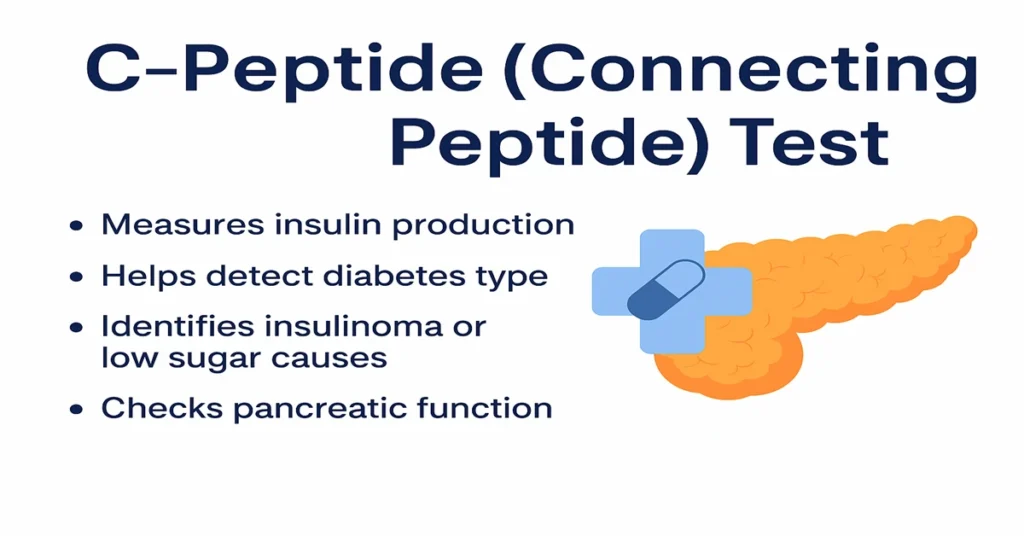
The C-Peptide Test is a blood test that measures the level of C-peptide in the circulation. C-peptide is released into the bloodstream whenever the pancreas produces insulin. Because insulin and C-peptide are released together in equal amounts, this test gives clinicians a dependable view of how much insulin the body is producing on its own.
In everyday practice, doctors use this test to clarify different forms of diabetes, assess pancreatic insulin-producing capacity, and investigate unexplained low blood sugar episodes. It is also useful when monitoring people with long-standing diabetes or those who have had pancreatic surgery, where understanding remaining insulin production is clinically important.
What Is C-Peptide?
C-peptide stands for “connecting peptide.” It is formed inside the pancreas during the normal process of insulin production. A larger precursor molecule, proinsulin, splits into two parts: insulin, which actively regulates blood glucose, and C-peptide, which enters the bloodstream alongside it.
Because injected insulin does not contain C-peptide, measuring this peptide allows doctors to distinguish insulin made by the body from insulin given as medication. This makes the test particularly helpful when interpreting complex glucose or insulin results.
Where It Is Produced
C-peptide is produced in the pancreas, specifically within the beta cells of the islets of Langerhans. When blood sugar levels rise, these cells release proinsulin, which is then processed into insulin and C-peptide before both are secreted into the bloodstream.
From a laboratory standpoint, this close one-to-one release is what makes C-peptide a reliable indicator of natural insulin production, even in patients who are receiving insulin injections.
Functions and Importance
Although C-peptide itself has no direct role in controlling blood sugar, measuring it has important diagnostic value.
First, it reflects pancreatic insulin output. Low levels signal reduced insulin production, while higher levels suggest increased secretion, often seen when the body is resistant to insulin’s effects. Second, it helps differentiate between types of diabetes, especially when the clinical picture is unclear. Third, it allows doctors to monitor beta-cell function over time, such as in people with diabetes or after pancreatic procedures.
In certain situations, the test also helps clarify the cause of unexplained hypoglycemia by showing whether insulin present in the blood is coming from the body or from external sources.
Causes of Low or Negative C-Peptide Levels
Low C-peptide levels indicate that the pancreas is producing little or no insulin. Clinically, this is most often seen when insulin-producing beta cells are significantly damaged or suppressed. It may also be observed in people who rely heavily on injected insulin, as external insulin can reduce the pancreas’s own output.
From a doctor’s perspective, low levels serve as a signal of limited endogenous insulin production rather than a diagnosis on their own.
Common Symptoms of Low Levels
Symptoms associated with low C-peptide levels are usually related to insufficient insulin activity. These may include features commonly seen in diabetes, such as excessive thirst, frequent urination, unintended weight loss, and persistent fatigue. In some cases, especially when insulin dosing is not well balanced, episodes of low blood sugar may occur.
Causes of High or Positive C-Peptide Levels
High C-peptide levels suggest increased insulin production. This often reflects a state where the pancreas is producing more insulin to compensate for insulin resistance. In less common situations, it may be associated with abnormal insulin-producing tissue or reduced clearance of C-peptide from the bloodstream.
Clinicians view elevated levels as a clue that insulin regulation is altered, rather than as a stand-alone diagnosis.
Common Symptoms of High Levels
Symptoms linked to high C-peptide levels are usually indirect and relate to changes in insulin and glucose balance. These may include difficulty with weight control or episodes of low blood sugar in specific clinical settings. Features associated with broader metabolic imbalance, such as changes in blood pressure or lipid levels, may also be present, depending on the underlying condition.
Reference Range
Reference ranges for C-peptide can vary slightly between laboratories. Typical fasting values generally fall within a defined normal range, while stimulated levels after glucose intake are higher and reflect active pancreatic response.
Very low fasting levels usually point toward minimal insulin production, whereas higher values may indicate increased insulin secretion or reduced insulin effectiveness. Interpretation always depends on clinical context and accompanying tests.
Sample Type and Test Procedure
Sample Collection
The test is most commonly performed on a blood sample taken from a vein in the arm. In some situations, a urine sample may also be used to assess C-peptide excretion over time.
Preparation
Patients are often asked to fast for several hours before testing to obtain a baseline measurement. In certain cases, the test may be performed after glucose intake or a meal to assess stimulated insulin release.
Duration
Blood collection is brief and usually completed within minutes. Laboratory processing times vary, but results are typically available within one to two days.
Understanding Your Results
C-peptide results are interpreted alongside blood glucose, insulin levels, and clinical history. Low or absent levels suggest reduced pancreatic insulin production. Values within the reference range generally indicate balanced insulin output, while higher levels point toward increased or poorly regulated insulin secretion.
Doctors emphasize that these results should never be viewed in isolation. Proper interpretation requires correlating laboratory findings with symptoms, medical history, and other investigations.
Why Is This Test Important?
The C-Peptide Test helps clarify whether the body is producing enough insulin and supports accurate classification of diabetes. It can prevent confusion between different diabetes types, assess remaining pancreatic function in people on long-term insulin therapy, and uncover hidden causes of abnormal blood sugar patterns.
In clinical decision-making, this test often provides context rather than definitive answers, guiding further evaluation when needed.
Test Preparation
Patients are usually advised to fast for 8–10 hours unless instructed otherwise. It is important to inform the doctor about all medications being taken, particularly insulin or glucose-lowering drugs, as these can influence results. Avoiding strenuous physical activity before the test is also recommended, as it may temporarily affect insulin dynamics.
When to Consult a Doctor
Medical advice should be sought if blood sugar levels remain unstable despite treatment, or if symptoms such as recurrent low blood sugar, unexplained fatigue, or sudden weight changes occur. Doctors may recommend the C-peptide test along with other investigations to gain a clearer understanding of glucose control and pancreatic function.
Important Word Explanations
- C-Peptide: A protein released alongside insulin that reflects natural insulin production.
- Proinsulin: The inactive precursor that splits into insulin and C-peptide.
- Insulinoma: A rare insulin-producing tumor of the pancreas.
- Beta Cells: Pancreatic cells responsible for making insulin and C-peptide.
- Hypoglycemia: A condition characterized by low blood sugar levels.
- Pancreatitis: Inflammation of the pancreas.
- Insulin Resistance: A state in which body cells respond poorly to insulin.
~END~
Related Posts
None found
This is the first website where I actually understood the meaning of normal and abnormal ranges. Very helpful content.