
Blood Sugar Test: Meaning, Normal Range, Low & High Blood Sugar Causes, Symptoms, and Complete Medical Guide
What Is Blood Sugar?
Blood sugar refers to the level of glucose circulating in the bloodstream at any given time. Glucose is the body’s primary and most readily available source of energy. Almost every organ depends on it, especially the brain, heart, muscles, and nervous system.
When blood sugar levels stay within a healthy range, the body functions smoothly without you being aware of it. When levels fall too low or rise too high, even briefly, the effects can be felt across multiple systems. For this reason, blood sugar testing is one of the most commonly used investigations in medical practice. It helps doctors assess metabolic balance, screen for diabetes, and monitor how the body is handling glucose over time.
Where Is Glucose Produced in the Body?
Most glucose in the body comes from the digestion of carbohydrates in food. During digestion, carbohydrates are broken down into glucose, which then enters the bloodstream and becomes available for use by cells.
The body also has built-in mechanisms to keep blood sugar stable when food intake is irregular. This balance is maintained mainly through the coordinated action of the liver and the pancreas.
Role of the Liver
The liver acts as the body’s glucose reservoir. It stores excess glucose in the form of glycogen after meals and releases glucose between meals or during periods of fasting. When required, the liver can also generate glucose from non-carbohydrate sources. This ensures a steady supply of energy, even when you have not eaten for several hours.
Role of the Pancreas
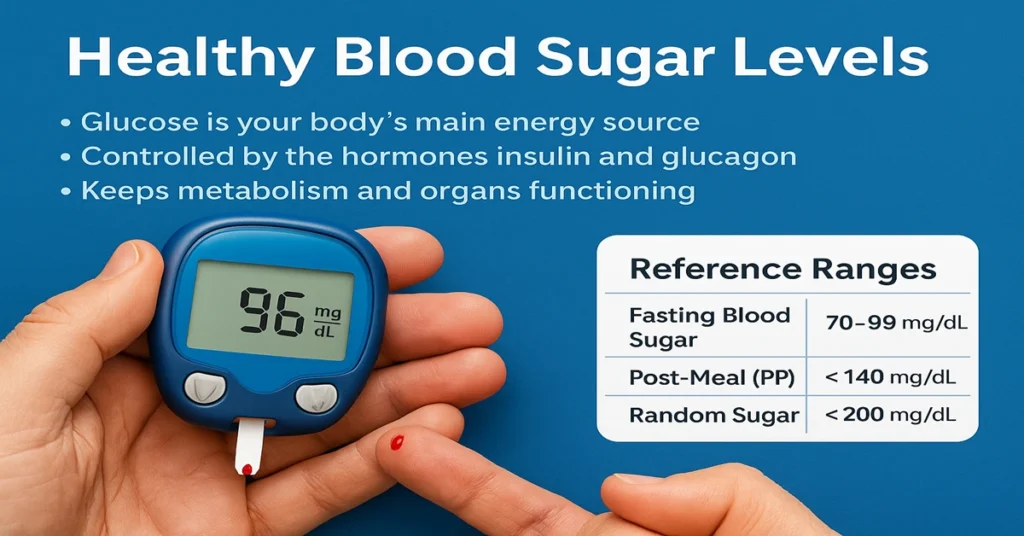
The pancreas regulates blood sugar through hormones. Insulin helps move glucose from the blood into cells, lowering blood sugar levels. Glucagon has the opposite effect and signals the liver to release stored glucose when levels fall. Together, these systems maintain day-to-day glucose stability.
Main Functions and Importance of Blood Sugar
Glucose plays a central role in nearly all body functions.
Provides Energy to Cells
Every cell requires glucose to produce energy. Without adequate glucose, cells cannot function efficiently.
Supports Brain and Nervous System
The brain relies almost entirely on glucose. Even mild fluctuations can affect concentration, alertness, coordination, and mood.
Powers Physical Activity
During physical activity, muscles use circulating glucose and stored glycogen to sustain strength and endurance.
Maintains Metabolic Balance
Balanced blood sugar supports normal metabolism of fats and proteins. Disturbances can shift how the body uses energy sources.
Hormonal Regulation
Blood sugar balance depends on finely tuned hormone activity. Persistent imbalance can indicate or lead to metabolic disorders.
From a clinical viewpoint, stable blood sugar reflects healthy coordination between digestion, hormone release, and organ function.
Causes of Low Blood Sugar (Hypoglycemia)
Low blood sugar, known as hypoglycemia, occurs when glucose levels drop below the normal range. This can happen in people with or without diabetes and is often related to timing of food intake, medication effects, or hormonal regulation.
Low values signal that the body does not have immediate access to sufficient glucose. Clinicians focus on identifying patterns—such as repeated episodes or symptoms occurring at specific times—rather than a single low reading.
Symptoms of Low Blood Sugar
Symptoms of low blood sugar tend to appear quickly because the brain is highly sensitive to glucose changes. People may notice shakiness, sweating, hunger, palpitations, dizziness, difficulty concentrating, or sudden changes in mood. More severe drops can affect consciousness.
In clinical settings, these symptoms are taken seriously, especially if they occur repeatedly or without a clear trigger.
Causes of High Blood Sugar (Hyperglycemia)
High blood sugar, or hyperglycemia, occurs when glucose remains elevated above the normal range. This may be temporary, such as during illness or stress, or persistent, as seen in diabetes and insulin resistance.
Elevated blood sugar signals that glucose is not being efficiently moved from the blood into cells. Doctors assess whether the elevation is fasting-related, post-meal, or consistently present throughout the day.
Symptoms of High Blood Sugar
High blood sugar often develops gradually. Common features include increased thirst, frequent urination, fatigue, blurred vision, and slow recovery from minor injuries or infections. Some people may not notice symptoms until levels have been high for a prolonged period.
From a clinical perspective, symptoms are evaluated together with laboratory values to understand severity and duration.
Blood Sugar Reference Ranges
Reference ranges may vary slightly between laboratories, but commonly used values include:
Fasting Blood Sugar
Normal: 70 – 99 mg/dL
Post-Meal Blood Sugar (2 hours after eating)
Normal: Less than 140 mg/dL
Random Blood Sugar
Normal: Less than 200 mg/dL
HbA1c (Average over 2–3 months)
Normal (non-diabetic): Below 5.7%
Doctors interpret these values in context, often using more than one reading to understand long-term glucose control.
Sample Type
Blood sugar testing can be performed using capillary blood from a finger prick or venous blood collected in a laboratory. The method used depends on the type of test and clinical requirement.
Tube Used
For laboratory testing, a sodium fluoride (NaF) tube is commonly used. This tube prevents glucose breakdown after collection, ensuring accurate measurement.
Test Preparation
Preparation depends on the type of blood sugar test being performed.
Fasting Blood Sugar
Usually requires no food or drink except water for several hours before testing.
Random or Post-Meal Blood Sugar
Does not require fasting.
HbA1c
Can be performed at any time of day without special preparation.
Doctors also review medications and recent illness when interpreting results, as these can influence glucose levels.
When to Consult a Doctor
Medical advice is recommended if blood sugar readings are consistently outside the normal range or if symptoms such as excessive thirst, frequent urination, unexplained fatigue, or visual changes occur. Follow-up is also important for people with known metabolic conditions or a family history of diabetes.
Early evaluation helps distinguish temporary fluctuations from conditions requiring ongoing monitoring.
Important Word Explanations
- Glucose: The main sugar used by the body for energy.
- Hypoglycemia: Blood sugar levels that are lower than normal.
- Hyperglycemia: Blood sugar levels that are higher than normal.
- HbA1c: A test that reflects average blood sugar over the past 2–3 months.
- Insulin: A hormone that helps lower blood sugar by allowing cells to absorb glucose.
- Glucagon: A hormone that raises blood sugar by signaling glucose release from the liver.
- Gluconeogenesis: The process by which the liver produces glucose from non-carbohydrate sources.
~END~