
Blood Lead Level (BLL) Test: High–Low Levels, Symptoms, Causes & Clinical Importance
Overview
Lead is a toxic heavy metal with no beneficial role in the human body. Exposure can occur through the environment, certain occupations, older buildings, contaminated water, or specific household and consumer products. Even small amounts can be harmful, particularly for infants and young children whose brains and nervous systems are still developing. In adults, ongoing exposure may affect multiple organs over time, including the kidneys, blood-forming system, and nervous system.
One of the challenges with lead exposure is that early effects are often subtle or entirely silent. Many individuals, especially children, may look well while damage is slowly occurring. The Blood Lead Level (BLL) Test is therefore essential. It provides a direct measurement of lead circulating in the blood and allows doctors to identify exposure early, assess severity, and decide on appropriate next steps. The test is widely used for screening children in high-risk areas, monitoring exposed workers, and evaluating patients with symptoms that raise concern for lead toxicity.
What Is the Blood Lead Level Test?
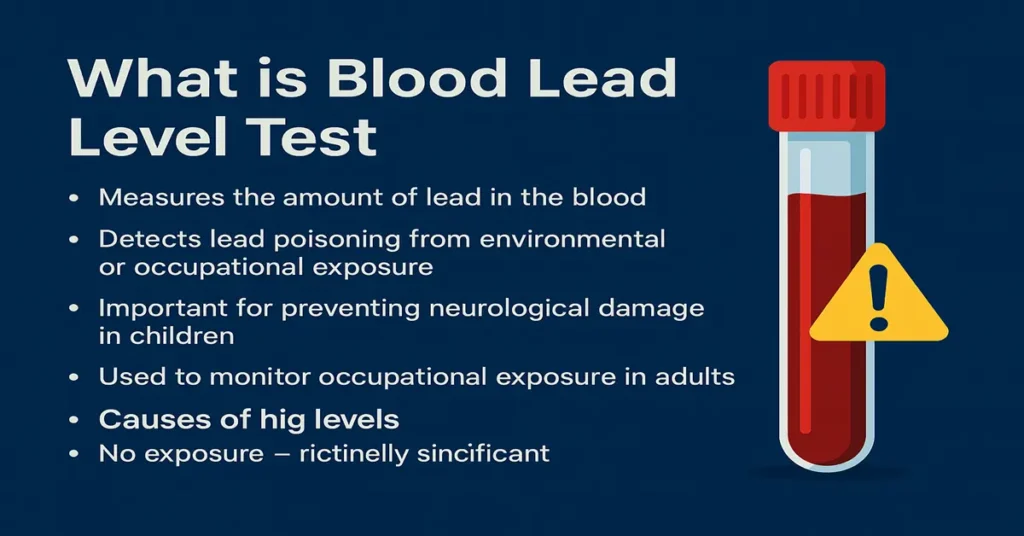
The Blood Lead Level Test measures the concentration of lead in whole blood. Once lead enters the body, it binds primarily to red blood cells and is carried throughout the circulation. Over time, it accumulates in organs such as the brain, kidneys, liver, and especially the bones.
Lead stored in bone can remain there for years and may slowly re-enter the bloodstream, particularly during periods of stress, illness, or pregnancy. From a clinical standpoint, a low or undetectable blood lead level suggests minimal recent exposure, while an elevated level indicates ongoing or past exposure that may require further evaluation.
Doctors use this test to identify environmental or occupational exposure, confirm suspected lead poisoning, screen vulnerable populations, and monitor trends over time after interventions or changes in environment.
Where Does Lead Come From?
Lead is not produced inside the body; it is an external toxin. Exposure occurs when lead-containing materials are inhaled, swallowed, or absorbed through contact.
In occupational settings, workers may be exposed during activities such as battery manufacturing, welding, smelting, metal recycling, construction, demolition, or renovation of older buildings. Environmental exposure commonly comes from lead-based paint in homes built before 1978, contaminated drinking water from old plumbing, polluted soil near highways or industrial areas, and airborne dust.
Household and consumer sources include certain imported toys or jewelry, traditional remedies or cosmetics, lead-glazed pottery, and old furniture or peeling paint. Once absorbed, lead is not broken down by the body and can continue to exert harmful effects unless exposure is reduced.
Why Is This Test Important?
The importance of the Blood Lead Level Test lies in the fact that lead poisoning often develops without clear early warning signs. In children, even modest elevations can interfere with brain development, learning ability, behavior, and cognitive function. These effects may be permanent if exposure is not recognized early.
Adults are not immune to harm. Chronic exposure can affect kidney function, blood pressure regulation, fertility, and the nervous system. Because damage can occur quietly, measuring blood lead levels allows clinicians to act before more serious or irreversible problems develop. Early detection supports timely environmental changes, workplace safety measures, and medical follow-up when needed.
Causes of Low or Normal Lead Levels
Low or nondetectable blood lead levels usually indicate that there is no significant ongoing exposure. This is commonly seen in individuals living in safer housing environments, using clean water sources, and working in settings with proper occupational safety controls. From a medical perspective, this is a reassuring and desirable finding.
Symptoms of Low Lead Levels
Low or normal lead levels do not cause symptoms. Individuals with these results are generally considered at low risk for lead-related health effects at the time of testing.
Causes of High Lead Levels
Elevated blood lead levels reflect exposure from one or more sources over time. Occupational exposure is a frequent cause in adults working in industries involving metals, mining, plumbing, or renovation of older structures. Environmental exposure may result from deteriorating lead-based paint, contaminated soil, or water supplied through lead pipes.
Household sources also contribute, particularly in children. Traditional medicines, cosmetics such as kohl or sindoor, leaded pottery, old toys, jewelry, and dust generated during home renovations can all raise blood lead levels. In many cases, exposure is gradual and accumulates over months or years rather than occurring as a single event.
Symptoms of High Lead Levels
The clinical effects of elevated lead levels vary with age and degree of exposure. Children are particularly vulnerable because they absorb lead more readily and their developing nervous systems are more sensitive. They may show learning difficulties, delayed growth or development, behavioral changes, irritability, fatigue, poor appetite, abdominal discomfort, or constipation. In severe cases, seizures and significant neurological impairment can occur.
Adults may experience headaches, abdominal pain, difficulty concentrating, memory problems, mood changes, muscle weakness, numbness or tingling in the limbs, high blood pressure, kidney-related issues, anemia, or fertility problems. Very high levels are medical emergencies and can lead to seizures, coma, or life-threatening complications.
Reference Ranges
Blood lead levels are interpreted using age-specific thresholds. In children, levels below 5 µg/dL are generally considered acceptable, while values at or above this level indicate increased exposure risk and warrant attention. In adults, levels below 10 µg/dL are typically considered acceptable, with higher values suggesting exposure.
Levels above approximately 45 µg/dL are associated with significant toxicity and may require urgent medical management, while values above 70 µg/dL are considered medical emergencies. Clinicians emphasize that no level of lead is completely safe, and the goal is always to keep exposure as low as possible.
Sample Type
The test is performed on a whole blood sample, usually drawn from a vein. In children, an initial finger-prick (capillary) sample may be used for screening. If this result is elevated, it is typically confirmed with a venous blood sample to ensure accuracy.
Test Preparation
The Blood Lead Level Test usually requires no special preparation. For finger-prick testing, washing hands beforehand helps avoid surface contamination. Patients should inform their doctor about possible sources of exposure, including home environment and workplace conditions. Routine screening may be recommended for children living in older housing or in areas known to have higher environmental risk.
When to Consult a Doctor
Medical advice should be sought if a child lives in or frequently visits a home built before 1978, if an adult works in an industry with potential lead exposure, or if unexplained symptoms such as fatigue, abdominal discomfort, or concentration difficulties arise. Evaluation is also important when children show learning or behavioral concerns without a clear cause.
Emergency medical care is required if severe symptoms such as seizures, marked confusion, loss of consciousness, or sudden neurological changes occur, as these may indicate severe lead poisoning.
Important Word Explanations
- Lead: A toxic heavy metal harmful to many organs, especially the brain
- Poisoning: Illness caused by exposure to a harmful substance
- Chelation Therapy: A medical treatment used to remove heavy metals from the bloodstream
- Exposure: Contact with a harmful substance over time or at high levels
- µg/dL: Micrograms of lead per deciliter of blood
- Neurotoxicity: Damage to the brain or nervous system
~END~
Related Posts
None found
I was able to find good advice from your articles.