
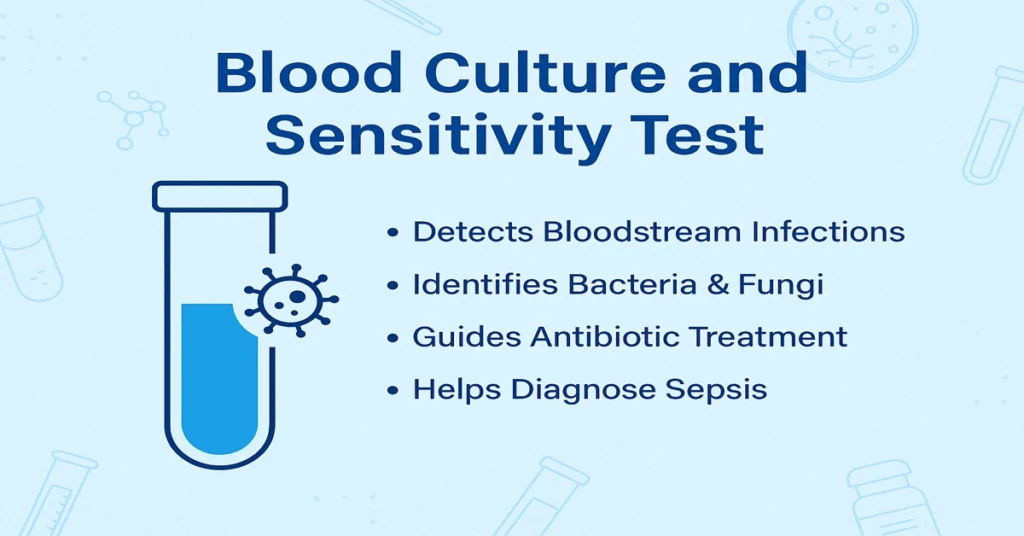
What is a Blood Culture and Sensitivity Test?
The Blood Culture and Sensitivity (C/S) test is a key laboratory investigation used to detect bacteria or fungi circulating in the bloodstream and to identify which antimicrobial medicines are likely to work against them.
In routine clinical practice, this test is regarded as the definitive method for diagnosing bloodstream infections, including septicemia. When infection spreads into the blood, it can rapidly affect multiple organs. Identifying the organism early, and understanding its drug sensitivity, is critical for safe and effective medical decision-making.
In simple terms, this test helps doctors answer two essential questions:
Is there an infection in the blood?
If yes, which medicine is most appropriate?
Because of this, blood culture testing is commonly ordered in cases of persistent fever, suspected sepsis, serious hospital-acquired infections, and in critically ill patients.
Where the Infection Originates and How It Is Detected
Unlike routine blood tests that measure chemicals or cells, a blood culture is designed to capture living microorganisms that should not normally be present in the bloodstream.
Source of Infection
Bacteria or fungi can enter the blood from many sites in the body, especially when an infection becomes severe. Common sources include the lungs, urinary tract, skin wounds, surgical sites, heart valves, indwelling catheters, and the gastrointestinal system. Once organisms gain access to the blood, they can spread quickly and trigger a widespread inflammatory response.
Clinically, this often explains symptoms such as fever, chills, low blood pressure, rapid heart rate, and general deterioration.
Laboratory Process
To detect these organisms, blood is collected using strict sterile technique to avoid contamination. The sample is placed into special culture bottles that contain nutrients supporting microbial growth. These bottles are then incubated under controlled conditions.
If bacteria or fungi are present, they begin to multiply. Modern automated systems continuously monitor the bottles and alert the laboratory when growth is detected. Once an organism is isolated, it is identified and tested against a panel of antimicrobial drugs to determine which ones are effective.
This structured approach allows treatment to be focused and evidence-based rather than empirical.
Main Functions and Importance of the Test
The Blood Culture and Sensitivity test has several critical clinical roles.
Detects the Cause of Bloodstream Infection
It confirms whether bacteria or fungi are present in the blood and identifies the exact organism responsible. This clarity is especially important when symptoms are severe or non-specific.
Guides Targeted Treatment
Sensitivity testing shows which antibiotics or antifungal agents are likely to be effective. This allows clinicians to choose therapy based on laboratory evidence rather than trial and error.
Helps Prevent Antibiotic Misuse
By narrowing treatment to the most appropriate drug, the test supports responsible antibiotic use and helps limit the development of antimicrobial resistance.
Essential in Critical Care
In intensive care units, post-surgical patients, transplant recipients, and those with central lines, bloodstream infections can progress rapidly. Blood cultures play a central role in monitoring and early intervention.
Helps Confirm or Exclude Sepsis
When systemic infection is suspected, blood culture results help distinguish true bloodstream infection from other causes of fever or inflammation.
Causes of Low or Negative Blood Culture Results
A negative blood culture means that no microorganisms grew during the standard incubation period, usually up to seven days.
This can occur when there is genuinely no bloodstream infection, or when the infection is localized to a specific organ without blood involvement. In some cases, antibiotics given before sample collection may suppress growth, leading to a negative result despite infection. Certain slow-growing organisms may also require special techniques to detect.
Symptoms or Implications of a Negative Result
A negative result generally suggests that the bloodstream is not infected. Clinically, this helps rule out septicemia and prompts doctors to explore other possible causes of the patient’s symptoms, such as localized infection, inflammatory conditions, or non-infectious illnesses.
In most situations, a negative blood culture is reassuring.
Causes of High or Positive Blood Culture Results
A positive blood culture indicates that bacteria or fungi are present in the bloodstream. This finding is always taken seriously.
Common organisms detected include a range of bacteria commonly associated with urinary, respiratory, skin, or device-related infections, as well as certain fungi in vulnerable patients. Positive results often reflect infections that have spread beyond their original site, particularly in hospitalized or immunocompromised individuals.
Symptoms of Positive Blood Culture (Septicemia or Sepsis)
When microorganisms circulate in the blood, the immune system may respond intensely. Patients may experience fever with chills, rapid heartbeat, low blood pressure, confusion, breathing difficulty, and marked weakness.
In more advanced cases, this response can progress to sepsis or septic shock, which requires urgent medical care and close monitoring.
Reference Ranges
Blood culture results are reported qualitatively rather than as numeric ranges.
- Negative: No microbial growth detected after full incubation
- Positive: Growth detected and organism identified
- Sensitivity Report: Indicates which drugs are effective or ineffective
Antimicrobial responses are commonly classified as sensitive, intermediate, or resistant to guide therapy decisions.
Sample Type and Collection Method
Sample Type
Venous blood collected using strict aseptic technique.
Number of Samples
Typically, two or more samples are taken from different sites to improve accuracy and help distinguish true infection from contamination.
Sample Volume
Adequate blood volume is essential, as low volumes may reduce detection rates.
Laboratory Processing
Samples are incubated in both aerobic and anaerobic conditions to allow detection of a wide range of organisms.
Test Preparation
No fasting is required. Ideally, blood should be collected before antibiotics are started, as prior treatment can affect results.
Patients should inform their healthcare provider about any current medications, recent infections, or conditions that affect immunity.
When to Consult a Doctor
Medical attention is important if symptoms such as persistent fever, chills, confusion, breathing difficulty, or signs of infection after surgery or catheter use are present.
Doctors may recommend a blood culture when serious infection is suspected, when fever has no clear cause, or when treatment decisions depend on identifying the exact organism involved.
Important Word Explanations
- Septicemia: Presence of bacteria or fungi in the bloodstream
- Sepsis: A severe, body-wide response to bloodstream infection
- Sensitivity Test: Determines which antimicrobial drugs are effective
- False Negative: Infection present but not detected by the test
- Aerobic / Anaerobic Culture: Growth conditions with or without oxygen
- Antibiotic Resistance: Reduced response of bacteria to a drug
~END~
Related Posts
None found