
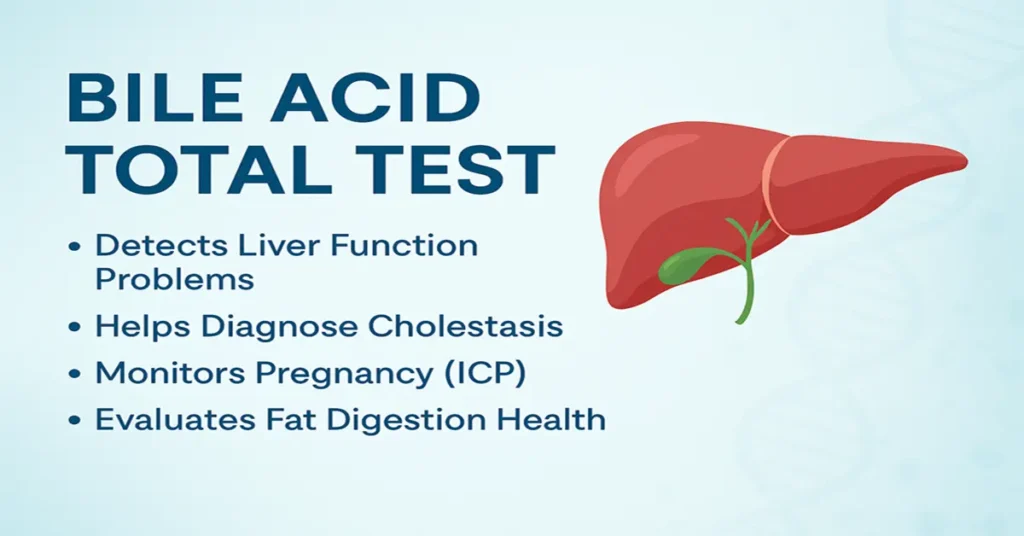
What are Bile Acids?
Bile acids are natural substances made by the liver from cholesterol. They play a key role in digestion, especially in breaking down fats and helping the body absorb fat-soluble vitamins. After being produced in the liver, bile acids are stored in the gallbladder. When you eat, the gallbladder releases bile into the small intestine, where bile acids assist with digestion.
In clinical practice, bile acids are also useful markers of liver health. The Total Bile Acids (TBA) test measures the overall level of bile acids circulating in the blood. Doctors commonly use this test to assess liver function and to detect cholestasis, a condition in which bile flow from the liver is reduced or blocked.
Where Bile Acids Are Produced and Processed
Bile acids move through a carefully regulated cycle known as the enterohepatic circulation, which allows the body to reuse them efficiently.
Production in the Liver
The liver converts cholesterol into bile acids through a series of enzyme-controlled steps. This process not only supports digestion but also helps remove excess cholesterol from the body.
Storage in the Gallbladder
Once produced, bile acids are concentrated and stored in the gallbladder, ready to be released when food enters the digestive tract.
Release into the Small Intestine
After a meal, bile flows into the small intestine, where bile acids help disperse dietary fats so digestive enzymes can work effectively.
Reabsorption and Recycling
Most bile acids are reabsorbed in the intestine and transported back to the liver. This recycling conserves resources and maintains a stable bile acid pool for ongoing digestion.
Main Functions and Importance of Bile Acids
Bile acids support several essential body functions, extending beyond digestion alone.
Fat Digestion and Absorption
They emulsify dietary fats, allowing efficient absorption of fats and fat-soluble vitamins such as A, D, E, and K.
Cholesterol Regulation
By converting cholesterol into bile acids, the liver uses this pathway as a natural means of cholesterol elimination.
Metabolic Signaling
Bile acids act as signaling molecules that influence liver activity, glucose handling, and fat metabolism, helping coordinate digestive and metabolic processes.
Gut Health
They contribute to maintaining a balanced gut environment by limiting the growth of certain harmful bacteria.
Because bile acids reflect how well these systems are working, blood levels can provide valuable insight into liver and biliary function.
Causes of Low Bile Acid Levels
Low bile acid levels are uncommon and are usually seen in situations where bile production or overall nutrition is significantly impaired. Clinically, such findings prompt doctors to consider reduced liver synthetic capacity or severe nutritional issues rather than focusing on the bile acids alone.
Symptoms of Low Bile Acid Levels
When bile acid levels are low, fat digestion may be less efficient. Over time, this can be associated with signs of poor fat absorption, such as loose or fatty stools, unintentional weight loss, or features related to vitamin deficiencies. The symptoms arise from malabsorption rather than from low bile acids themselves.
Causes of High Bile Acid Levels
Elevated bile acid levels most often suggest that bile is not flowing normally from the liver. This may occur when liver cells are inflamed or when bile ducts are partially or completely blocked. In pregnancy, a temporary condition known as intrahepatic cholestasis of pregnancy (ICP) is a well-recognized cause of raised bile acids and is closely monitored in clinical care.
Symptoms of High Bile Acid Levels
Symptoms reflect bile accumulation and underlying liver stress rather than the bile acids alone. Patients may notice itching, fatigue, changes in urine or stool color, or yellowing of the skin and eyes. In pregnancy, itching can be a particularly important signal and often leads to bile acid testing.
Reference Ranges
Bile acid reference ranges can vary slightly between laboratories, but fasting values are typically used for interpretation.
- Normal (fasting): usually below 10 µmol/L
- Mild elevation: suggests early or mild cholestasis
- Higher levels: indicate more significant impairment of bile flow or liver function
Results are always interpreted alongside symptoms and other liver tests.
Sample Type and Test Method
Sample Type
Blood (serum) collected from a vein in the arm.
Fasting Requirement
Fasting for 8–12 hours is usually recommended, as bile acid levels rise after meals.
Test Method
Reported as Total Bile Acids (TBA), which reflects the combined concentration of bile acids in the bloodstream.
Doctors often request this test together with liver function tests to build a clearer picture of liver health.
Test Preparation
No special preparation is needed beyond fasting. Patients should avoid heavy or fatty meals and alcohol before testing. It is important to inform the doctor if you are pregnant or taking medications that can influence bile flow or liver function, as this context helps with accurate interpretation.
When to Consult a Doctor
Medical advice should be sought if symptoms suggest a bile or liver problem, such as persistent itching, jaundice, dark urine, pale stools, ongoing fatigue, or abdominal discomfort. During pregnancy, any unexplained itching should be discussed promptly, as bile acid testing plays an important role in monitoring maternal and fetal well-being.
Important Word Explanations
- Bile Acids: Substances made from cholesterol in the liver that aid fat digestion
- Cholestasis: Reduced or blocked flow of bile from the liver
- Cirrhosis: Scarring of liver tissue that affects normal function
- ICP (Intrahepatic Cholestasis of Pregnancy): A pregnancy-related condition with raised bile acids and itching
- Steatorrhea: Fatty stools caused by impaired fat absorption
- µmol/L: A unit used to measure small concentrations of substances in blood
~END~
Related Posts
None found