
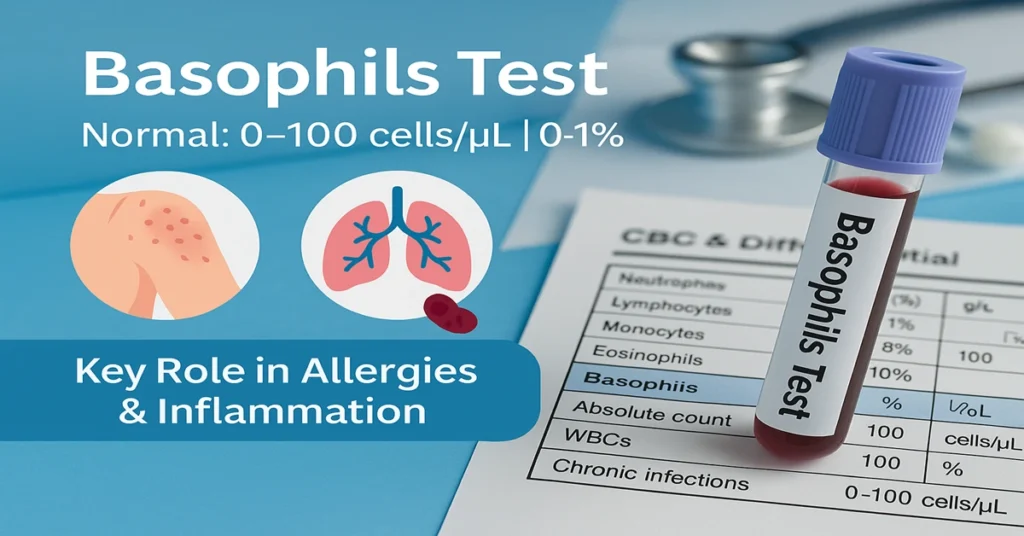
Basophils Test: Meaning, Normal Range, Low & High Basophil Causes, Symptoms, and Complete Medical Guide
What Are Basophils?
Basophils are the least common type of white blood cell, usually accounting for less than one percent of circulating white blood cells. Despite their small numbers, they have a meaningful role in immune responses, particularly in allergic reactions and inflammatory processes. Basophils belong to the granulocyte group, meaning they contain granules filled with immune-active substances.
Under microscopic examination, basophils are recognized by their dark blue or purple granules. These granules contain chemicals such as histamine and heparin, which influence blood vessel behavior, inflammation, and allergy-related responses. Clinically, basophils are considered regulatory cells that help shape how the immune system reacts rather than cells that fight infections directly.
Where Are Basophils Produced?
Basophils are produced in the bone marrow from hematopoietic stem cells, along with other white blood cells. After maturing, they enter the bloodstream, where they circulate in very small numbers.
When the immune system detects allergens, parasites, or inflammatory signals, basophils may shift from the blood into tissues. In these tissues, they interact with other immune cells such as mast cells and eosinophils. This movement explains why blood basophil levels can change even when overall immune activity is occurring elsewhere in the body.
Functions and Importance of Basophils
Although basophils are few, their effects on immune signaling are significant.
Releasing Histamine and Heparin
Basophils release histamine, which contributes to itching, redness, and swelling during allergic reactions. They also release heparin, which influences blood flow during inflammation.
Role in Inflammation
By affecting blood vessel permeability, basophils help immune cells reach areas of injury or immune activation. This process supports inflammation as part of the body’s defense and repair mechanisms.
Defense Against Parasites
Basophils work alongside eosinophils during parasitic infections. Their released substances help weaken or damage parasites that are too large for other white blood cells to handle effectively.
Immune Regulation
Basophils release cytokines that help regulate the intensity of immune responses. This regulation helps prevent immune reactions from being either insufficient or excessive.
Involvement in Hypersensitivity Reactions
Basophils are closely linked to allergic conditions such as asthma, allergic rhinitis, and eczema. Their activation contributes to many of the classic allergy symptoms seen in these conditions.
From a clinical perspective, basophils act more as immune modulators than frontline defenders.
Causes of Low Basophils (Basopenia)
Low basophil levels are known as basopenia. Because basophils normally circulate in very small numbers, even minor shifts can result in low readings.
Basopenia often reflects immune suppression, hormonal influences, or stress responses rather than a disorder of basophils themselves. During the early phase of allergic reactions, basophils may move from the bloodstream into tissues, temporarily lowering blood levels. Hormonal conditions, particularly those affecting thyroid activity, can also influence basophil counts.
Medications such as corticosteroids commonly suppress basophil production. Severe infections, physical stress, trauma, or acute illness may also reduce circulating basophils as the immune system reallocates resources.
Symptoms of Low Basophils
Low basophil levels do not usually cause specific symptoms. Instead, they may indicate underlying factors such as stress, hormonal imbalance, or medication effects.
Clinically, basopenia is interpreted alongside other white blood cell values rather than being considered a standalone finding.
Causes of High Basophils (Basophilia)
High basophil levels are referred to as basophilia. This finding often suggests prolonged immune activation.
Chronic inflammatory or allergic conditions can raise basophil counts. Thyroid-related disorders, particularly reduced thyroid activity, may also be associated with higher levels. Parasitic infections can stimulate basophil production as part of the immune response.
In some cases, disorders of blood cell production lead to persistently elevated basophils. After removal of the spleen, basophil counts may appear higher because normal blood cell filtering is reduced. Doctors assess whether basophilia is mild and reactive or persistent and significant.
Symptoms of High Basophils
Basophilia itself does not cause symptoms. Any symptoms present usually reflect the condition responsible for immune activation.
These may include allergy-related symptoms such as itching, rashes, wheezing, or nasal congestion. In chronic inflammatory or blood-related conditions, fatigue, weight changes, or night sweats may be observed. Clinically, basophilia is evaluated as part of the overall white blood cell pattern.
Basophil Reference Range
Reference ranges vary slightly between laboratories, but commonly used values include:
Absolute Basophil Count (ABC)
Normal: 0 – 100 cells/µL
Percentage of Total WBCs
Normal: 0% – 1%
Because basophils are few in number, doctors often rely more on absolute counts than percentages when interpreting results.
Sample Type and Collection
- Sample Required: Whole blood
- Collection Tube: Lavender-top EDTA tube
Blood is drawn from a vein, usually in the arm. Basophil values are measured automatically as part of a CBC with differential. Results are typically available the same day.
Test Preparation
No fasting is required for a basophils test. Hydration can help with sample collection. Doctors review medications—especially steroids or thyroid-related treatments—when interpreting basophil results.
The basophil count is almost always assessed alongside other white blood cell values.
When to Consult a Doctor
Medical advice is recommended if basophil levels remain consistently high or low on repeated testing. Follow-up is also important when allergic symptoms are persistent, breathing difficulties occur, or unexplained fatigue, weight changes, or fever are present.
People with thyroid disorders, chronic allergies, or a family history of blood conditions may require closer monitoring. Early evaluation helps clarify whether changes are reactive or require further investigation.
Important Word Explanations
- Basophils: Rare white blood cells involved in allergic reactions and immune regulation.
- Basophilia: A condition where basophil levels are higher than normal.
- Basopenia: A condition where basophil levels are lower than normal.
- Histamine: A chemical released during allergic reactions that causes itching and swelling.
- Granulocytes: White blood cells that contain granules, including neutrophils, eosinophils, and basophils.
- CBC with Differential: A blood test that provides detailed counts of all white blood cell types.
~END~
Pingback: WBC Test (White Blood Cell Count) – Normal Range, Low & High Causes, Symptoms