allabouttestsofficial@gmail.com

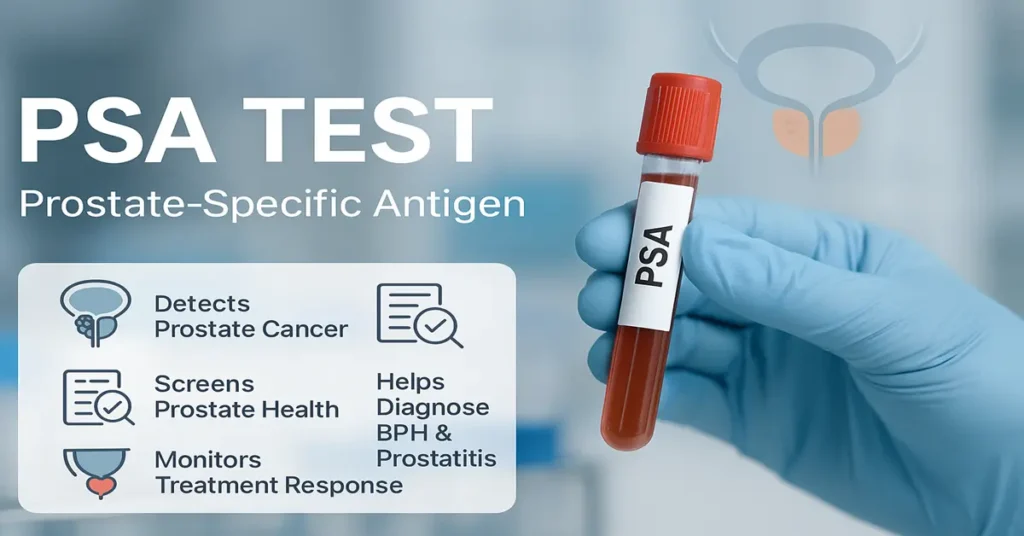
Gloved hand holding a PSA blood sample tube with medical icons showing prostate cancer detection, screening, and treatment monitoring.

PSA (Prostate-Specific Antigen) Test – Meaning, Function, Normal Range, and Clinical Significance

The PSA (Prostate-Specific Antigen) test measures a protein made by the prostate gland to assess prostate health. It helps detect prostate cancer, benign enlargement, and inflammation. Learn about its normal range, functions, causes of high and low PSA, and how results are interpreted.
PSA (Prostate-Specific Antigen) Test – Meaning, Function, Normal Range, and Clinical Significance Read More »

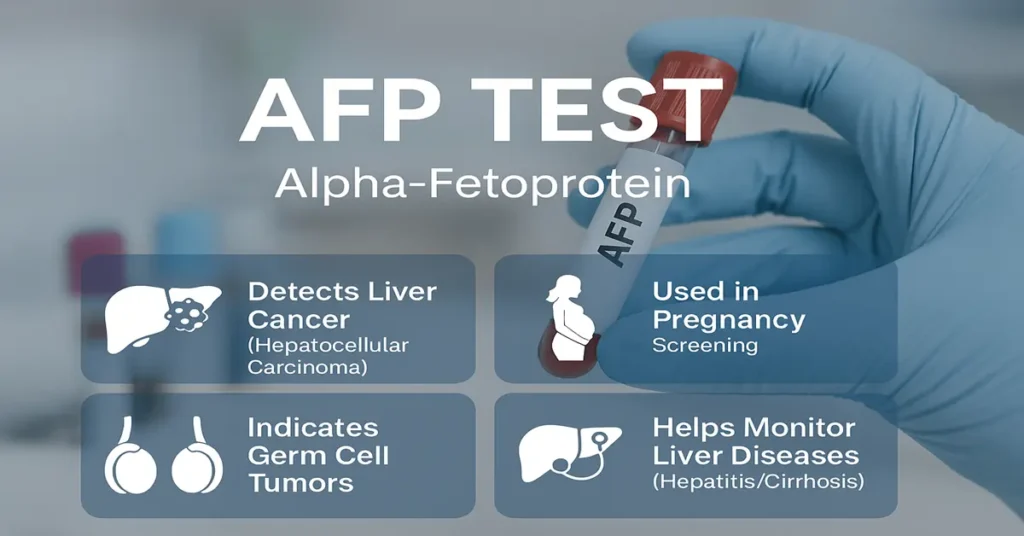
Gloved hand holding AFP blood sample tube with infographic showing liver cancer detection, pregnancy screening, germ cell tumors, and liver disease monitoring.

AFP (Alpha-Fetoprotein) Test – Meaning, Function, Normal Range, and Clinical Importance

AFP (Alpha-Fetoprotein) is a key protein used to detect liver cancer, germ cell tumors, and fetal abnormalities during pregnancy. Learn about its functions, causes of high and low levels, and how this simple blood test helps in early diagnosis and monitoring of serious conditions.

AFP (Alpha-Fetoprotein) Test – Meaning, Function, Normal Range, and Clinical Importance Read More »

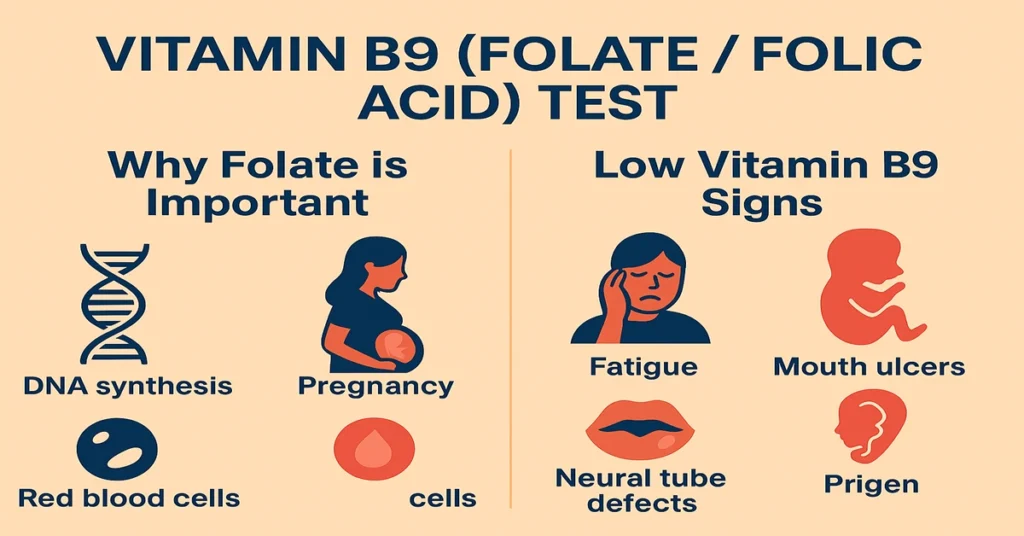
Infographic explaining Vitamin B9 (Folate / Folic Acid) test, showing its importance for DNA synthesis, pregnancy health, and red blood cell formation, along with key deficiency signs such as fatigue, mouth ulcers, and neural tube defects.

Vitamin B9 (Folate / Folic Acid) Test – Normal Range, Function, and Deficiency

Vitamin B9 (Folate or Folic Acid) is a vital B-complex vitamin needed for DNA synthesis, red blood cell production, and fetal brain development. Learn about the Vitamin B9 test, normal range (2.7–17.0 ng/mL), deficiency symptoms, and test preparation steps.

Vitamin B9 (Folate / Folic Acid) Test – Normal Range, Function, and Deficiency Read More »