allabouttestsofficial@gmail.com

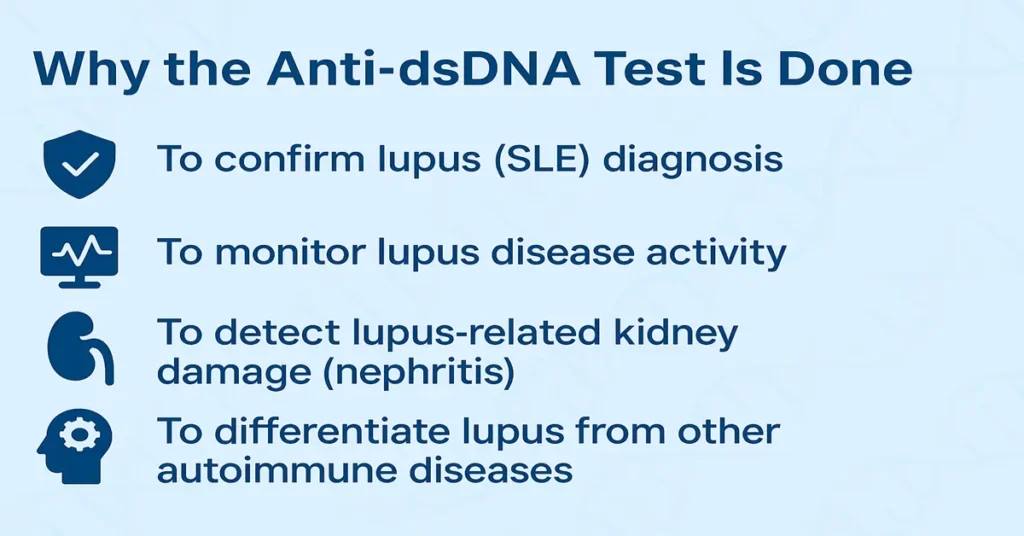
Infographic showing four main purposes of Anti-dsDNA Test – confirming lupus, monitoring activity, detecting kidney damage, and differentiating autoimmune diseases.

Anti dsDNA Antibody Test – Purpose, Procedure, and Normal Range

The Anti dsDNA Antibody Test helps diagnose and monitor Systemic Lupus Erythematosus (SLE). It detects antibodies against double-stranded DNA, which are highly specific for lupus. This guide explains its purpose, normal range, symptoms of high levels, and test preparation in simple, clear terms.

Anti dsDNA Antibody Test – Purpose, Procedure, and Normal Range Read More »
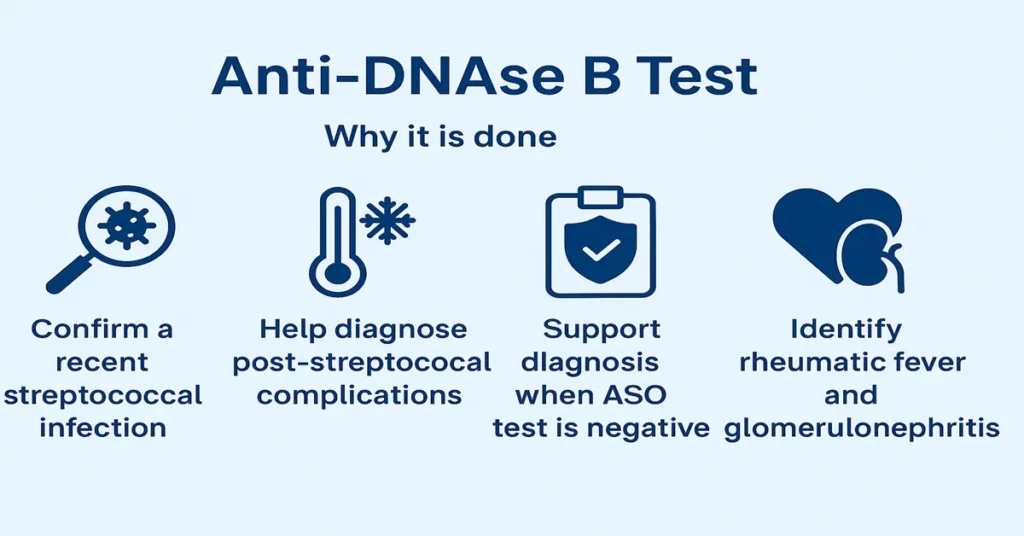
Infographic showing four key reasons for Anti-DNase B Test – confirming strep infection and diagnosing rheumatic fever or kidney inflammation.

Anti DNase B Antibody Test – Purpose, Procedure, and Normal Range

The Anti-DNase B Antibody Test detects antibodies against Group A Streptococcus bacteria. It helps diagnose recent or past strep infections and complications like rheumatic fever or PSGN, especially when the ASO test is negative. Learn its purpose, test method, reference range, and when to consult a doctor.

Anti DNase B Antibody Test – Purpose, Procedure, and Normal Range Read More »
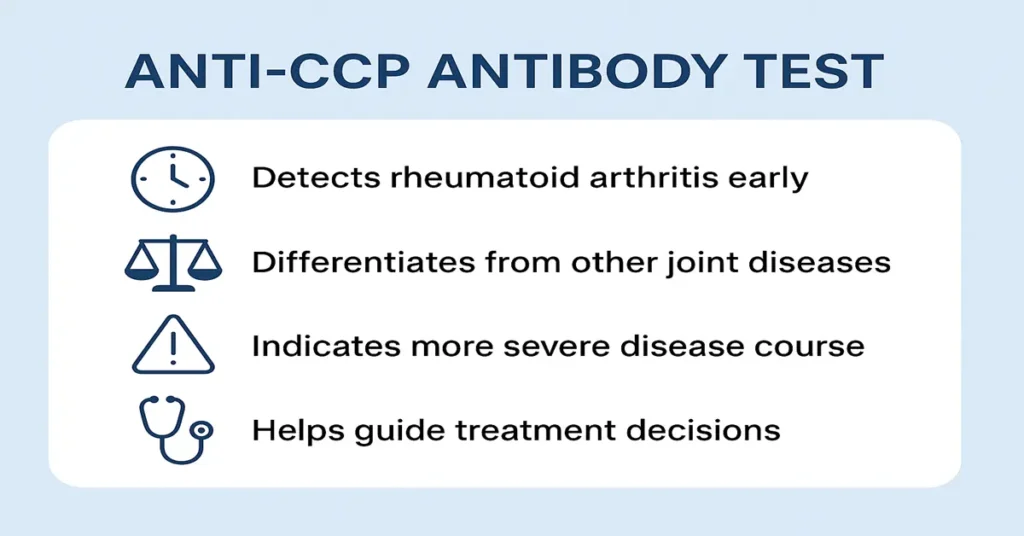
Infographic showing key points about Anti-CCP Antibody Test – detects rheumatoid arthritis early and guides treatment.

Anti-CCP Antibody Test – Purpose, Procedure, and Normal Range

The Anti-CCP Antibody Test detects antibodies linked with Rheumatoid Arthritis. It helps in early diagnosis, differentiates RA from other joint diseases, and predicts disease severity. This guide explains the purpose, normal range, symptoms of high levels, and test preparation in simple language.

Anti-CCP Antibody Test – Purpose, Procedure, and Normal Range Read More »
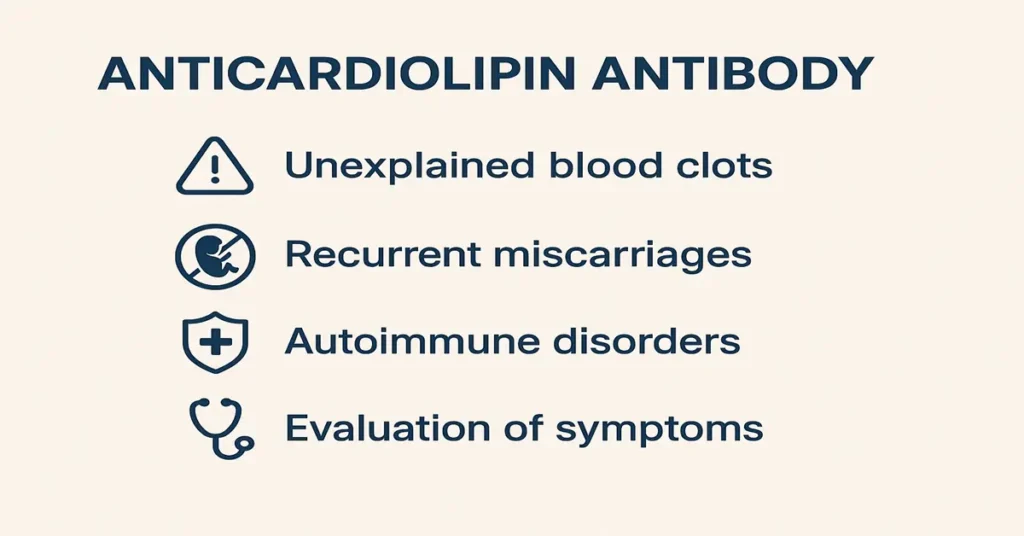
Infographic showing reasons for Anticardiolipin Antibody (aCL) Test – unexplained blood clots, miscarriages, autoimmune disorders.

Anticardiolipin Antibody (aCL) Test – Purpose, Procedure, Results, and Normal Range

The Anticardiolipin Antibody (aCL) Test detects abnormal antibodies linked to blood clots, recurrent miscarriages, and autoimmune disorders like APS and lupus. This article explains the purpose, test process, symptoms of high levels, and how to interpret results with reference ranges.

Anticardiolipin Antibody (aCL) Test – Purpose, Procedure, Results, and Normal Range Read More »

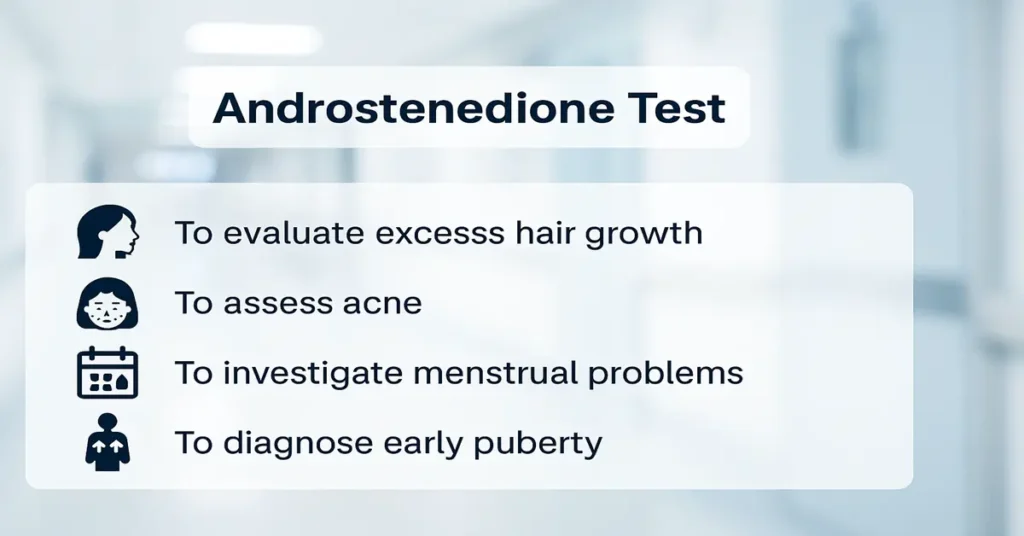
Infographic about the Androstenedione Test showing its uses: to evaluate excess hair growth, assess acne, investigate menstrual problems, and diagnose early puberty.

Androstenedione Test – Purpose, Function, Normal Range, and Results

The Androstenedione Test measures a steroid hormone that acts as a precursor to testosterone and estrogen. It helps detect hormone imbalances, PCOS, adrenal disorders, and puberty-related issues. Learn about its purpose, function, causes of high or low levels, and normal range here.

Androstenedione Test – Purpose, Function, Normal Range, and Results Read More »

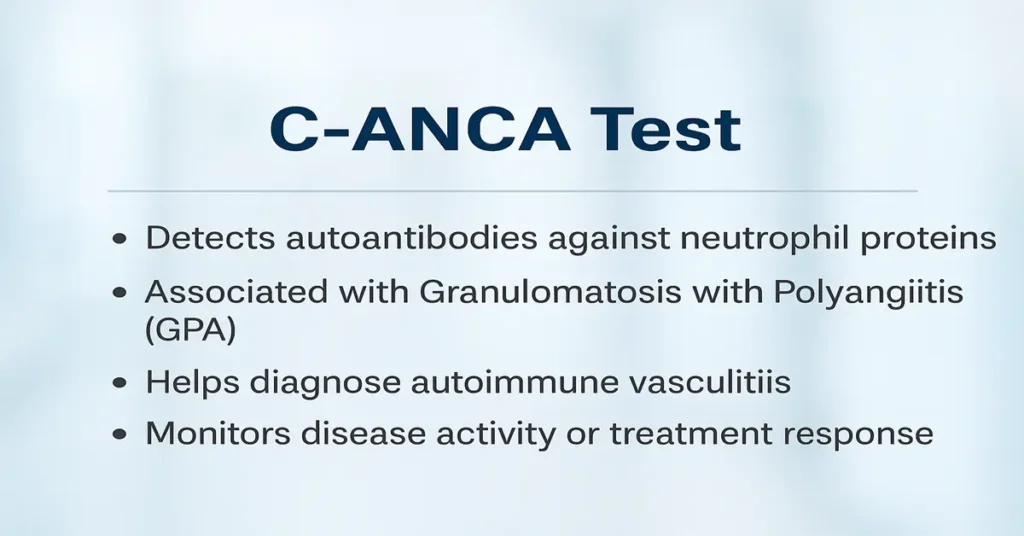
Infographic about the C-ANCA Test showing four key points: detects autoantibodies, linked with Granulomatosis with Polyangiitis (GPA), helps diagnose autoimmune vasculitis, and monitors disease activity or treatment response.

C-ANCA Test (Cytoplasmic Anti-Neutrophil Cytoplasmic Antibody) – Meaning, Purpose, and Results

The C-ANCA (Cytoplasmic Anti-Neutrophil Cytoplasmic Antibody) test detects antibodies against neutrophils, helping diagnose vasculitis, especially Granulomatosis with Polyangiitis (GPA). Learn about its purpose, causes of high and low levels, symptoms, and interpretation.

C-ANCA Test (Cytoplasmic Anti-Neutrophil Cytoplasmic Antibody) – Meaning, Purpose, and Results Read More »

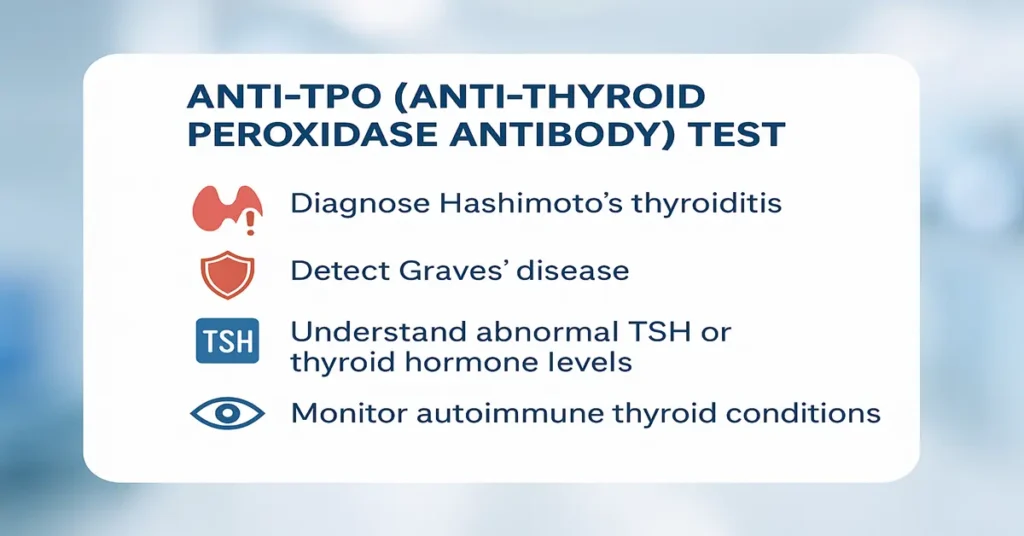
Infographic showing the purpose of the Anti-TPO (Anti-Thyroid Peroxidase Antibody) Test, including diagnosis of Hashimoto’s thyroiditis, Graves’ disease, thyroid hormone level evaluation, and autoimmune thyroid monitoring.

Anti-TPO (Anti-Thyroid Peroxidase Antibody) Test – Purpose, Procedure, and Results

The Anti-TPO test detects antibodies that attack the thyroid enzyme responsible for producing thyroid hormones. It helps diagnose autoimmune thyroid diseases like Hashimoto’s and Graves’, evaluate thyroid dysfunction, and monitor treatment. Learn about its purpose, normal range, and interpretation in detail.

Anti-TPO (Anti-Thyroid Peroxidase Antibody) Test – Purpose, Procedure, and Results Read More »

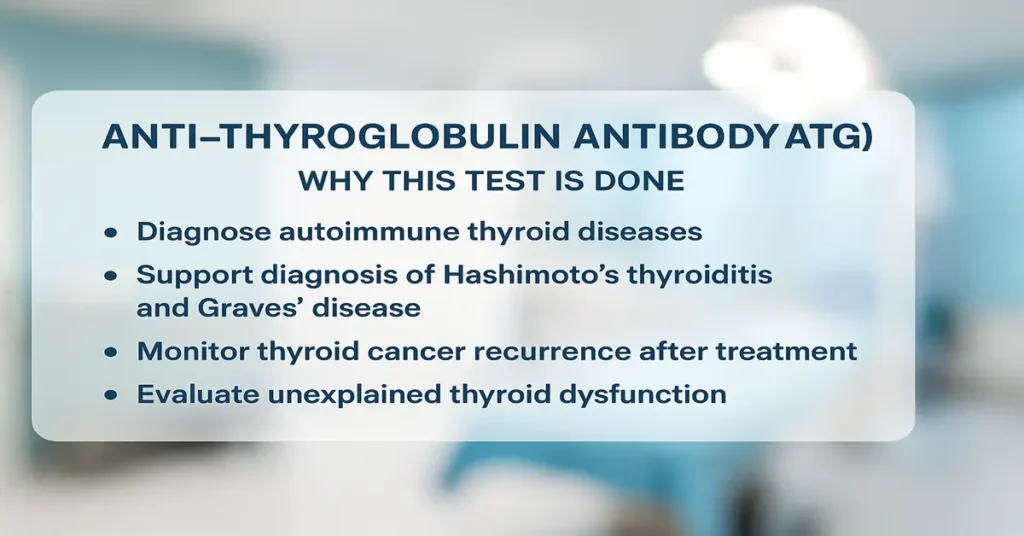
Infographic showing reasons for performing the Anti-Thyroglobulin Antibody (ATG) test, including diagnosis of autoimmune thyroid diseases, Hashimoto’s, Graves’ disease, and thyroid cancer monitoring.

Anti-Thyroglobulin Antibody (ATG) Test – Purpose, Procedure, and Normal Range

The Anti-Thyroglobulin Antibody (ATG) test detects antibodies that attack the thyroid gland. It helps diagnose autoimmune thyroid diseases like Hashimoto’s and Graves’ disease and is also used to monitor thyroid cancer after treatment. Learn about its purpose, normal range, and interpretation here.

Anti-Thyroglobulin Antibody (ATG) Test – Purpose, Procedure, and Normal Range Read More »