
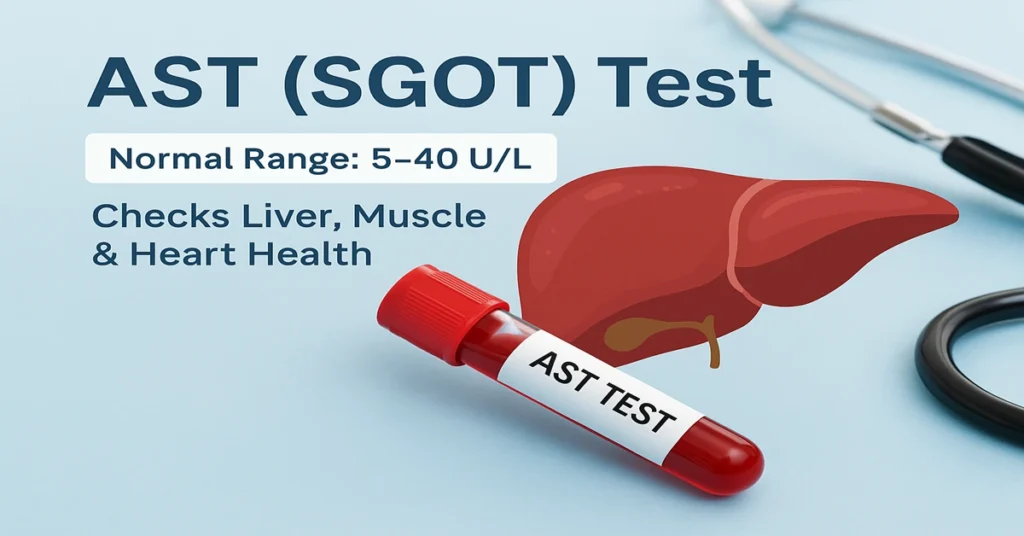
AST (SGOT) Test: Meaning, Normal Range, High & Low Levels, Causes, Symptoms, and Complete Medical Guide
What Is AST (SGOT)?
AST stands for Aspartate Aminotransferase, also known as SGOT (Serum Glutamic-Oxaloacetic Transaminase). It is an enzyme that normally stays inside the cells of several organs. The liver contains a significant amount of AST, but it is also present in the heart, skeletal muscles, kidneys, pancreas, brain, and red blood cells.
The AST test measures how much of this enzyme is present in the blood. Under normal conditions, only small amounts are detected. When cells are stressed, inflamed, or injured, AST can leak into the bloodstream. Because of this behavior, AST is widely used as a marker to identify cell damage, most commonly related to the liver or muscles.
In routine practice, AST is rarely interpreted alone. Doctors usually review it alongside ALT (SGPT) and other liver enzymes to understand the full clinical picture.
Where Is AST Produced in the Body?
AST is produced inside the cells of multiple organs. While the liver is the most commonly discussed source, the enzyme is not liver-specific, which is an important point during interpretation.
Organs and Tissues That Produce AST
- Liver (hepatocytes): A major contributor to blood AST levels
- Heart muscle: Levels can rise sharply with heart muscle injury
- Skeletal muscles: Exercise, trauma, or muscle disease may increase AST
- Kidneys and pancreas: Mild elevations may occur during inflammation
- Brain: Severe injury can release AST
- Red blood cells: Breakdown of RBCs can falsely elevate AST
Because AST originates from many tissues, doctors rely on supporting tests, clinical history, and symptoms to identify the actual source.
Main Functions and Importance of AST
AST plays a role inside cells, but its value in medical testing lies in what it signals rather than what it does.
Helps in Protein Metabolism
AST supports the conversion of amino acids into substances that cells use for energy. This function happens quietly inside healthy cells.
Supports Energy Production
The enzyme participates in metabolic pathways that allow cells to generate energy efficiently.
Marker for Liver Health
Liver cells contain high concentrations of AST. When these cells are damaged, AST enters the bloodstream, making it a useful indicator of liver stress or injury.
Detects Muscle and Heart Involvement
Because muscles and heart tissue also contain AST, elevations may reflect muscle injury, heavy exertion, or cardiac damage rather than liver disease.
AST/ALT Ratio for Clinical Interpretation
Doctors often compare AST with ALT:
- AST higher than ALT may suggest alcohol-related liver injury or muscle involvement
- ALT higher than AST is more typical in viral hepatitis or fatty liver conditions
This comparison helps narrow down the likely source of enzyme elevation.
Causes of Low AST Levels
Low AST values are usually not clinically significant. In most individuals, they represent normal variation rather than disease.
Common Causes
- Reduced enzyme activity related to vitamin B6 availability
- Advanced liver failure with minimal functioning liver tissue
- Normal biological variation
Low AST by itself rarely requires further evaluation unless other clinical signs are present.
Symptoms of Low AST
Low AST does not cause symptoms. When seen in advanced liver disease, symptoms relate to liver failure rather than the enzyme level itself and are usually accompanied by multiple abnormal tests.
Causes of High AST Levels
High AST levels indicate cellular injury somewhere in the body. The degree of elevation and accompanying test results guide interpretation.
Liver-Related Causes
Inflammation or injury to liver cells—whether acute or chronic—commonly raises AST. This includes viral, alcohol-related, autoimmune, or toxic injury.
Fatty Liver Disease
Both alcoholic and non-alcoholic fatty liver conditions may cause mild to moderate AST elevation.
Cirrhosis
Long-standing liver damage often leads to persistent enzyme elevation.
Alcohol-Related Liver Injury
Alcohol exposure typically raises AST more than ALT, a pattern doctors watch closely.
Non-Liver Causes
AST may rise due to heart muscle injury, skeletal muscle damage, intense physical exertion, inflammation of the pancreas, destruction of red blood cells, or medication-related effects.
Because AST is non-specific, context is essential when interpreting results.
Symptoms of High AST
AST itself does not produce symptoms. Any symptoms reflect the condition responsible for the elevation.
Possible Liver-Related Features
Yellowing of the eyes or skin, dark urine, pale stools, abdominal discomfort, poor appetite, or ongoing fatigue may point toward liver involvement.
Possible Heart-Related Features
Chest discomfort, shortness of breath, sweating, or radiating pain require urgent assessment.
Possible Muscle-Related Features
Muscle soreness, weakness, stiffness, or swelling—especially after exertion—may explain isolated AST elevation.
Doctors usually correlate AST with ALT, ALP, GGT, and clinical findings before reaching conclusions.
AST Reference Range
Reference ranges vary slightly by laboratory.
- Normal AST Level: Approximately 5 – 40 U/L
AST/ALT Ratio
The relationship between AST and ALT helps identify patterns of injury rather than serving as a diagnosis on its own.
Sample Type and Collection
- Sample Type: Serum
- Tube Used: Red-top (plain) tube
Blood is drawn from a vein, processed, and analyzed for enzyme levels.
Test Preparation
AST testing is straightforward for most patients.
Fasting
Usually not required unless part of a broader metabolic panel.
Medication Review
Many medicines can influence AST levels, so current medications should always be reported.
Physical Activity
Strenuous exercise before testing may temporarily raise AST.
Alcohol Intake
Alcohol can elevate AST and may affect interpretation.
When to Consult a Doctor
Medical review is recommended if AST remains elevated on repeat testing or if it is accompanied by symptoms such as jaundice, unexplained fatigue, muscle weakness, chest discomfort, or abnormal findings in other liver tests.
Early evaluation helps distinguish between liver, muscle, cardiac, or medication-related causes.
Important Medical Word Explanations
- Enzyme: A protein that supports chemical reactions in the body.
- Hepatitis: Inflammation of the liver.
- Cirrhosis: Long-term liver damage with scarring.
- Haemolysis: Breakdown of red blood cells.
- SGOT: Older name for AST.
- Myopathy: Disorders affecting muscle tissue.
~END~