
Overview
Arsenic (As) is a naturally occurring toxic element found in the environment, including soil, water, air, and some foods. It belongs to the group of heavy metals and has no beneficial role in human physiology. Even small amounts can be harmful when exposure is prolonged. Because of its well-known effects on multiple organs and its association with cancer, arsenic is regarded as one of the most serious environmental toxins worldwide.
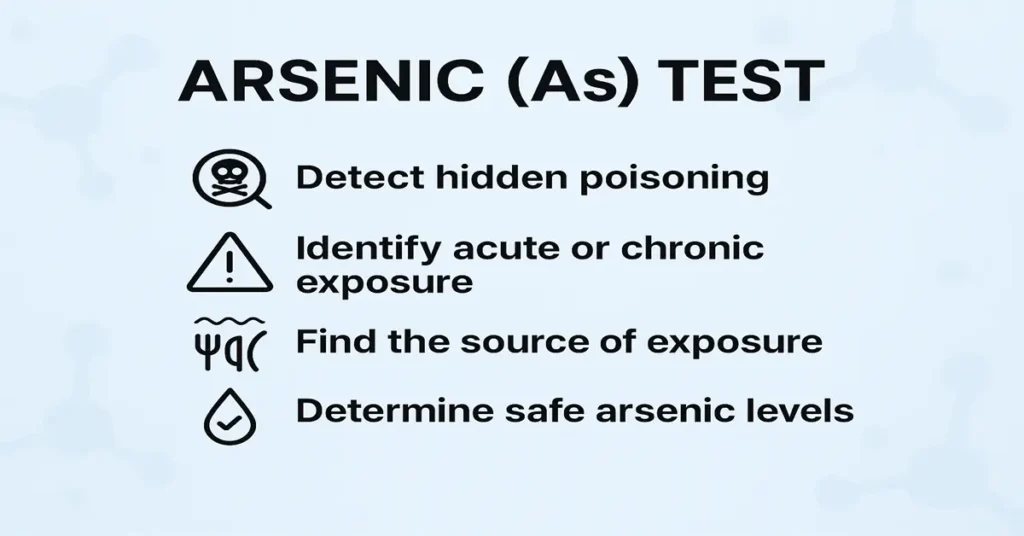
Arsenic testing—performed on urine, blood, hair, or nails—helps identify recent or past exposure. Doctors usually consider this test when there is a risk of contaminated drinking water, occupational exposure, or clinical features that raise suspicion of arsenic toxicity.
What is Arsenic (As)?
Arsenic is a chemical element (atomic number 33) that exists in different chemical forms, broadly classified as organic and inorganic arsenic.
Organic arsenic is commonly found in seafood. It is generally less toxic and is eliminated from the body relatively quickly.
Inorganic arsenic, which is found in contaminated groundwater, industrial emissions, and some pesticides, is highly toxic and responsible for most health problems related to arsenic exposure.
Inside the body, arsenic interferes with basic cellular processes, particularly energy production and DNA repair. With ongoing exposure, this disruption can lead to tissue damage and long-term disease.
Where It Comes From / How It Enters the Body
Arsenic is not produced by the body. Exposure occurs through external sources, most commonly:
- Drinking water contaminated with inorganic arsenic, especially groundwater and well water
- Industrial activities such as mining, smelting, coal burning, and metal refining
- Certain pesticides, herbicides, and wood preservatives
- Foods grown in arsenic-rich soil
- Inhalation of arsenic-containing dust or fumes in polluted environments
After entering the body through ingestion, inhalation, or skin contact, arsenic circulates in the bloodstream and gradually accumulates in organs such as the liver and kidneys, as well as in skin, hair, and nails.
Main Effects and Importance of Testing
Arsenic exposure is often slow and silent. Testing plays an important role in identifying exposure before irreversible damage develops.
Acute exposure usually follows ingestion of a large amount and can lead to rapid, severe illness.
Chronic exposure, which is more common, results from low-level intake over months or years and may go unnoticed initially.
From a clinical perspective, arsenic affects multiple systems:
- Skin: pigment changes and thickened areas
- Nervous system: sensory disturbances and weakness
- Liver and kidneys: impaired detoxification and filtration
- Cardiovascular system: increased long-term risk of complications
Because of these widespread effects, arsenic testing is important not only for individual diagnosis but also for public health monitoring. International guidelines recommend very low allowable levels of arsenic in drinking water.
Causes of Low Arsenic Levels
Low or undetectable arsenic levels are normal and desirable. Small traces may appear due to dietary intake, particularly from seafood, but these are usually organic forms with little clinical significance.
Such levels typically reflect:
- Use of clean drinking water
- No occupational or environmental exposure
- Normal elimination of trace amounts by the kidneys
Symptoms of Low Levels
Low arsenic levels do not cause symptoms. The body does not require arsenic for any biological function, so the absence of arsenic is considered healthy.
Causes of High Arsenic Levels
Elevated arsenic levels usually reflect environmental or occupational exposure. Common situations include long-term use of contaminated groundwater, living near industrial or mining areas, or working in settings where arsenic compounds are present.
Dietary exposure may also contribute when food is grown in arsenic-rich soil, although drinking water remains the most significant source worldwide.
Symptoms of High Arsenic Levels
The clinical picture depends on the duration and intensity of exposure.
With short-term high exposure, symptoms tend to be sudden and severe, affecting the gastrointestinal and nervous systems.
With long-term exposure, changes develop gradually and may involve the skin, nerves, and internal organs.
In practice, these symptoms prompt doctors to investigate environmental exposure history alongside laboratory testing.
Reference Ranges (Normal Values)
Reference ranges vary by sample type and laboratory method. Urine testing is most commonly used to assess recent exposure, while hair and nail samples reflect longer-term accumulation. Results are always interpreted in the context of exposure history and clinical findings.
Sample Type and Collection
- Urine: preferred for assessing recent exposure
- Blood: reflects current circulating levels
- Hair or nails: useful for evaluating past or chronic exposure
Collection follows standard laboratory procedures. Special attention is paid to avoiding contamination during sampling.
Test Preparation
Fasting is usually not required. Patients are often advised to avoid seafood for a few days before testing, as it can temporarily raise organic arsenic levels and complicate interpretation. Occupational history and recent environmental exposures should always be shared with the clinician.
When to Consult a Doctor
Medical evaluation is appropriate if there are unexplained skin changes, neurological symptoms, persistent digestive complaints, or abnormal liver or kidney test results—especially in individuals with known exposure risks. Testing is also important for people living in areas where groundwater contamination is common.
Early identification of arsenic exposure allows timely intervention and reduces the risk of long-term complications.
Important Word Explanations
- Heavy metal: A toxic element that can accumulate in body tissues.
- Inorganic arsenic: Highly toxic form commonly found in contaminated water and industrial sources.
- Organic arsenic: Less toxic form mainly found in seafood.
- Keratosis: Thickened, rough skin changes seen with long-term exposure.
- Hyperpigmentation: Darkening of the skin due to excess pigment.
- Toxicity: Harmful effects resulting from exposure to a substance.
~END~
Related Posts
None found