
Overview
The Anti-Thyroid Peroxidase Antibody (Anti-TPO) test is a blood test commonly used to evaluate autoimmune conditions affecting the thyroid gland. It detects antibodies directed against thyroid peroxidase (TPO), an enzyme that plays a central role in the production of thyroid hormones, T3 and T4.
In a healthy immune system, thyroid tissue is not targeted. When Anti-TPO antibodies are present, it indicates that the immune system is reacting against the thyroid gland itself. This immune activity can gradually affect thyroid cells and alter hormone production, a pattern most often seen in autoimmune thyroid disorders such as Hashimoto’s thyroiditis and Graves’ disease.
What is Anti-TPO (Anti-Thyroid Peroxidase Antibody)?
The Anti-TPO test looks for antibodies that target the thyroid peroxidase enzyme within the thyroid gland. TPO is essential for the normal synthesis of thyroid hormones, which influence metabolism, energy balance, body temperature, and many other physiological processes.
When Anti-TPO antibodies are produced, they interfere with normal thyroid function. Over time, this immune response may contribute to reduced or excessive hormone production, depending on the underlying autoimmune condition. Clinically, the test helps explain why thyroid hormone or TSH levels may be abnormal.
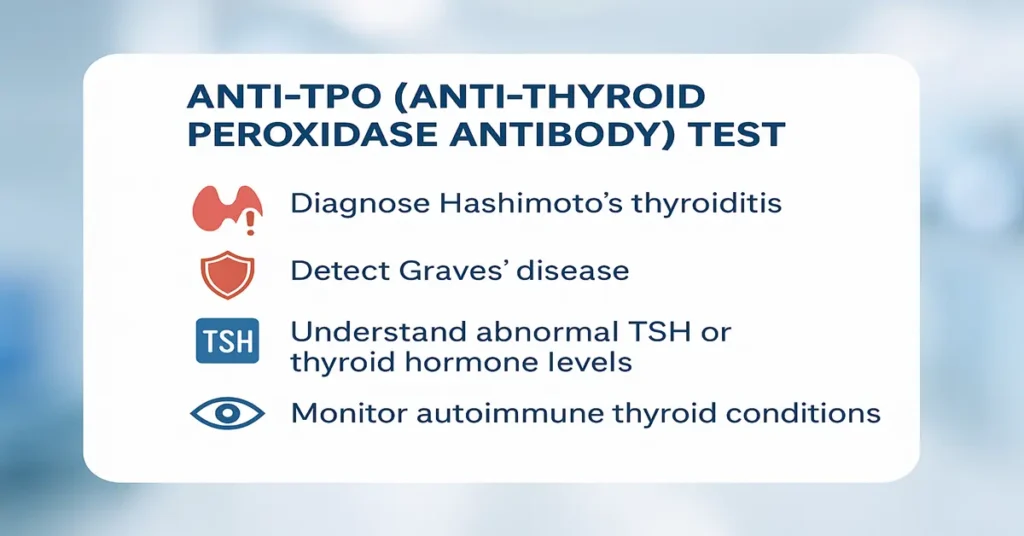
The test is mainly used to support the diagnosis of autoimmune thyroid disorders, to clarify unexplained thyroid test abnormalities, and to follow known autoimmune thyroid disease over time. It is often requested alongside other thyroid-related blood tests for a more complete assessment.
Where is Anti-TPO Produced in the Body?
Anti-TPO antibodies are produced by B-cells, which are part of the immune system. These cells normally generate antibodies to protect the body from infections.
In autoimmune thyroid disease, B-cells mistakenly identify thyroid peroxidase as a foreign target. As a result, Anti-TPO antibodies are released into the bloodstream. Although these antibodies circulate widely, their effects are focused on the thyroid gland, where they reflect ongoing immune activity against thyroid tissue.
Functions and Importance of Anti-TPO
Anti-TPO antibodies do not have any useful physiological function. Their significance lies in what their presence indicates rather than in any action they perform.
From a clinical point of view, detecting Anti-TPO antibodies helps identify autoimmune involvement of the thyroid gland, often at an early stage. The test is useful in distinguishing autoimmune thyroid disease from other, non-immune causes of thyroid dysfunction. It can also provide supportive information when assessing people with a family history of thyroid disease or other autoimmune conditions.
In certain situations, such as pregnancy or the period after childbirth, Anti-TPO testing may help clarify the risk of autoimmune-related thyroid changes.
Causes of Low or Negative Anti-TPO Levels
Low or negative Anti-TPO levels indicate that antibodies against thyroid peroxidase are not detected. This is the expected finding in individuals without autoimmune thyroid disease.
Negative results may also be seen in early stages of thyroid conditions before antibody production becomes measurable, or after effective treatment or thyroid removal. In most cases, a negative Anti-TPO result suggests the absence of immune-mediated thyroid damage.
Symptoms of Low/Negative Anti-TPO
There are no symptoms associated with low or negative Anti-TPO levels. This result is considered normal.
If thyroid-related symptoms are present despite a negative result, clinicians usually rely on thyroid hormone levels, TSH, and other antibody tests to explore alternative explanations.
Causes of High Anti-TPO Levels
Elevated Anti-TPO levels indicate immune activity directed against the thyroid gland. In clinical practice, this is most commonly associated with autoimmune thyroid disorders, particularly Hashimoto’s thyroiditis and Graves’ disease.
Higher levels may also be seen in transient thyroid inflammation, such as postpartum thyroiditis, or alongside other autoimmune conditions. Mild elevations can occasionally be detected in individuals without clear thyroid disease, especially with increasing age, which is why results are always interpreted in context.
Symptoms of High Anti-TPO Levels
Anti-TPO antibodies themselves do not cause symptoms. Any symptoms experienced are due to changes in thyroid hormone production resulting from autoimmune thyroid involvement.
Depending on whether the thyroid becomes underactive or overactive, individuals may notice changes in energy levels, weight, temperature tolerance, mood, or neck swelling. Clinicians use Anti-TPO results to support understanding of these patterns rather than as a direct explanation for symptoms.
Reference Range of Anti-TPO
Anti-TPO results are reported as numerical values, with a reference range defined by the testing laboratory. Values within the normal range are considered negative, while higher values suggest thyroid autoimmunity.
Because laboratory methods can vary, it is important to interpret results using the reference range provided on the report and in combination with other thyroid tests and clinical findings.
Sample Type and Test Requirements
The Anti-TPO test is performed on a blood sample, usually collected as serum in a plain or serum separator tube. Fasting is not required, and the sample can be taken at any time of day.
The blood draw is routine, and results are typically available within a short timeframe, depending on laboratory processing.
Test Preparation
No special preparation is generally needed before Anti-TPO testing. Patients should inform their doctor about any thyroid medications, steroids, or recent treatments, as these can influence interpretation.
Pregnancy or recent childbirth should also be mentioned, as immune-related thyroid changes can occur during this period.
When to Consult a Doctor
Medical advice is recommended if there are ongoing symptoms such as persistent fatigue, unexplained weight changes, mood alterations, or sensitivity to heat or cold. Swelling in the neck, menstrual irregularities, or fertility concerns may also prompt evaluation.
People with a family history of thyroid or autoimmune disease may benefit from discussion with a healthcare professional regarding appropriate testing, including Anti-TPO, as part of a broader thyroid assessment.
Important Word Explanations
- Thyroid Peroxidase (TPO): An enzyme in the thyroid gland essential for the production of thyroid hormones.
- Autoantibody: An antibody produced by the immune system that mistakenly targets the body’s own tissues.
- B-cells: White blood cells responsible for producing antibodies.
- Hashimoto’s Thyroiditis: An autoimmune condition commonly associated with reduced thyroid hormone production.
- Graves’ Disease: An autoimmune disorder associated with excessive thyroid hormone production.
- Postpartum Thyroiditis: Temporary inflammation of the thyroid occurring after childbirth.
~END~
Related Posts
None found