
Overview
The Anti-Thyroglobulin Antibody (ATG) test is a blood test used to detect antibodies directed against thyroglobulin, a protein naturally produced by the thyroid gland. Thyroglobulin plays a central role in the production of thyroid hormones, including T3 and T4, which regulate metabolism, energy levels, and many body functions.
Under normal conditions, the immune system does not react to thyroglobulin. In some individuals, however, the immune system mistakenly identifies this thyroid protein as a target and produces antibodies against it. This immune response is a feature of autoimmune thyroid disease.
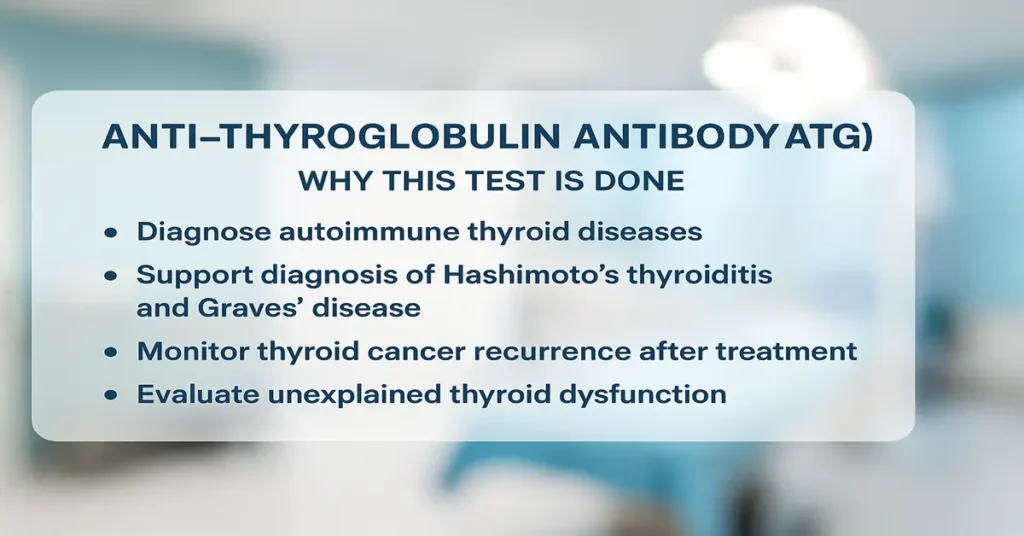
When anti-thyroglobulin antibodies are found in the blood, it suggests that the immune system is interacting abnormally with the thyroid gland. This finding is commonly associated with conditions such as Hashimoto’s thyroiditis and Graves’ disease and may also have relevance in certain thyroid cancer follow-up settings.
What is the Anti-Thyroglobulin Antibody (ATG) Test?
The ATG test measures the concentration of antibodies against thyroglobulin in the bloodstream. These antibodies are autoantibodies, meaning they are produced by the immune system against the body’s own proteins rather than against infections.
A positive ATG result indicates that the immune system has developed a response to thyroid tissue. Clinically, this information helps doctors understand whether thyroid dysfunction or inflammation may have an autoimmune basis.
The test is commonly requested alongside other thyroid investigations, such as thyroid-stimulating hormone (TSH), thyroid hormones (T3 and T4), and anti-thyroid peroxidase (TPO) antibodies, to provide a more complete assessment of thyroid health.
Where Are Anti-Thyroglobulin Antibodies Produced?
Anti-thyroglobulin antibodies are produced by B-cells, a type of white blood cell involved in immune defense. These cells are part of the adaptive immune system and are normally responsible for producing antibodies against harmful organisms.
In autoimmune thyroid conditions, B-cells become misdirected and begin producing antibodies against thyroglobulin. Although these antibodies circulate in the blood, their effects are focused on the thyroid gland, where they reflect ongoing immune activity directed at thyroid tissue.
Functions and Importance of the ATG Test
Anti-thyroglobulin antibodies do not have a useful biological function. Their importance lies in what their presence indicates about immune system behavior.
From a clinical perspective, ATG testing helps identify autoimmune involvement of the thyroid, particularly when thyroid hormone levels or TSH results are abnormal without an obvious explanation. The test can also be useful in the long-term monitoring of certain thyroid cancer patients, especially after thyroid removal, where changes in antibody levels may affect interpretation of other thyroid markers.
Overall, the ATG test supports diagnostic reasoning rather than acting as a standalone test.
Causes of Low or Negative ATG Levels
Low or negative ATG levels mean that antibodies against thyroglobulin are not detected. This is the expected finding in most healthy individuals and indicates the absence of an immune response directed at thyroid tissue.
Negative results are also commonly seen in people with non-autoimmune thyroid conditions or in those who have completed treatment and no longer show immune activity against the thyroid.
Symptoms of Low/Negative ATG Levels
Low or negative ATG levels do not cause symptoms. This result simply reflects a lack of detectable autoimmune activity against thyroglobulin.
If thyroid-related symptoms persist despite a negative ATG result, doctors usually rely on other thyroid tests and clinical findings to guide further evaluation.
Causes of High ATG Levels
Elevated ATG levels indicate that the immune system is reacting against thyroglobulin. In clinical practice, this is most often associated with autoimmune thyroid disorders, where immune-mediated inflammation affects thyroid structure and function.
Raised ATG levels may also be encountered in certain thyroid cancer contexts or, less commonly, alongside other autoimmune conditions. Because of this variability, ATG results are always interpreted in combination with thyroid hormone levels, TSH, imaging, and clinical features.
Symptoms of High ATG Levels
Anti-thyroglobulin antibodies themselves do not produce symptoms. Any symptoms experienced are due to the underlying thyroid condition rather than the antibodies directly.
Depending on whether thyroid hormone production is reduced or increased, patients may notice changes in energy levels, weight, temperature sensitivity, or mood. Clinicians use ATG results as one part of the overall assessment rather than as an explanation for symptoms on their own.
Reference Ranges for ATG Test
ATG results are reported as numerical values, with reference ranges defined by the testing laboratory. Values within the normal range are considered negative, while higher values suggest autoimmune activity involving the thyroid gland.
Borderline elevations may require correlation with other test results and clinical findings. Because testing methods can vary, it is important to interpret results using the reference range provided on the laboratory report and with guidance from a healthcare professional.
Sample Requirements
The ATG test is performed on a blood sample, usually collected as serum in a plain or serum separator tube. Fasting is not required, and the sample can be taken at any time of day.
The blood draw is routine, and results are typically available within a short period, depending on the laboratory.
Test Preparation
No special preparation is generally needed before an ATG test. Patients are usually advised to inform their doctor about any thyroid medications, steroids, or recent treatments that may influence interpretation.
In individuals who have undergone thyroid surgery or radioactive iodine therapy, ATG testing may be performed periodically as part of follow-up.
When to Consult a Doctor
Medical advice should be sought if symptoms such as persistent fatigue, unexplained weight changes, neck swelling, or sensitivity to cold or heat are present. Changes in mood, menstrual irregularities, or a family history of thyroid or autoimmune disease may also prompt evaluation.
A doctor may recommend ATG testing along with other thyroid investigations to clarify the cause of symptoms and assess overall thyroid health.
Important Word Explanations
- Thyroglobulin: A protein produced by the thyroid gland that is essential for making thyroid hormones.
- Autoimmune Disease: A condition in which the immune system mistakenly attacks the body’s own tissues.
- B-cells: White blood cells responsible for producing antibodies.
- Thyroiditis: Inflammation of the thyroid gland.
- Hypothyroidism: Reduced thyroid hormone production.
- Hyperthyroidism: Excess thyroid hormone production.
- Thyroidectomy: Surgical removal of the thyroid gland.
~END~
Related Posts
None found