
What is Anti-TG (Anti–Thyroglobulin Antibody)?
The Anti-TG test (Anti–Thyroglobulin Antibody Test) is a blood test that looks for antibodies directed against thyroglobulin, a protein made by the thyroid gland. Thyroglobulin is an essential building block in the production of thyroid hormones—T3 (triiodothyronine) and T4 (thyroxine)—which regulate metabolism, energy use, growth, and many daily body functions.
Under normal circumstances, the immune system does not react to thyroglobulin. In some people, however, the immune system mistakenly identifies this protein as foreign and produces Anti-TG antibodies. Their presence signals an autoimmune response involving the thyroid gland.
Clinically, this immune reaction may be associated with thyroid inflammation and changes in hormone balance, which can present as either an underactive or overactive thyroid, depending on the condition and stage of disease.
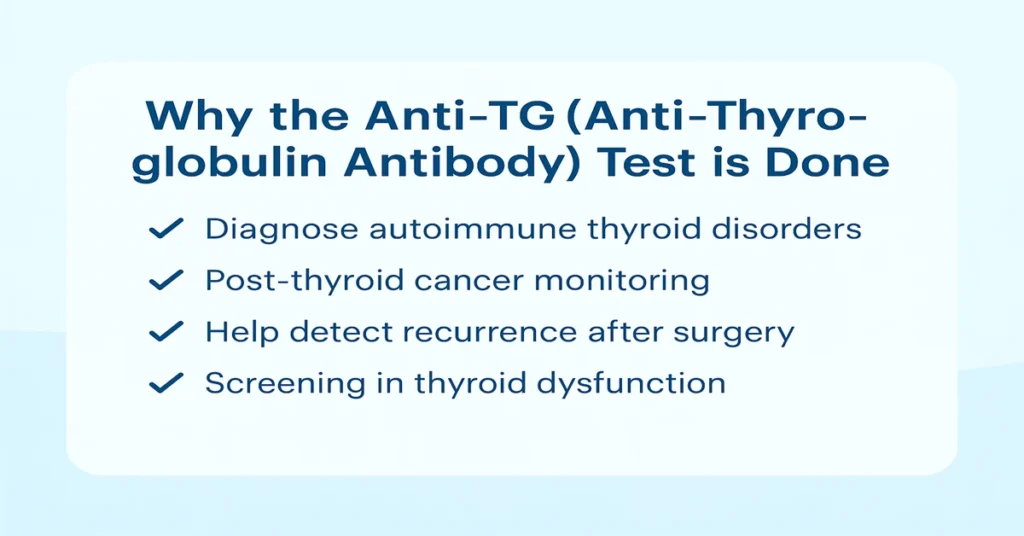
The Anti-TG test is mainly used to:
- Support the diagnosis of autoimmune thyroid disorders, such as Hashimoto’s thyroiditis and Graves’ disease
- Assist in thyroid cancer follow-up, particularly after thyroid surgery or radioactive iodine treatment
- Provide additional context when thyroid hormone tests (TSH, T3, T4) show abnormalities
Where is Thyroglobulin and Anti-TG Produced in the Body?
Thyroglobulin is produced by the follicular cells of the thyroid gland, which sits at the front of the neck. Inside the thyroid follicles, thyroglobulin acts as the raw material from which T3 and T4 hormones are formed.
Anti-TG antibodies are produced by B lymphocytes, a type of immune cell. In autoimmune thyroid conditions, these cells incorrectly recognize thyroglobulin as a threat and begin producing antibodies against it. These antibodies circulate in the bloodstream and reflect immune-mediated involvement of thyroid tissue.
Main Functions and Importance of the Test
The Anti-TG test does not measure thyroid hormone levels directly. Instead, it helps identify whether the immune system is involved in a thyroid disorder.
Main Functions
Identifying autoimmune thyroid disease
Anti-TG antibodies are commonly seen in autoimmune thyroid conditions. Their presence helps distinguish immune-related thyroid dysfunction from non-autoimmune causes.
Supporting thyroid cancer monitoring
After thyroid removal for differentiated thyroid cancer, thyroglobulin is used as a tumor marker. Anti-TG antibodies can interfere with thyroglobulin measurement, so identifying their presence is important for correct interpretation during follow-up.
Providing context in thyroid evaluation
The test is often ordered alongside Anti-TPO antibodies and thyroid function tests to give a more complete picture of thyroid health.
Causes of Low Levels (Negative Anti-TG Test Result)
A negative Anti-TG result is generally considered normal.
Common clinical interpretations include:
- No autoimmune thyroid activity
- Normal immune response toward thyroid tissue
- Thyroid dysfunction due to non-autoimmune causes
- Very early disease, before antibodies are detectable
- Reduced antibody production due to immune suppression
Symptoms of Low Levels (Negative Test)
Low or negative Anti-TG levels do not produce symptoms.
If a person has thyroid-related complaints with a negative Anti-TG result, those symptoms are usually due to hormone imbalance or structural thyroid issues rather than immune antibody activity.
Causes of High Levels (Positive Anti-TG Test Result)
A positive Anti-TG test indicates that antibodies against thyroglobulin are present, suggesting immune involvement of the thyroid.
Common clinical settings include:
Hashimoto’s thyroiditis
Frequently associated with Anti-TG antibodies and often seen together with Anti-TPO antibodies.
Graves’ disease
An autoimmune condition in which immune activity affects thyroid regulation, sometimes accompanied by Anti-TG positivity.
Post-thyroid cancer follow-up
Anti-TG antibodies may persist after surgery or treatment and can influence interpretation of thyroglobulin tumor marker levels.
Other autoimmune conditions
Anti-TG antibodies may occasionally be detected alongside other autoimmune diseases, reflecting shared immune tendencies.
Thyroid inflammation or injury
Any process that disrupts thyroid tissue may expose thyroglobulin to the immune system and trigger antibody formation.
Symptoms of High Anti-TG Levels (Positive Test)
Anti-TG antibodies themselves do not cause symptoms. Any clinical features depend on the underlying thyroid condition affecting hormone levels.
When associated with an underactive thyroid pattern, people may notice:
- Persistent tiredness
- Weight gain or slowed metabolism
- Dry skin or hair changes
- Sensitivity to cold
When associated with an overactive thyroid pattern, features may include:
- Unintentional weight loss
- Palpitations or fast heart rate
- Heat intolerance
- Increased nervousness or restlessness
These symptoms reflect thyroid hormone imbalance rather than the antibody level itself.
Reference Ranges
- Negative: Below the laboratory cut-off
- Positive: Above the laboratory cut-off
Exact numerical ranges vary between laboratories and testing methods. Results are always interpreted in combination with thyroid hormone tests and clinical findings.
Sample Type
- Sample: Blood (serum)
- Tube: Red-top or plain tube
- Method: Commonly ELISA or chemiluminescence-based assays
- Fasting: Not required
Test Preparation
No special preparation is needed.
Patients should inform their doctor about:
- Known thyroid disease or autoimmune conditions
- Thyroid medications or hormone therapy
- Previous thyroid surgery or radioactive iodine treatment
This information helps ensure accurate interpretation.
When to Consult a Doctor
Medical advice is recommended if you experience:
- Persistent fatigue or unexplained weight changes
- Neck swelling or a feeling of fullness in the throat
- Hair, skin, or temperature sensitivity changes
- Palpitations or unexplained anxiety
- Abnormal thyroid hormone test results
Doctors often assess Anti-TG along with Anti-TPO antibodies and thyroid function tests to clarify the cause of thyroid abnormalities.
Important Word Explanations
- Thyroglobulin: A protein produced by the thyroid gland that is essential for making thyroid hormones.
- Antibody: A protein made by the immune system to recognize targets.
- Autoimmune disease: A condition in which the immune system attacks the body’s own tissues.
- Hashimoto’s thyroiditis: An autoimmune condition commonly linked with reduced thyroid function.
- Graves’ disease: An autoimmune disorder typically associated with increased thyroid hormone activity.
- TSH: Thyroid-stimulating hormone that regulates thyroid hormone production.
~END~
Related Posts
None found