
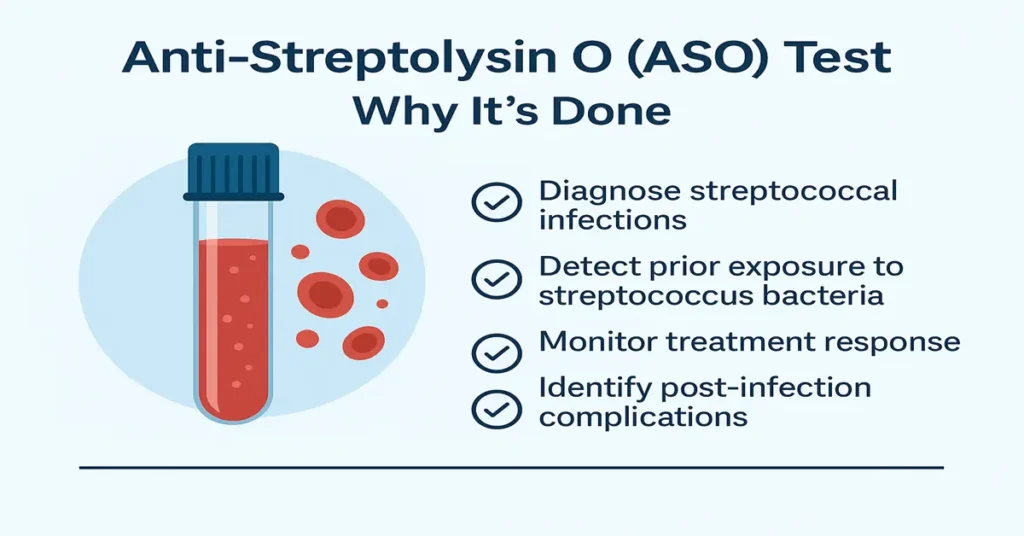
What is Anti-Streptolysin O (ASO)?
Anti-Streptolysin O (ASO) is an antibody made by the immune system after an infection caused by Group A Streptococcus (GAS) bacteria. These bacteria commonly cause illnesses such as strep throat, scarlet fever, and certain skin infections.
Streptococcus bacteria release a toxin known as streptolysin O. When the body recognizes this toxin, it responds by producing ASO antibodies to neutralize it. These antibodies themselves are not harmful; rather, they act as markers showing that the immune system has recently reacted to a streptococcal infection.
Clinically, the ASO test is most helpful when symptoms appear weeks after the original infection has settled. In such situations, it helps doctors determine whether a recent streptococcal infection may be linked to complications affecting the joints, heart, or kidneys.
Where is ASO Produced in the Body?
ASO antibodies are produced by B-lymphocytes, a type of white blood cell involved in antibody formation. When streptolysin O enters the body during a streptococcal infection, these immune cells recognize it as foreign and begin producing ASO antibodies in response.
This process takes time. ASO levels usually start to rise about one to three weeks after infection, which is why the test is not used to diagnose an active sore throat but rather to assess a recent immune response.
Main Functions and Importance of ASO
ASO antibodies play a protective role by binding to and neutralizing the streptolysin O toxin. From a medical standpoint, their greatest value lies in what they reveal rather than what they do.
In practice, ASO levels help clinicians understand whether the body has recently encountered Group A Streptococcus. This is especially useful when evaluating conditions that develop after the infection has resolved. Doctors often consider ASO results alongside clinical findings to support a link between earlier infection and later symptoms.
Because post-streptococcal complications can appear weeks after the initial illness, ASO testing helps bridge that diagnostic gap.
Causes of Low ASO Levels
Low or normal ASO levels are common and usually reassuring. They typically indicate that there has been no recent immune response to streptococcal toxins.
This may be seen when there has been no recent exposure to Group A Streptococcus, or when testing is performed very early—before antibody levels have had time to rise. In some individuals, a weaker immune response may also result in lower detectable levels.
Symptoms of Low ASO Levels
Low ASO levels do not cause symptoms. They simply suggest that the immune system is not showing evidence of a recent streptococcal infection. In healthy individuals without post-infectious complications, this is the expected finding.
Causes of High ASO Levels
Elevated ASO levels indicate a recent immune response to Group A Streptococcus. This rise reflects exposure to streptolysin O rather than an ongoing infection.
High levels are commonly seen after throat or skin infections caused by streptococci. They may also be detected when the immune response continues in the weeks following infection, particularly in individuals who develop post-streptococcal complications involving joints, kidneys, or the heart.
Symptoms of High ASO Levels
ASO antibodies themselves do not cause symptoms. Instead, elevated levels are often found in people who are experiencing symptoms related to post-streptococcal conditions.
These symptoms vary depending on the organ system involved and may include joint discomfort, fatigue, swelling, skin changes, or signs related to heart or kidney involvement. The ASO test helps clinicians understand whether these symptoms could be linked to a recent streptococcal infection.
Reference Ranges
Normal ASO values differ by age and laboratory method.
- Adults: typically below 200 IU/mL
- Children: typically below 400 IU/mL
Because values can vary between laboratories, doctors often focus on trends rather than a single number. A rising ASO level on repeat testing taken a few weeks apart is more informative than one isolated result.
Sample Type and Test Method
The ASO test is performed on a blood (serum) sample. Several laboratory techniques may be used, including agglutination-based or light-scattering methods. Results are reported in international units per milliliter (IU/mL).
Test Preparation
No special preparation is needed for the ASO test. Eating and drinking normally is allowed.
It is helpful to inform the doctor about recent throat or skin infections and any antibiotics taken, as this context assists in interpreting the result. In some cases, a repeat test after a few weeks may be advised to assess changes in antibody levels.
When to Consult a Doctor
Medical advice is recommended if symptoms develop after a recent sore throat or skin infection, especially if they involve joints, the heart, or the kidneys. Persistent fatigue, swelling, changes in urine, or unexplained joint pain are common reasons doctors consider ASO testing.
The test is most meaningful when interpreted together with symptoms, clinical examination, and other supporting investigations.
Important Word Explanations
- Antibody: A protein made by the immune system in response to foreign substances.
- Streptococcus: A group of bacteria that commonly cause throat and skin infections.
- Streptolysin O: A toxin produced by Streptococcus bacteria.
- Rheumatic Fever: An inflammatory condition that may follow streptococcal infection.
- Glomerulonephritis: Inflammation of kidney filtering units after immune activation.
- B-lymphocytes: White blood cells responsible for producing antibodies.
~END~
Related Posts
None found