
What Are Anti-Sperm Antibodies?
Anti-sperm antibodies (ASA) are proteins produced by the immune system that mistakenly identify sperm cells as foreign. Under normal circumstances, the immune system protects the body from infections and harmful substances. In rare situations, however, it can react against the body’s own cells—including sperm.
When anti-sperm antibodies attach to sperm, they may interfere with normal sperm function. This interference can reduce sperm movement, affect their ability to interact with the egg, or limit successful fertilization. As a result, anti-sperm antibodies are a recognized immune-related factor in infertility, even when routine fertility tests appear normal.
These antibodies may be present in men, women, or sometimes both partners. For this reason, testing for anti-sperm antibodies is often considered during the evaluation of unexplained infertility.
Where Are They Produced in the Body?
In Men
In men, anti-sperm antibodies are usually produced when the natural protection that keeps sperm hidden from the immune system is disrupted. This protection is known as the blood–testis barrier.
Antibody production may occur in areas such as the testes, epididymis, or prostate gland, particularly if inflammation, injury, or structural disruption allows sperm to come into contact with immune cells. Once this exposure occurs, the immune system may begin producing antibodies directed against sperm.
In Women
Women can also develop anti-sperm antibodies after exposure to sperm. In such cases, the immune response is usually localized to the reproductive tract. Antibodies may be detected in cervical mucus or uterine fluids.
When present, these antibodies can reduce sperm survival or movement within the female reproductive environment, making fertilization less likely despite normal ovulation and semen parameters.
Main Functions and Importance of the Test
Sperm cells are normally tolerated by the immune system. When antibodies develop against them, this tolerance is lost. Anti-sperm antibodies do not serve any beneficial function; instead, they signal an abnormal immune response affecting fertility.
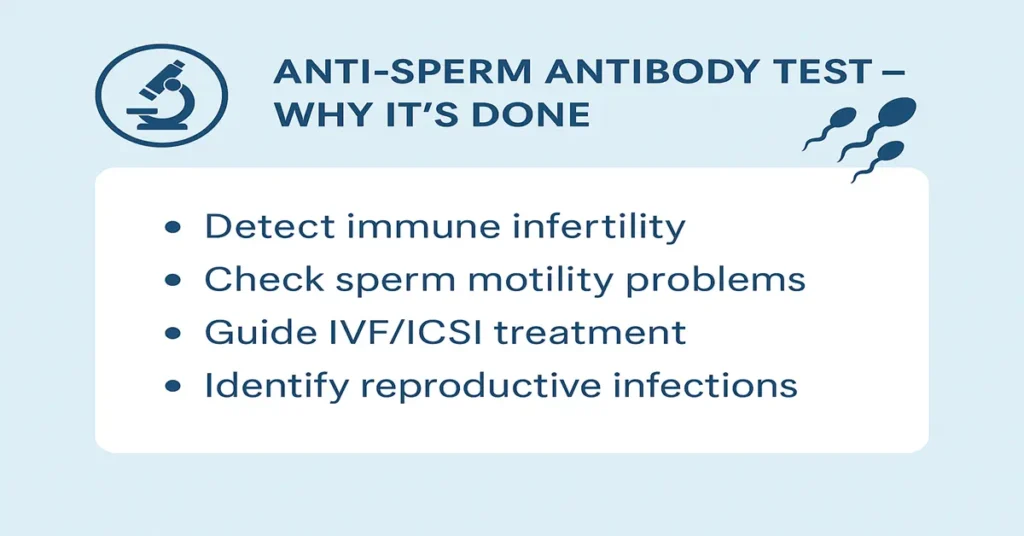
From a clinical perspective, the Anti-Sperm Antibody Test helps identify whether immune factors are contributing to difficulty in conceiving. It supports clinicians in distinguishing immune-related infertility from hormonal, anatomical, or mechanical causes and provides useful context when standard fertility evaluations do not explain the problem.
Causes of Low Levels of Anti-Sperm Antibodies
Low or undetectable levels of anti-sperm antibodies are considered normal. This finding indicates that the immune system is not reacting against sperm cells.
Such results are commonly seen when the reproductive system has remained structurally intact, free from significant injury or inflammation, and when immune exposure to sperm has not occurred.
Symptoms of Low Levels
Low levels of anti-sperm antibodies do not cause symptoms. They simply reflect a normal immune relationship with sperm and are generally associated with normal sperm function and fertility from an immune standpoint.
Causes of High Levels of Anti-Sperm Antibodies
Elevated levels of anti-sperm antibodies suggest that the immune system has been sensitized to sperm.
In Men
Higher levels may be associated with previous injury, surgery, infection, or conditions affecting the reproductive tract that allow sperm to interact with immune cells.
In Women
In women, antibody production may follow immune sensitization after exposure to sperm, sometimes in the setting of local inflammation or heightened immune reactivity within the reproductive tract.
In both cases, antibody presence reflects immune recognition of sperm rather than a direct problem with sperm production itself.
Symptoms of High Levels
Anti-sperm antibodies do not cause visible symptoms. Instead, their effects are usually identified during fertility evaluation.
In men, antibody-related interference may be suspected when semen analysis shows reduced sperm movement or clumping despite otherwise normal findings. In women, difficulty conceiving may persist even when ovulation and other fertility indicators are normal.
These patterns often prompt further testing to explore immune-related causes.
Reference Range
Anti-sperm antibody results are generally reported as present or absent rather than as precise numerical values.
- Normal: No significant anti-sperm antibodies detected
- Abnormal: Anti-sperm antibodies detected in blood, semen, or cervical mucus
A positive result suggests that antibodies may be interfering with normal sperm function, which can contribute to infertility.
Sample Type and Testing Method
Testing methods vary depending on the individual being evaluated.
In men, analysis is commonly performed using a semen sample, and in some cases, a blood sample may also be used.
In women, blood or cervical mucus samples may be tested.
Laboratory techniques such as antibody-binding assays or immunoassays are used to determine whether antibodies are present and whether they are attached to sperm surfaces or circulating in fluids.
Test Preparation
Preparation depends on the sample type being collected. General instructions are provided by the testing laboratory or clinician to ensure accurate results.
It is important to inform the healthcare provider about recent infections, surgeries, or reproductive procedures, as these details help with result interpretation. Women may also be advised on appropriate timing based on the menstrual cycle when cervical samples are involved.
When to Consult a Doctor
Medical advice is recommended when pregnancy has not occurred despite regular attempts over an extended period, especially when routine fertility tests are normal.
A consultation is also appropriate if there is a history of reproductive tract injury, surgery, infection, or unexplained findings on semen analysis. In such situations, testing for anti-sperm antibodies can help clarify whether immune factors are playing a role.
Important Word Explanations
- Antibody: A protein made by the immune system that binds to specific targets.
- Sperm Motility: The ability of sperm to move effectively.
- Vasectomy: A surgical procedure that interrupts sperm transport.
- Epididymis: A structure where sperm mature and are stored.
- Varicocele: Enlargement of veins in the scrotum that may affect testicular function.
- ICSI (Intracytoplasmic Sperm Injection): A laboratory fertilization technique used in assisted reproduction.
~END~
Related Posts
None found