
What is Anti-SM (Anti–Smith Antibody)?
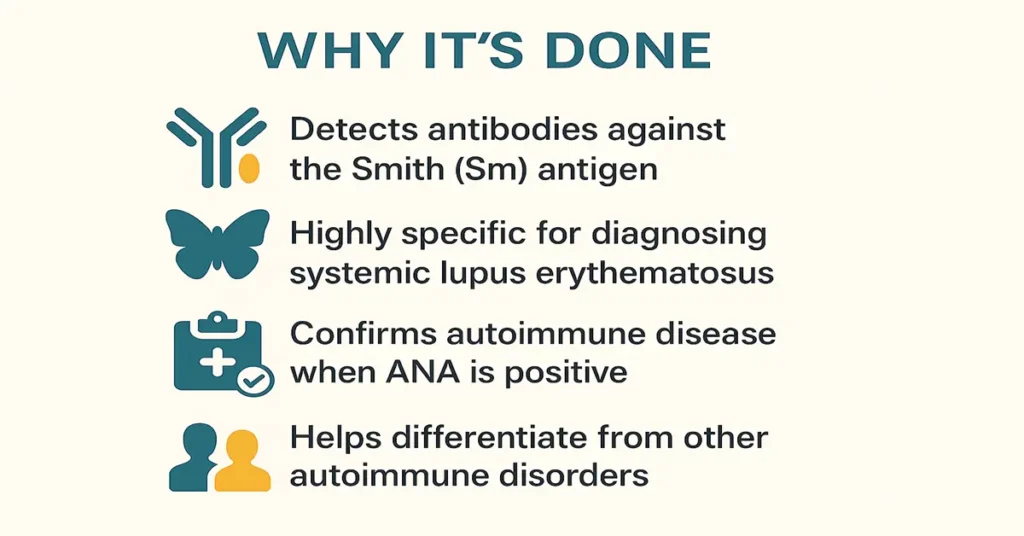
The Anti-SM test (Anti–Smith Antibody Test) is a blood test that looks for antibodies directed against the Smith (Sm) antigen. The Sm antigen is a small ribonucleoprotein located inside the cell nucleus. These antibodies are named after the first patient (“Smith”) in whom they were identified.
Anti-SM antibodies are highly specific for Systemic Lupus Erythematosus (SLE), a chronic autoimmune condition in which the immune system mistakenly targets the body’s own tissues. While only about 20–30% of people with lupus have Anti-SM antibodies, their presence carries strong diagnostic weight because they are rarely seen in other diseases.
In clinical practice, Anti-SM testing is usually done as part of a broader Antinuclear Antibody (ANA) panel, helping doctors confirm lupus when the overall clinical picture points in that direction.
Where is Anti-SM Produced in the Body?
Anti-SM antibodies are produced by B lymphocytes, a type of white blood cell responsible for antibody formation. In autoimmune conditions such as lupus, these cells become inappropriately activated.
Instead of targeting infections, B cells begin to recognize components of the cell nucleus—specifically the Sm antigen, which is part of RNA-protein complexes—as foreign. This leads to the production of Anti-SM antibodies. Once formed, these antibodies circulate in the bloodstream and reflect an underlying autoimmune response.
In simple terms:
- Produced by: B lymphocytes
- Target: Smith (Sm) antigen within the cell nucleus
- Strongly associated with: Systemic Lupus Erythematosus (SLE)
Main Functions and Importance
Anti-SM antibodies themselves do not have a normal or useful role in the body. They are autoantibodies, meaning they arise from an abnormal immune response. Their importance lies in what they tell clinicians.
Diagnostic importance:
Anti-SM is one of the most specific laboratory markers for SLE. When detected, especially in a patient with compatible symptoms, it strongly supports a lupus diagnosis.
Role alongside ANA:
ANA testing is very sensitive for lupus but not specific. Anti-SM adds specificity. A positive ANA followed by a positive Anti-SM result significantly strengthens diagnostic confidence.
Not a monitoring marker:
Unlike some other lupus-related antibodies, Anti-SM levels usually remain fairly stable. They do not reliably rise or fall with disease activity, so they are not used to track flares or treatment response.
Causes of Low Levels (Negative Test Result)
A negative Anti-SM result is common and does not rule out lupus.
Possible reasons include:
- The person does not have lupus or another related autoimmune disease.
- The person has lupus but does not produce Anti-SM antibodies (this is quite common).
- Early disease, before antibodies become detectable.
- Low antibody levels that fall below the detection limit of the test.
Symptoms of Low Levels (Negative Test)
A negative Anti-SM test does not cause symptoms. It simply reflects the absence of detectable Anti-SM antibodies.
If a person has lupus with a negative Anti-SM result, any symptoms they experience—such as joint pain, fatigue, rashes, or organ involvement—are due to the disease itself, not the antibody result. Other tests and clinical findings guide diagnosis in such cases.
Causes of High Levels (Positive Test Result)
A positive Anti-SM test is strongly suggestive of Systemic Lupus Erythematosus. It is one of the most specific antibody findings in lupus diagnostics.
Situations associated with Anti-SM positivity include:
- Systemic Lupus Erythematosus (SLE): the primary and most relevant association.
- Mixed Connective Tissue Disease (MCTD): rarely, and usually at low levels.
- Other autoimmune diseases: very uncommon and typically not clinically decisive.
Because Anti-SM antibodies are seldom found outside lupus, their presence is considered highly meaningful when supported by symptoms and other laboratory findings.
Symptoms of High Levels (Positive Test)
Anti-SM antibodies themselves do not produce symptoms. Instead, they indicate an autoimmune process consistent with lupus. The symptoms depend on which organs are affected.
Common clinical features seen in lupus patients who may have Anti-SM positivity include:
Skin and mucous membranes:
- Butterfly-shaped rash over the cheeks and nose
- Sensitivity to sunlight
- Chronic or recurrent skin lesions
Joints and muscles:
- Joint pain, swelling, or stiffness
- Reduced mobility, especially in the morning
Kidneys:
- Protein in urine
- Swelling of legs, feet, or around the eyes
Blood and circulation:
- Low red blood cells, white cells, or platelets
- Tendency toward inflammation-related complications
General symptoms:
- Fatigue, low-grade fever, weight changes
- Chest discomfort or breathlessness when heart or lung linings are involved
It’s important to remember that Anti-SM supports diagnosis, not disease severity.
Reference Ranges
- Negative: No detectable Anti-SM antibodies (normal finding)
- Positive: Detectable Anti-SM antibodies (suggestive of autoimmune disease, especially SLE)
Results may be reported simply as positive or negative, or as antibody units (U/mL), depending on the laboratory method used. Cut-off values can vary slightly between testing platforms.
Sample Type
- Sample: Blood (serum), collected from a vein
- Tube: Red-top or plain tube
- Fasting: Not required
- Method: Commonly performed using ELISA or immunoblot techniques
Test Preparation
No special preparation is needed for the Anti-SM test.
Patients should inform their doctor about:
- Any known autoimmune conditions
- Ongoing immunosuppressive or steroid therapy
Anti-SM testing is often ordered alongside ANA, Anti-dsDNA, Anti-RNP, and complement (C3/C4) levels to provide a complete autoimmune profile.
When to Consult a Doctor
Medical consultation is appropriate if you experience symptoms suggestive of lupus, such as:
- Persistent joint pain or swelling
- Skin rashes that worsen with sunlight
- Unexplained fatigue or fever
- Swelling related to kidney involvement
- Chest pain or breathing difficulty
Doctors often begin with an ANA test and, if positive, proceed with Anti-SM and other specific antibody tests to clarify the diagnosis.
Important Word Explanations
- Antibody: A protein made by the immune system to recognize targets.
- Autoantibody: An antibody that mistakenly targets the body’s own tissues.
- Smith (Sm) Antigen: A nuclear protein complex involved in RNA processing.
- Systemic Lupus Erythematosus (SLE): A chronic autoimmune disease affecting multiple organs.
- ANA (Antinuclear Antibody): A screening group of antibodies directed against nuclear components.
- B Lymphocytes: Immune cells responsible for producing antibodies.
~END~
Related Posts
None found