
Overview
The Anti-Phospholipid Antibody (APA) Test is a blood test used to detect antibodies that mistakenly attack phospholipids, a type of fat molecule found in the body’s cell membranes and blood components.
These antibodies are abnormal and can interfere with the body’s natural ability to prevent unwanted blood clots. When present, they increase the risk of abnormal clot formation (thrombosis) in veins and arteries.
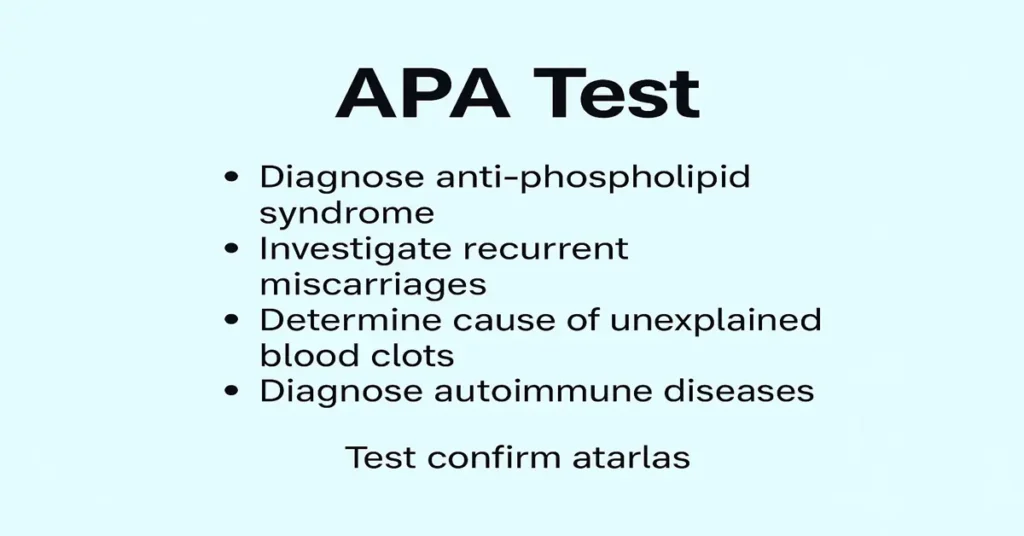
This test helps diagnose Anti-Phospholipid Syndrome (APS), a condition that causes recurrent blood clots, miscarriages, and other complications. It is also useful in evaluating people with autoimmune diseases like Systemic Lupus Erythematosus (SLE), or those who have unexplained pregnancy losses or strokes at a young age.
Purpose of the Test
Doctors recommend the Anti-Phospholipid Antibody Test in several situations, such as:
- To diagnose or confirm Anti-Phospholipid Syndrome (APS).
- To investigate repeated pregnancy losses or pregnancy-related complications such as pre-eclampsia or stillbirth.
- To find the cause of unexplained blood clots (deep vein thrombosis, pulmonary embolism, or stroke).
- To support the diagnosis of autoimmune diseases, especially lupus (SLE).
- To monitor treatment response in patients already diagnosed with APS or related disorders.
Where Anti-Phospholipid Antibodies Are Produced
These antibodies are produced by B-lymphocytes, a type of white blood cell that normally makes antibodies to fight infections.
However, in autoimmune disorders, the immune system malfunctions and begins to make antibodies against the body’s own tissues — in this case, phospholipids and phospholipid-binding proteins found in cell membranes and blood plasma.
This abnormal immune reaction can occur due to:
- Autoimmune diseases (like lupus or rheumatoid arthritis).
- Certain chronic infections (e.g., HIV, hepatitis C, syphilis).
- Medications or sometimes without any clear cause.
Main Functions and Importance
Normally, Anti-Phospholipid Antibodies (APA) should not exist in the body. When they appear, they have harmful effects, such as:
- Binding to phospholipids and related proteins in the blood vessel walls.
- Promoting abnormal clot formation (thrombosis) in veins and arteries.
- Causing pregnancy complications, including recurrent miscarriage, stillbirth, or pre-eclampsia.
- Acting as diagnostic markers for Anti-Phospholipid Syndrome (APS) and other autoimmune disorders.
Thus, this test plays a vital role in identifying the underlying cause of clotting disorders and preventing future complications.
Causes of Low Levels
Low or undetectable levels of Anti-Phospholipid Antibodies are normal and generally indicate a healthy immune system.
If previously high levels become low, it may be due to:
- Successful treatment of autoimmune disease or infection.
- Recovery from infection that temporarily triggered antibody production.
- Natural fluctuation in immune activity.
Symptoms of Low Levels
- Usually, there are no symptoms.
- Low levels simply indicate the absence of autoimmune activity related to Anti-Phospholipid Antibodies.
Causes of High Levels
High levels indicate an overactive or malfunctioning immune system. The main causes include:
- Anti-Phospholipid Syndrome (APS):
- The primary condition associated with these antibodies.
- It can exist alone (primary APS) or along with another autoimmune disease (secondary APS).
- Autoimmune Disorders:
- Especially Systemic Lupus Erythematosus (SLE) and Rheumatoid Arthritis.
- Chronic Infections:
- Such as HIV, hepatitis C, syphilis, or Lyme disease.
- Certain Medications:
- Hydralazine, phenytoin, chlorpromazine, and some antibiotics (like amoxicillin) may trigger temporary antibody formation.
- Cancer or Tumor Activity:
- Rarely, certain cancers may lead to increased antibody production.
- Post-Infection Immune Response:
- After viral or bacterial infections, transient antibodies may appear and disappear over time.
Symptoms of High Levels
High levels of Anti-Phospholipid Antibodies can cause abnormal blood clotting and pregnancy complications. Symptoms depend on the site of the clot or the body system involved:
- Deep vein thrombosis (DVT): Leg pain, redness, or swelling.
- Pulmonary embolism: Sudden shortness of breath or chest pain.
- Stroke or mini-stroke (TIA): Sudden weakness, vision changes, or speech difficulty.
- Recurrent pregnancy loss or stillbirth.
- Low platelet count (thrombocytopenia): Easy bruising or bleeding.
- Skin changes (Livedo reticularis): A lace-like, purplish skin pattern on arms or legs.
These symptoms indicate that blood flow is being disrupted by clots in blood vessels.
Reference Ranges
The reference values may differ slightly depending on the testing method and laboratory, but typically:
| Result | Interpretation |
|---|---|
| Negative: < 20 GPL/MPL units (IgG/IgM) | Normal – no significant antibody presence |
| Borderline: 20–40 GPL/MPL units | May indicate mild autoimmune activity – retest recommended |
| Positive: > 40 GPL/MPL units or > 99th percentile | Strongly supports APS or autoimmune disease |
| Persistent Positivity: Positive results on two or more occasions at least 12 weeks apart confirm chronic autoimmune antibody production. |
Sample Type and Collection
- Sample: Blood (serum)
- Tube: Serum Separator Tube (SST)
- Test Method: ELISA (Enzyme-Linked Immunosorbent Assay)
- Fasting: Not required unless tested with other fasting-related investigations.
Test Preparation
- No fasting or dietary restriction is required for this test.
- Inform your doctor about any ongoing medications, especially blood thinners (warfarin, heparin) or immunosuppressants, as they may affect the interpretation of results.
- If you have recently recovered from an infection, your doctor may suggest waiting a few weeks before testing to avoid false positives.
When to Consult a Doctor
You should consult a doctor, preferably a hematologist or rheumatologist, if you experience:
- Recurrent or unexplained blood clots.
- Miscarriages or pregnancy complications.
- Stroke or mini-stroke symptoms without known risk factors.
- Persistent low platelet count or skin discoloration.
- If you are already diagnosed with APS or lupus, and symptoms worsen despite treatment.
Early medical evaluation and proper management can prevent life-threatening complications such as stroke or pulmonary embolism.
Important Word Explanations
| Term | Meaning |
|---|---|
| Phospholipids | Fat molecules that form the main structure of cell membranes. |
| Autoantibodies | Antibodies that mistakenly attack the body’s own tissues. |
| Thrombosis | Formation of blood clots inside blood vessels. |
| Anti-Phospholipid Syndrome (APS) | Autoimmune disease causing recurrent clots and pregnancy losses. |
| B-Lymphocytes | Immune cells that produce antibodies. |
| ELISA | Laboratory technique used to detect antibodies in blood samples. |
| Livedo Reticularis | Purplish, net-like skin pattern seen in APS patients. |
~END~
Related Posts
None found