
Overview
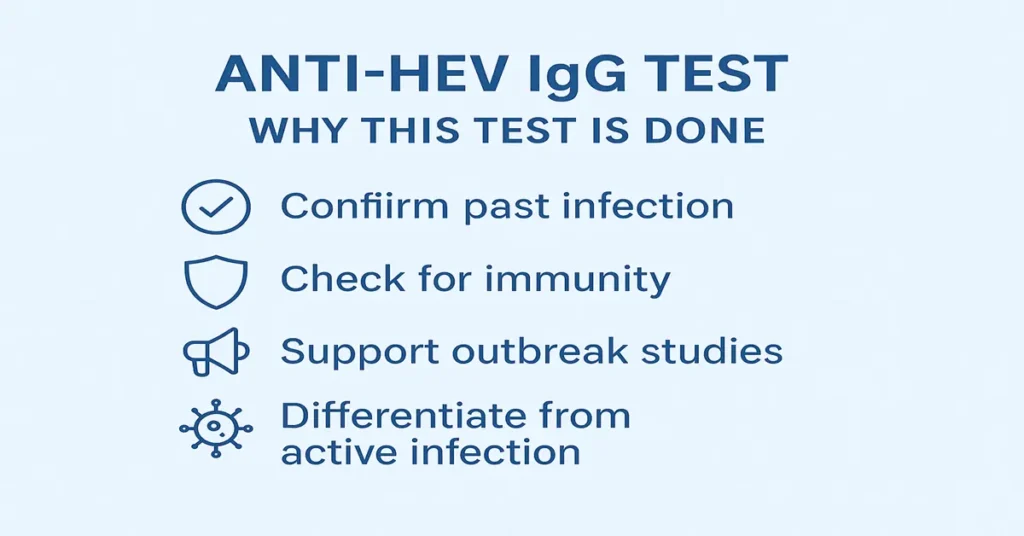
The Anti–Hepatitis E Virus Antibody Test (HEV IgG Test) is a blood test that detects IgG antibodies produced by the immune system after exposure to the Hepatitis E virus (HEV). These antibodies develop after the infection has resolved and generally indicate past infection and established immunity.
Hepatitis E is an acute viral illness that affects the liver and is commonly spread through contaminated water or food, particularly in areas with limited sanitation. In most individuals, the infection is self-limiting. This test is not meant to detect active disease; instead, it helps confirm whether a person has been infected in the past and has developed long-term immune protection.
What Is the Anti–Hepatitis E Virus (HEV IgG) Test?
The HEV IgG test measures Immunoglobulin G antibodies directed against the Hepatitis E virus. When a person is infected with HEV, the immune system produces antibodies in a predictable pattern. IgM antibodies appear first during the active phase of infection, while IgG antibodies appear later, usually after recovery.
The presence of IgG antibodies indicates previous exposure to the virus rather than a current infection. For clinicians, this distinction is important when evaluating liver-related symptoms, investigating unexplained hepatitis, or assessing immunity in individuals from endemic regions. When combined with HEV IgM testing, the test helps differentiate between recent and resolved infection.
Where Are HEV IgG Antibodies Produced?
HEV IgG antibodies are produced by B lymphocytes, which are immune cells responsible for antibody formation. Once the immune system recognizes components of the Hepatitis E virus, these cells are activated and begin producing antibodies.
This process primarily occurs within immune tissues such as the lymph nodes, spleen, and bone marrow. After the infection clears, memory B cells persist, allowing the immune system to respond quickly if the virus is encountered again. The continued presence of IgG antibodies in the blood reflects this immune memory.
Main Functions and Importance
The Anti–HEV IgG test does not identify an active infection. Its value lies in confirming past exposure and immunity. From a clinical standpoint, this information helps clarify whether a previous Hepatitis E infection explains current or past liver findings.
The test is also useful in public health and epidemiological studies, particularly in regions where Hepatitis E is common. By identifying who has already developed immunity, healthcare systems can better understand population-level exposure and risk. When interpreted alongside IgM results, the test supports accurate classification of infection timing.
Causes of Low or Negative Levels
Low or negative Anti–HEV IgG levels usually indicate that the person has not been exposed to the Hepatitis E virus and has not developed immunity. This may also occur if testing is performed very early, before IgG antibodies have had time to develop.
In individuals with weakened immune systems, antibody production may be reduced or delayed. These results are interpreted in relation to symptoms, exposure history, and other laboratory findings rather than in isolation.
Symptoms of Low Levels
Low or negative HEV IgG levels do not cause symptoms. They simply indicate a lack of detectable immunity. Clinically, this means the individual remains susceptible to infection if exposed to the virus, rather than suggesting illness.
Causes of High Anti–HEV IgG Levels
Positive or high Anti–HEV IgG levels indicate prior exposure to Hepatitis E with subsequent immune response. In most cases, this reflects complete recovery from a past infection and the presence of protective antibodies.
Occasionally, cross-reactivity with related viral antibodies may occur, but this is uncommon. Overall, a positive IgG result is generally considered a marker of resolved infection rather than active disease.
Symptoms of High Levels
Anti–HEV IgG antibodies themselves do not cause symptoms. When present, they reflect an earlier infection that has already resolved.
Some individuals may recall previous symptoms of hepatitis, such as fatigue, jaundice, or abdominal discomfort, which improved over time. If IgG is positive and IgM is negative, the infection is considered inactive, and recovery has already occurred.
Reference Ranges
HEV IgG results are typically reported as positive or negative rather than as numerical values.
A negative result indicates no detectable IgG antibodies and no evidence of past infection. A positive result indicates previous exposure and immunity. Terminology such as “reactive” or “non-reactive” may be used depending on the laboratory.
Sample Type and Test Method
The test is performed on a serum blood sample, usually collected in a plain or serum separator tube. Fasting is not required.
Laboratories commonly use immunoassay techniques such as ELISA or chemiluminescent assays to detect HEV IgG antibodies with good specificity.
Test Preparation
No special preparation is required. Patients should inform their doctor about recent viral illnesses or known exposures, as this can help with interpretation.
If there is concern about active Hepatitis E infection, clinicians often request additional tests, including HEV IgM antibodies and liver function tests, to provide a complete assessment.
When to Consult a Doctor
Medical evaluation is advised if symptoms suggestive of liver involvement occur, such as jaundice, dark urine, pale stools, persistent fatigue, or abdominal discomfort.
Doctors may also recommend HEV IgG testing in individuals with unexplained hepatitis, those who have traveled to endemic regions, or as part of population screening and public health assessments.
Important Word Explanations
- Hepatitis E Virus (HEV): A virus that causes acute liver infection, usually spread through contaminated food or water.
- Antibody (Ab): A protein produced by the immune system to recognize and respond to infections.
- IgG (Immunoglobulin G): A long-term antibody that indicates past infection or immunity.
- IgM (Immunoglobulin M): An early antibody that indicates recent or active infection.
- ELISA: A laboratory method used to detect specific antibodies in blood samples.
- Immunity: Protection against re-infection due to antibodies formed after recovery.
~END~
Related Posts
None found