
Overview
The Anti-HAV Antibody Test is a blood test used to detect antibodies produced by the immune system in response to infection with the Hepatitis A virus (HAV). Hepatitis A is an acute viral infection that affects the liver and is most commonly spread through contaminated food or water, or through close contact with an infected person.
In clinical settings, this test helps doctors understand whether a person is currently infected, was infected in the past, or is already protected against the virus. It is also widely used to assess immunity before or after vaccination.
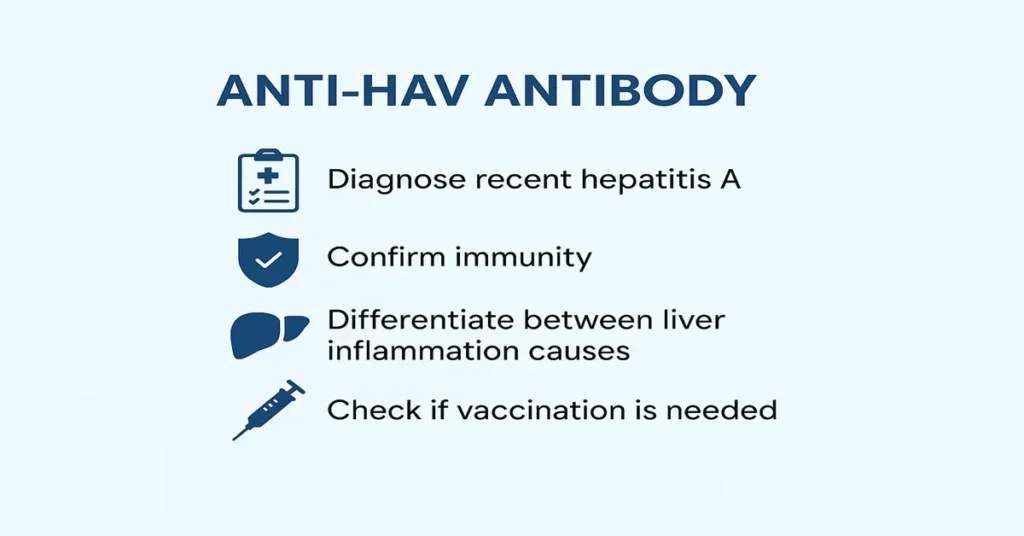
The Anti-HAV test is commonly used to:
- Identify a recent or ongoing Hepatitis A infection
- Confirm past infection or immunity
- Decide whether Hepatitis A vaccination is required
Two main antibody types are measured:
- IgM Anti-HAV, which appears early and signals a recent or active infection
- IgG Anti-HAV, which appears later and reflects past infection or long-term immunity
What Is the Anti-HAV Antibody Test?
The Anti-HAV Antibody Test measures immune proteins that specifically recognize the Hepatitis A virus. These antibodies are produced as part of the body’s natural defense response after exposure to the virus or following vaccination.
From a doctor’s perspective, the pattern of antibodies tells an important story. The presence of IgM suggests a recent immune response and points toward an active or very recent infection. IgG, on the other hand, indicates that the immune system has already encountered the virus in the past or has responded to vaccination, providing protection going forward.
This distinction allows clinicians to clarify whether symptoms are due to Hepatitis A, whether a patient is immune, or whether preventive vaccination should be considered.
Where Is It Produced in the Body?
Anti-HAV antibodies are produced by B lymphocytes, which are immune cells responsible for antibody formation. Once the Hepatitis A virus enters the body, the immune system recognizes it as foreign and activates these cells.
Antibody production mainly takes place in immune-related tissues such as the lymph nodes, spleen, and bone marrow. Detectable antibody levels usually begin to appear a few weeks after exposure, reflecting the timing of the immune response rather than the presence of the virus itself.
Main Functions and Importance
The Anti-HAV test is important both for diagnosis and for prevention planning.
From a clinical standpoint:
- IgM Anti-HAV helps confirm an acute or recent Hepatitis A infection and is particularly useful when symptoms of hepatitis are present.
- IgG Anti-HAV confirms immunity, either from past infection or successful vaccination, and usually remains detectable for life.
The test also helps distinguish Hepatitis A from other causes of liver inflammation, such as Hepatitis B, Hepatitis C, or non-infectious liver conditions. On a broader level, it plays a public health role by identifying individuals who are susceptible versus those who are already protected.
Causes of Low or Negative Levels
Low or negative Anti-HAV antibody levels usually indicate that there has been no prior exposure to the virus and no immunity has developed. This can also occur if testing is done very early, before the immune system has had time to produce detectable antibodies.
In some cases, reduced antibody levels may be seen in individuals with weakened immune responses. These results are interpreted alongside symptoms, exposure history, and liver enzyme findings.
Symptoms of Low Levels
Low or negative antibody levels themselves do not cause symptoms. They simply indicate the absence of detectable immunity. Clinically, this means the person remains susceptible to Hepatitis A if exposed, rather than indicating an illness.
Causes of High Levels
The significance of high Anti-HAV antibody levels depends on the antibody type detected.
- High IgM Anti-HAV reflects a recent or ongoing Hepatitis A infection and indicates an active immune response.
- High IgG Anti-HAV reflects past exposure or vaccination and confirms protective immunity rather than disease.
Understanding which antibody is elevated is essential for correct interpretation.
Symptoms of High Levels
Antibodies themselves do not cause symptoms. Any symptoms present are related to the infection phase rather than the antibody level.
When IgM Anti-HAV is present, patients may experience symptoms typical of acute hepatitis, such as fatigue, nausea, abdominal discomfort, or jaundice. When IgG Anti-HAV is present alone, there are no symptoms, as this simply reflects immunity.
Reference Ranges
Anti-HAV results are commonly reported as positive or negative for each antibody type rather than as numeric values.
- Negative Anti-HAV indicates no detectable antibodies
- Positive IgM Anti-HAV suggests recent or active infection
- Positive IgG Anti-HAV indicates past infection or immunity
Reference interpretation may vary slightly between laboratories, but results are always assessed together with clinical findings.
Sample Type and Test Method
The Anti-HAV test is performed on a serum blood sample, usually collected in a plain or serum separator tube. Fasting is not required.
Laboratories commonly use immunoassay-based methods such as ELISA or chemiluminescent assays to detect Anti-HAV antibodies with good accuracy and reliability.
Test Preparation
No special preparation is generally needed before testing. Patients should inform their doctor if they have recently received a Hepatitis A vaccine, as this can influence IgG results.
If symptoms suggest liver involvement, doctors often request this test along with liver function tests and other viral hepatitis markers to obtain a complete picture.
When to Consult a Doctor
Medical consultation is advised if symptoms such as jaundice, dark urine, pale stools, abdominal discomfort, persistent fatigue, nausea, or fever are present.
Doctors may also recommend Anti-HAV testing when liver enzymes are elevated, during outbreak investigations, before travel to high-risk areas, or when assessing immunity status prior to vaccination.
Important Word Explanations
- Antibody (Ab): A protein produced by the immune system to recognize and respond to infections.
- HAV (Hepatitis A Virus): A virus that causes acute infection of the liver.
- IgM: An early antibody type that signals recent infection.
- IgG: A long-lasting antibody type that indicates past infection or immunity.
- Jaundice: Yellowing of the skin and eyes due to liver dysfunction.
- Serum: The clear liquid part of blood used for many laboratory tests.
- ELISA: A laboratory method used to detect antibodies in blood samples.
~END~
Related Posts
None found