
Overview
The Anti-DNase B Antibody Test is a blood test used to detect antibodies produced by the immune system against an enzyme called deoxyribonuclease B (DNase B). This enzyme is released by Group A beta-hemolytic Streptococcus, the bacteria responsible for infections such as strep throat and certain skin infections, including impetigo.
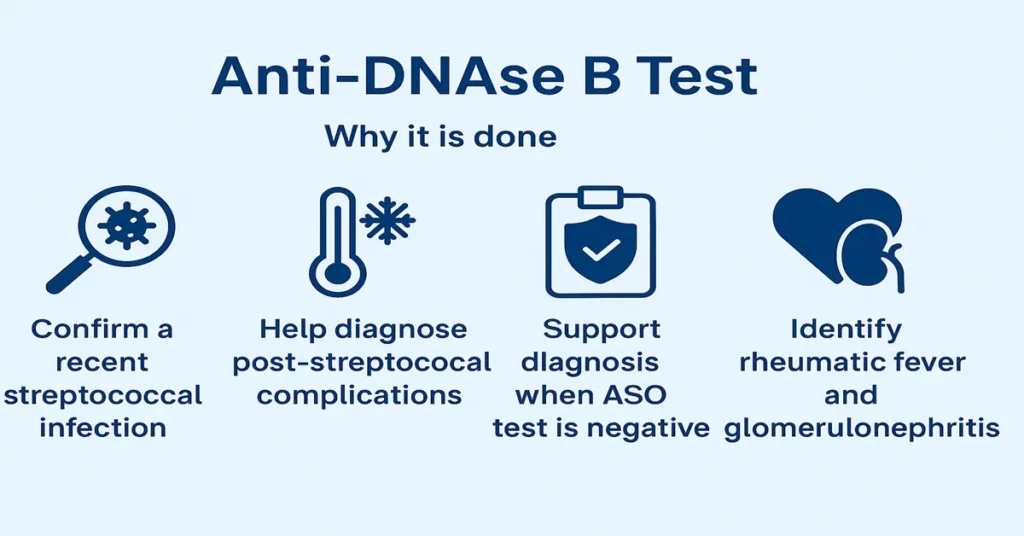
In clinical practice, this test is particularly useful when doctors need evidence of a recent or past streptococcal infection, especially after the initial infection has resolved. It is often requested when complications are suspected rather than active infection. These complications can include rheumatic fever, which may affect the heart and joints, and post-streptococcal glomerulonephritis, a condition involving kidney inflammation.
The Anti-DNase B test is frequently used alongside, or as a follow-up to, the ASO test, particularly when ASO results are negative but a streptococcal cause is still being considered.
What Is the Anti-DNase B Test?
The Anti-DNase B test measures antibodies directed against DNase B, one of the enzymes produced by Group A Streptococcus bacteria. When the body encounters this bacteria, the immune system responds by generating antibodies to help neutralize the bacterial products.
These antibodies do not disappear immediately once the infection clears. Instead, they can remain detectable in the blood for several weeks or even months. This makes the test especially valuable for identifying past streptococcal exposure, particularly when symptoms of the original infection are no longer present and direct tests such as throat swabs are no longer helpful.
Where Are Anti-DNase B Antibodies Produced?
Anti-DNase B antibodies are produced by B lymphocytes, which are immune cells responsible for antibody formation. Once the immune system recognizes DNase B released by streptococcal bacteria, these cells begin producing specific antibodies.
This immune activity occurs mainly within lymphoid tissues such as the lymph nodes and tonsils, as well as in the bone marrow. After production, the antibodies circulate in the bloodstream, where they can later be measured as evidence of a recent immune response to streptococcal infection.
Main Functions and Importance
Anti-DNase B antibodies do not have a role in normal body function once the infection has passed. Their importance is entirely diagnostic.
From a clinical perspective, the test helps confirm whether a streptococcal infection occurred in the recent past. This is especially important when patients present with symptoms suggestive of post-streptococcal complications rather than active infection. The test is commonly used to support the diagnosis of conditions such as rheumatic fever and post-streptococcal glomerulonephritis.
When interpreted together with the ASO test and clinical findings, Anti-DNase B testing improves confidence in identifying streptococcal-related immune complications.
Causes of Low or Negative Levels
Low or negative Anti-DNase B levels generally indicate that there has been no recent immune response to Group A Streptococcus. This may mean that no recent infection occurred, or that antibody levels have already declined over time.
In some cases, testing may be done very early, before antibody levels have risen to detectable levels. Mild infections may also produce a limited antibody response. These results are usually interpreted alongside timing of symptoms and other test findings.
Symptoms of Low Levels
Low or negative Anti-DNase B levels do not cause symptoms. They simply reflect the absence of detectable antibodies at the time of testing and are usually considered a reassuring or neutral finding.
Causes of High Anti-DNase B Levels
Elevated Anti-DNase B levels indicate a recent or ongoing immune response to a Group A Streptococcal infection. This does not necessarily mean that the infection is still active, but rather that exposure occurred within the recent past.
High levels are commonly seen following throat or skin infections and are particularly relevant when immune-mediated complications are suspected. Some individuals may also show elevated levels if they carry streptococcal bacteria without obvious symptoms.
Symptoms of High Levels
Anti-DNase B antibodies themselves do not cause symptoms. Any symptoms present are related to the prior infection or its complications.
Patients may recall a sore throat or skin infection several weeks earlier. Others may present with joint discomfort, fatigue, swelling, or urinary changes, reflecting post-streptococcal immune involvement. The antibody result helps clinicians link these later symptoms to a recent streptococcal exposure.
Reference Ranges
Reference ranges for Anti-DNase B vary by age and laboratory method. In general, values below the laboratory cutoff are considered normal, while higher values suggest recent or past streptococcal infection.
Because antibody levels rise and fall over time, interpretation is always based on clinical context, age, and comparison with other investigations such as ASO titers or urine tests.
Sample Type and Test Method
The Anti-DNase B test is performed on a blood sample, typically collected as serum using a plain or serum separator tube. Fasting is not required.
Laboratories commonly use nephelometry or ELISA-based methods to measure antibody concentrations. Results are reported in standardized units to allow comparison with reference ranges.
Test Preparation
No special preparation is usually needed before this test. Patients should inform their doctor about recent infections, antibiotic use, or the timing of symptoms, as this information helps guide interpretation.
If testing is performed very early after infection, repeat testing may be suggested after a short interval to assess changes in antibody levels.
When to Consult a Doctor
Medical review is recommended if symptoms such as joint pain, swelling, persistent fatigue, or urinary changes develop following a recent throat or skin infection. Features such as dark-colored urine, puffiness around the eyes, or chest discomfort may also prompt further evaluation.
In such cases, doctors may request Anti-DNase B testing along with other investigations to clarify whether a streptococcal infection has played a role in the current illness.
Important Word Explanations
- DNase B: An enzyme released by Group A Streptococcus bacteria.
- Antibody: A protein produced by the immune system in response to foreign substances.
- Group A Streptococcus: A type of bacteria that causes strep throat and certain skin infections.
- Rheumatic Fever: An immune-mediated condition that can follow a streptococcal infection.
- Post-Streptococcal Glomerulonephritis (PSGN): Kidney inflammation triggered by an immune response after strep infection.
- ASO Test: A blood test that detects antibodies against another streptococcal toxin.
- Serum: The clear liquid part of blood used for many laboratory tests.
~END~
Related Posts
None found