
Overview
The Androstenedione Test is a blood test that measures the level of androstenedione, a naturally occurring steroid hormone in the body. Androstenedione itself is not a primary sex hormone, but it acts as an important precursor that the body uses to produce testosterone and estrogen.
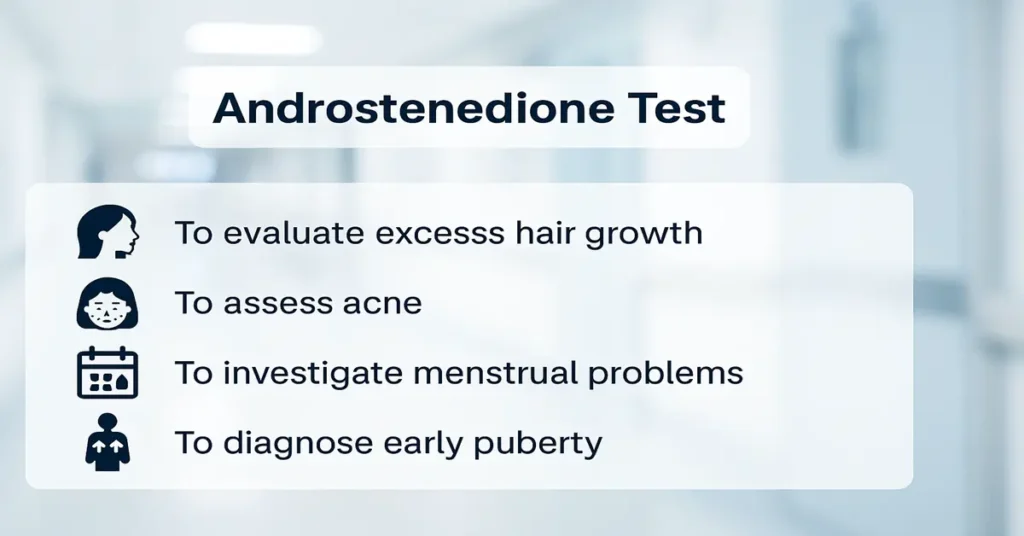
In clinical practice, this test is helpful when doctors are assessing hormonal balance. It is often considered when symptoms point toward excess or reduced androgen activity, such as changes in hair growth, acne, menstrual irregularities, fertility concerns, or variations in pubertal development. The result offers insight into how different hormone-producing organs are functioning together.
What is the Androstenedione Test?
The Androstenedione Test measures the amount of this hormone circulating in the blood at the time of testing. Because androstenedione sits upstream in the hormone production pathway, its level can reflect activity in more than one endocrine organ.
Doctors use this test to understand whether the balance between androgen and estrogen production is appropriate for a person’s age, sex, and clinical situation. It is rarely interpreted on its own and is usually considered alongside other hormone measurements.
Why the Test is Done
In everyday medical settings, the Androstenedione test is ordered to help clarify the cause of suspected hormonal imbalance. It can assist in evaluating conditions where androgen production appears altered, such as menstrual disturbances, infertility, or signs of early or delayed puberty.
The test may also help doctors decide whether excess hormone production is more likely coming from the adrenal glands or the gonads (ovaries or testes), which can guide further investigation.
Where is Androstenedione Produced in the Body?
Androstenedione is produced mainly by three hormone-producing organs. The adrenal glands, located above the kidneys, contribute a significant portion. In females, the ovaries also produce androstenedione and convert part of it into estrogen. In males, the testes convert it primarily into testosterone.
Production begins from cholesterol through a series of biochemical steps. Once formed, androstenedione either circulates in the bloodstream or is converted into other sex hormones depending on the body’s needs.
Main Functions and Importance of Androstenedione
Although androstenedione is not the most active hormone itself, it plays a key supporting role in hormone balance. It serves as a link between adrenal hormone production and sex hormone synthesis.
From a diagnostic perspective, its importance lies in what it reflects. Measuring androstenedione helps clinicians assess combined adrenal and gonadal activity and identify patterns that suggest the source of hormonal imbalance.
Causes of Low Androstenedione Levels
Low androstenedione levels act as a clinical signal that overall androgen production may be reduced. This can be seen when hormone-producing glands are underactive or when regulatory signals from the pituitary gland are insufficient.
Such findings are interpreted carefully and usually prompt doctors to look at related hormones to understand the broader endocrine picture.
Symptoms of Low Androstenedione
Low androstenedione itself does not cause symptoms. When symptoms are present, they are usually related to reduced downstream hormone effects, such as changes in energy levels, reproductive function, or pubertal development.
Clinicians correlate these findings with other hormone tests rather than relying on androstenedione alone.
Causes of High Androstenedione Levels
Elevated androstenedione suggests increased androgen production. This pattern may arise from altered adrenal or ovarian activity and is commonly evaluated in the context of conditions associated with excess androgens.
A high value signals the need for further assessment to determine the source and significance of the excess hormone production.
Symptoms of High Androstenedione
Androstenedione itself does not directly cause symptoms. Any symptoms that appear are due to increased conversion into active androgens or estrogens.
Depending on age and sex, this may be reflected as menstrual irregularity, skin changes, altered hair growth, or early pubertal signs. Doctors use the test result as one piece of evidence when evaluating these clinical features.
Reference Ranges
Normal androstenedione levels vary with age, sex, and stage of development. Adult reference ranges differ between males and females, and values in children change significantly with pubertal stage.
Because of this natural variation, results are always interpreted using the laboratory’s reference range and the individual’s clinical context rather than a single cutoff value.
Sample Type and Test Details
The Androstenedione Test is performed on a blood sample, usually collected as serum in a plain or serum separator tube. Fasting is generally not required unless the test is part of a broader hormone panel.
Samples can be collected at most times of the day, and analysis is performed using standardized laboratory methods designed for hormone measurement.
Test Preparation
In most cases, no special preparation is needed. Patients are advised to inform their doctor about any hormonal medications, contraceptives, or steroid use, as these can influence hormone levels and interpretation.
For women, the timing of the test within the menstrual cycle may sometimes be considered to improve clinical interpretation.
When to Consult a Doctor
Medical consultation is appropriate if there are ongoing concerns such as irregular menstrual cycles, difficulty conceiving, unexplained acne or hair changes, or unusual patterns of pubertal development.
In these situations, doctors may use the Androstenedione Test along with other hormone tests to better understand the underlying endocrine balance and plan further evaluation.
Important Word Explanations
- Androstenedione: A steroid hormone that serves as a precursor for testosterone and estrogen.
- Adrenal Glands: Small glands located above the kidneys that produce several important hormones.
- Precursor Hormone: A hormone that is converted into another, more active hormone.
- PCOS: A hormonal condition often associated with irregular periods and increased androgen levels.
- Congenital Adrenal Hyperplasia (CAH): A genetic condition affecting normal hormone production in the adrenal glands.
- Hirsutism: Excessive hair growth in women in a pattern more typical of male hormone influence.
~END~
Related Posts
None found