
Overview
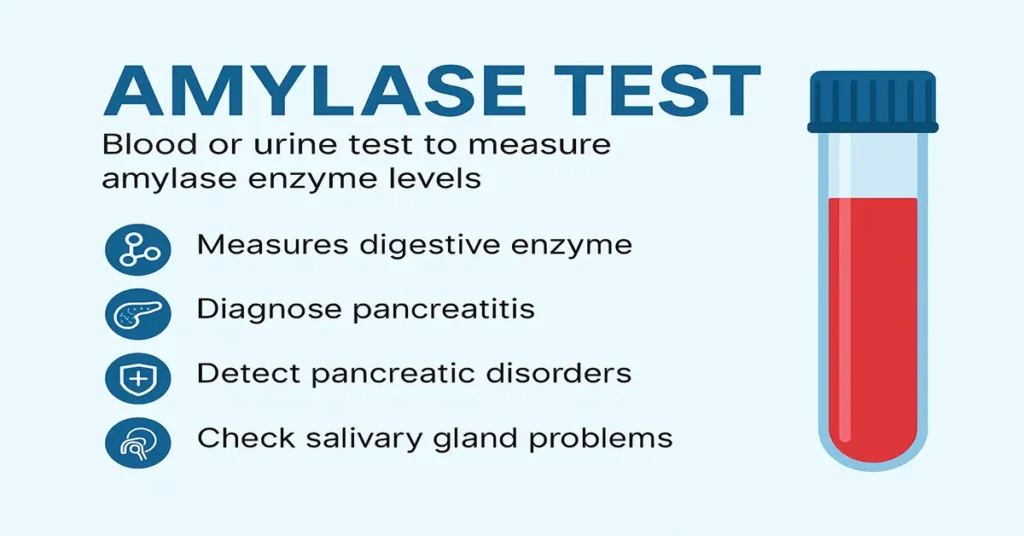
The Amylase Test is a laboratory investigation that measures the level of the amylase enzyme in blood or urine. Amylase is a digestive enzyme involved in breaking down starches into simpler sugars, such as glucose and maltose, which the body can absorb and use for energy.
From a clinical perspective, amylase is closely linked to the pancreas and salivary glands, the two main organs responsible for its production. Measuring its level helps doctors assess how these organs are functioning, especially when a patient presents with abdominal pain or digestive concerns.
In routine practice, this test is most often used to support the diagnosis or monitoring of pancreatitis and to look for conditions affecting the pancreas or salivary glands.
What is Amylase?
Amylase is an enzyme, not a hormone or a mineral. Its role is specific to digestion, particularly the breakdown of carbohydrates found in everyday foods like rice, bread, and potatoes.
Clinically, amylase exists in two main forms. One form is produced by the pancreas and released into the intestine to aid digestion. The other is produced by the salivary glands and begins the digestive process as soon as food is chewed. Both forms can be detected in the bloodstream, which is why amylase testing can reflect issues in more than one organ system.
Where is Amylase Produced in the Body?
The pancreas is the primary source of amylase measured in blood tests and is usually the main focus when levels are abnormal. The salivary glands also contribute significantly, particularly in conditions affecting the mouth or jaw region.
Smaller amounts of amylase may be produced in other tissues such as the lungs, fat tissue, and, in females, the fallopian tubes. In most cases, these minor sources are not clinically significant on their own but can add context when results do not fit a typical pancreatic pattern.
Main Functions and Importance
Amylase has a clear and practical role in digestion. It helps convert complex carbohydrates into simpler sugars that the intestines can absorb. Salivary amylase starts this process early, while pancreatic amylase continues it in the small intestine.
From a diagnostic viewpoint, amylase is valuable because changes in its level can reflect stress or injury to the pancreas. When a patient presents with acute abdominal pain, an elevated amylase level can act as an early signal that the pancreas may be involved. Doctors often consider this result alongside symptoms, physical findings, and other tests rather than in isolation.
Causes of Low Amylase Levels
Low amylase levels are less frequently encountered in daily practice and are usually interpreted in a broader clinical context. They may be seen when the pancreas has reduced enzyme-producing capacity, often due to long-standing or advanced disease.
Rather than being a diagnosis by itself, a low value serves as a clinical signal that encourages doctors to look at other pancreatic enzymes, imaging results, and the patient’s overall metabolic health.
Symptoms of Low Amylase Levels
Low amylase levels do not usually cause symptoms on their own. When symptoms are present, they are typically related to the underlying condition affecting digestion or metabolism rather than the enzyme level itself.
Doctors generally correlate a low amylase result with other laboratory findings and clinical features before drawing conclusions.
Causes of High Amylase Levels
Raised amylase levels are more commonly encountered and often point toward conditions involving the pancreas or salivary glands. In clinical settings, sudden elevations are frequently associated with pancreatic inflammation or obstruction, while moderate or persistent increases may reflect other abdominal or glandular conditions.
Kidney function also plays a role in clearing amylase from the body, so reduced clearance can influence blood levels. Because multiple conditions can affect amylase, doctors interpret elevated values carefully and in combination with other tests.
Symptoms of High Amylase Levels
Symptoms associated with high amylase depend largely on the underlying cause rather than the enzyme level itself. When the pancreas is involved, patients often report significant upper abdominal pain, nausea, or vomiting.
If the salivary glands are the source, swelling or discomfort near the jaw may be more prominent. From a clinical standpoint, the amylase result helps narrow down possibilities but does not replace a full evaluation.
Reference Ranges (Normal Values)
Amylase reference ranges differ depending on whether blood or urine is tested and on the laboratory method used. For blood tests, values within the stated reference range are generally considered normal, while markedly elevated levels raise suspicion of pancreatic involvement, especially when symptoms are present.
Urine amylase, often measured over 24 hours, can provide additional information in certain cases. Doctors always compare results with the reference range printed on the lab report and consider the patient’s clinical condition before making any interpretation.
Sample Type and Test Method
The Amylase Test can be performed on a blood sample or, in selected cases, on a 24-hour urine sample. Blood testing is more commonly used in acute settings, while urine testing may help in specific diagnostic situations.
Medication use and recent medical history can influence enzyme levels, so clinicians usually review these details when ordering or interpreting the test.
Why the Amylase Test is Important
In everyday clinical practice, the amylase test helps doctors quickly assess whether the pancreas may be contributing to a patient’s symptoms. It is particularly useful in the early evaluation of acute abdominal pain and in monitoring known pancreatic conditions.
The test also aids in identifying non-pancreatic causes, such as salivary gland involvement, when the clinical picture does not fit a typical pancreatic pattern. For this reason, it is often paired with other enzyme tests to improve diagnostic clarity.
Treatment and Follow-up
Amylase levels themselves are not treated. Instead, doctors focus on identifying and managing the underlying condition responsible for the abnormal result. As the clinical issue resolves, amylase levels often return toward the reference range.
Follow-up testing may be advised to monitor trends rather than relying on a single value, especially in patients with known pancreatic or digestive disorders.
Test Preparation
In most cases, no special preparation such as fasting is required before an amylase test. Certain medications and recent alcohol intake can influence enzyme levels, so doctors may advise temporary adjustments before testing when appropriate.
For urine testing, accurate collection over the advised period is essential to obtain reliable results.
When to Consult a Doctor
Medical review is important if a person experiences persistent or severe abdominal pain, repeated vomiting, fever, or unexplained digestive symptoms. Swelling near the jaw or neck may also warrant evaluation.
Individuals with a history of pancreatic disease, gallstones, or metabolic disorders should seek medical advice if new or worsening symptoms appear.
Important Word Explanations
- Enzyme: A protein that helps speed up chemical reactions in the body.
- Pancreatitis: Inflammation of the pancreas, which can be acute or chronic.
- Malabsorption: Reduced ability of the intestines to absorb nutrients from food.
- Jaundice: Yellowing of the skin and eyes due to bile or liver-related issues.
- U/L: Units per liter, the standard measurement used for enzyme levels in blood.
~END~