
Overview
The Ammonia Test is a blood test used to measure the level of ammonia (NH₃) circulating in the body. Ammonia is produced naturally when proteins are broken down during normal metabolism. Under usual conditions, the liver quickly converts ammonia into urea, which is then eliminated from the body through the kidneys in urine.
When this detoxification process is impaired, ammonia can accumulate in the bloodstream. Because ammonia is particularly harmful to brain cells, rising levels may affect mental alertness and behavior. For this reason, clinicians often use the ammonia test as part of the evaluation of liver function and unexplained neurological changes.
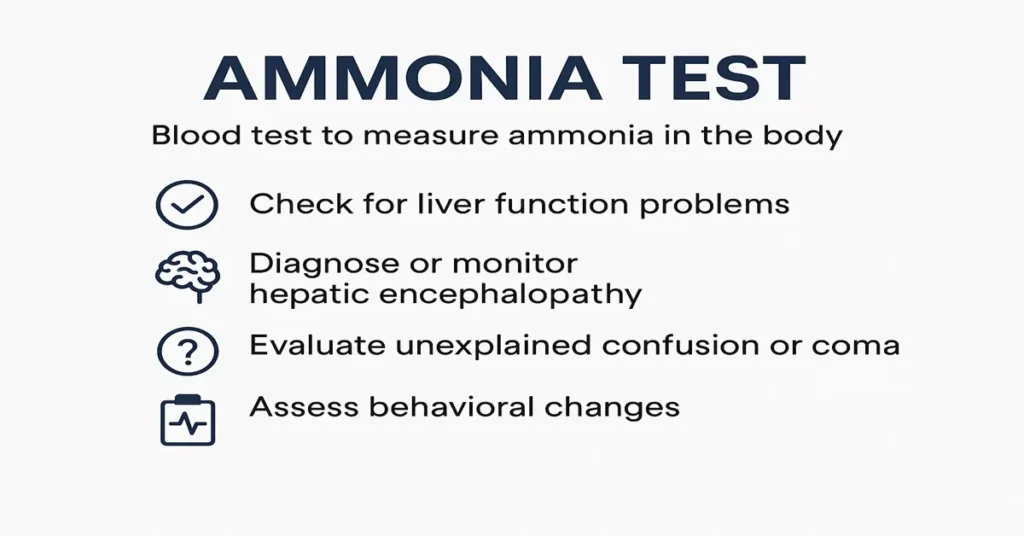
In everyday hospital practice, this test is most commonly ordered to assess liver-related conditions, to help identify hepatic encephalopathy, or to investigate sudden confusion, drowsiness, or altered consciousness.
What is Ammonia?
Ammonia (NH₃) is a chemical waste product generated during the digestion and metabolism of proteins. It is not useful to the body and is potentially toxic if allowed to remain in circulation.
In healthy individuals, ammonia follows a well-controlled pathway. The liver converts ammonia into urea through a series of enzymatic steps, after which urea is transported to the kidneys and excreted in urine. When this pathway is disrupted, ammonia levels may rise, a state referred to clinically as hyperammonemia.
Where is Ammonia Produced in the Body?
Ammonia is formed continuously in the body as part of normal metabolic activity. The intestines are a major source, where gut bacteria release ammonia during protein digestion. Muscles also generate small amounts during protein turnover, and the kidneys play a role in ammonia handling as part of acid–base balance.
Once produced, ammonia enters the bloodstream and is carried to the liver for conversion into urea. Any disruption along this route—production, transport, or conversion—can influence blood ammonia levels.
Main Functions and Importance
Ammonia itself has no physiological function. Its importance lies in how efficiently the body can neutralize and eliminate it. The liver’s ability to convert ammonia into urea is a critical protective mechanism for the brain.
Measuring ammonia levels provides useful clinical insight when liver function is compromised or when neurological symptoms appear without a clear cause. The test helps clinicians understand whether ammonia accumulation may be contributing to a patient’s condition.
Causes of Low Ammonia Levels
Low ammonia levels are uncommon and generally not considered clinically significant. They may be observed in situations such as reduced protein intake, certain medication effects, or during recovery phases of liver-related illness.
Because ammonia is a waste product, low values are usually interpreted as a normal or reassuring finding rather than a problem that requires attention.
Symptoms of Low Ammonia Levels
Low ammonia levels do not cause symptoms. They are typically viewed as a normal laboratory finding and do not affect bodily function.
Causes of High Ammonia Levels (Hyperammonemia)
High ammonia levels reflect either increased production or reduced clearance. In clinical practice, this most often points toward impaired liver function, where ammonia is not efficiently converted into urea.
Other contributing situations may include inherited metabolic conditions affecting the urea cycle, severe infections or trauma, gastrointestinal bleeding, or reduced kidney clearance. Certain medications can also influence ammonia metabolism. Rather than focusing on a single cause, clinicians interpret elevated ammonia as a signal to evaluate liver health and related metabolic pathways.
Symptoms of High Ammonia Levels
When ammonia accumulates, the brain is usually affected first. Changes may range from mild difficulty concentrating to more obvious alterations in behavior or alertness. In more advanced cases, speech changes, tremors, or reduced consciousness may be observed.
In infants and children, elevated ammonia can present differently, sometimes with feeding difficulties, lethargy, or developmental concerns. Because these features are not specific to ammonia alone, laboratory confirmation plays an essential role in assessment.
Reference Ranges (Normal Values)
Normal ammonia levels vary by age and laboratory method. In adults, values typically fall within a defined reference range, while infants and children may have slightly higher acceptable levels.
Significantly elevated results raise concern for liver dysfunction or metabolic disorders, particularly when accompanied by neurological symptoms. As with all laboratory tests, results should be interpreted using the reference range provided by the testing laboratory and the patient’s clinical context.
Sample Type and Handling
The Ammonia Test is performed on a blood sample, usually drawn from a vein in the arm. From a laboratory standpoint, ammonia measurement is highly sensitive to collection and handling conditions.
Because ammonia levels can change rapidly after blood is drawn, strict handling protocols are followed to preserve accuracy. Proper technique during collection and prompt processing are essential to ensure reliable results.
Why the Ammonia Test is Important
The ammonia test is an important tool in evaluating liver function and related neurological symptoms. It helps clinicians identify hepatic encephalopathy and assess the severity of liver-related metabolic disturbance.
In pediatric settings, it can also support the evaluation of suspected metabolic disorders. The test is often ordered alongside other liver-related investigations to provide a more complete clinical picture.
Test Preparation
Preparation for an ammonia test may vary depending on the clinical situation. In some cases, fasting may be advised. Physical exertion, smoking, and certain medications can influence results, so clinicians usually review these factors before testing.
Following collection instructions carefully helps ensure that the reported value accurately reflects the patient’s metabolic state.
Treatment for High Ammonia Levels
Management of elevated ammonia levels is guided by the underlying cause rather than the test result alone. In clinical practice, treatment decisions are individualized and based on liver function, metabolic findings, and the patient’s overall condition.
From a laboratory perspective, ammonia testing is used to monitor trends and support clinical decision-making rather than to direct specific therapies on its own.
When to Consult a Doctor
Medical attention is important if a person develops unexplained confusion, marked drowsiness, changes in behavior, or reduced alertness. Symptoms such as tremors, slurred speech, or jaundice also warrant evaluation.
Individuals with known liver disease are often advised to seek prompt medical review if mental or neurological changes occur, as ammonia levels may need reassessment.
Important Word Explanations
- Ammonia (NH₃): A toxic waste product formed during protein metabolism.
- Urea: A non-toxic compound produced by the liver to safely remove ammonia from the body.
- Hepatic encephalopathy: Brain dysfunction associated with impaired liver function and elevated ammonia.
- Hyperammonemia: Abnormally high levels of ammonia in the blood.
- Cirrhosis: Long-term scarring and damage of the liver that affects its normal function.
~END~