
ALT (SGPT) Test: Meaning, Normal Range, High & Low Levels, Causes, Symptoms, and Complete Medical Guide
What Is ALT (SGPT)?
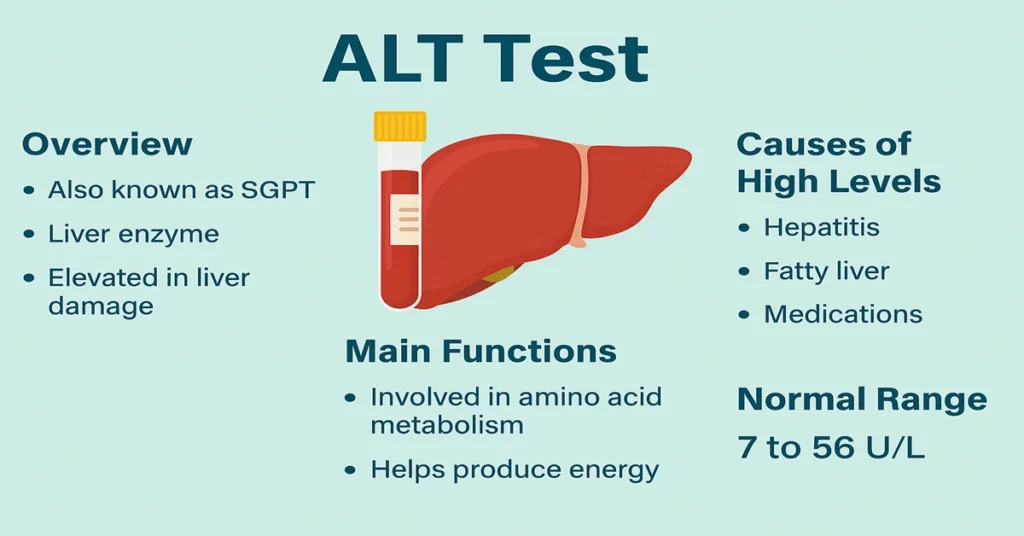
ALT stands for Alanine Aminotransferase, also known as SGPT (Serum Glutamic-Pyruvic Transaminase). It is an enzyme that normally remains inside liver cells and plays a role in routine metabolic activity. In healthy conditions, only very small amounts of ALT are found in the bloodstream.
When liver cells are stressed, inflamed, or damaged, ALT leaks out into the blood. Because this release happens early in liver injury, ALT is often one of the first laboratory signals that something may be affecting the liver. For this reason, it is widely used in routine health checks, liver evaluations, and medication monitoring.
Although ALT can be detected in a few other organs, the liver is by far the main source. This makes ALT one of the most liver-specific enzymes used in everyday clinical practice.
Where Is ALT Produced in the Body?
ALT is produced predominantly in hepatocytes, the main working cells of the liver. These cells contain high concentrations of ALT because of their role in metabolism.
Smaller amounts of ALT are also present in:
- Kidneys
- Heart muscle
- Skeletal muscles
However, ALT released from these tissues is usually minimal. This is why an elevated ALT level is most often interpreted as a liver-related finding, especially when other liver tests show similar changes.
Main Functions and Importance of ALT
ALT has an internal role inside cells, but its clinical value lies mainly in what it tells doctors about liver health.
Helps in Protein Metabolism
ALT assists in converting the amino acid alanine into substances that enter energy-producing pathways. This process supports normal cellular metabolism and energy balance.
Why ALT Testing Is Clinically Important
ALT is highly sensitive to liver cell injury. Even mild irritation or inflammation of liver cells can cause measurable increases in blood levels. Because of this sensitivity, ALT is commonly used to:
- Detect early liver injury before symptoms appear
- Monitor known liver conditions over time
- Assess the liver’s response to medications
- Support diagnosis when imaging or symptoms suggest liver involvement
Doctors usually interpret ALT alongside other enzymes, particularly AST, to better understand the pattern and likely source of injury.
Causes of Low ALT Levels
Low ALT levels are uncommon and, in most cases, not clinically concerning. They often reflect normal variation rather than disease.
Possible Reasons for Low ALT
- Reduced enzyme activity due to vitamin B6 availability
- Advanced liver disease where very few functioning liver cells remain
- Individual biological variation
On its own, a low ALT value rarely requires further evaluation unless other tests or symptoms suggest serious liver dysfunction.
Symptoms of Low ALT
Low ALT does not cause symptoms by itself. If it occurs in advanced liver disease, symptoms relate to liver failure rather than the ALT level itself and usually appear alongside multiple abnormal findings.
Causes of High ALT Levels
High ALT levels usually indicate liver cell injury. When liver cells are disturbed, ALT escapes into the bloodstream, raising its level.
Liver-Related Patterns
ALT commonly rises with inflammation of the liver, whether due to infection, metabolic stress, immune-related processes, or toxins. Fat accumulation within liver cells can also irritate tissue and raise ALT gradually.
Alcohol-Related Liver Stress
Alcohol can injure liver cells and raise ALT, although in long-standing alcohol-related injury, AST is often higher than ALT.
Progressive Liver Damage
In long-term liver disease, ALT may be elevated during active injury phases and may later decline if healthy liver tissue becomes significantly reduced.
Non-Liver Contributions
Certain medications, toxins, and severe muscle injury can mildly raise ALT, but these increases are usually smaller compared to liver-related elevations.
Because ALT is liver-focused, persistent elevation usually prompts closer evaluation of liver health.
Symptoms of High ALT
ALT itself does not cause symptoms. Any symptoms come from the underlying liver condition responsible for the enzyme rise.
When liver involvement is significant, people may notice changes such as yellowing of the eyes or skin, dark urine, pale stools, loss of appetite, nausea, abdominal discomfort on the right side, or persistent fatigue. These features help guide doctors toward further testing and imaging.
ALT Reference Range
Reference ranges vary slightly between laboratories, but commonly used values include:
- ALT Normal Range: approximately 7 – 56 U/L
ALT is considered more liver-specific than AST, which is why it carries particular weight in liver evaluations.
Sample Type and Collection
- Sample Type: Serum
- Tube Used: Red-top (plain) tube
A blood sample is taken from a vein, allowed to clot, and processed for enzyme measurement.
Test Preparation
ALT testing is straightforward for most people.
Fasting is usually not required unless the test is part of a broader liver or metabolic panel. Alcohol intake and recent heavy physical exertion can temporarily influence ALT levels, so these factors are considered during interpretation.
Current medications and supplements are also reviewed, as some can affect liver enzyme results.
When to Consult a Doctor
Medical consultation is advised if ALT remains elevated on repeated testing or if it is accompanied by symptoms such as jaundice, unexplained fatigue, abdominal discomfort, or abnormal findings on imaging studies.
Early evaluation helps identify whether liver changes are mild and reversible or part of a more significant process requiring closer monitoring.
Important Word Explanations
- Liver Enzymes: Proteins released into the blood when liver cells are stressed or damaged.
- Jaundice: Yellowing of the eyes or skin due to bilirubin buildup.
- Cirrhosis: Long-term liver scarring that affects normal function.
- Fatty Liver: Excess fat accumulation within liver cells.
- Hepatitis: Inflammation of the liver from various causes.
- SGPT: Another name for ALT.
~END~
This piece of writing offers clear idea for the new visitors of blogging, that
in fact how to do running a blog.