
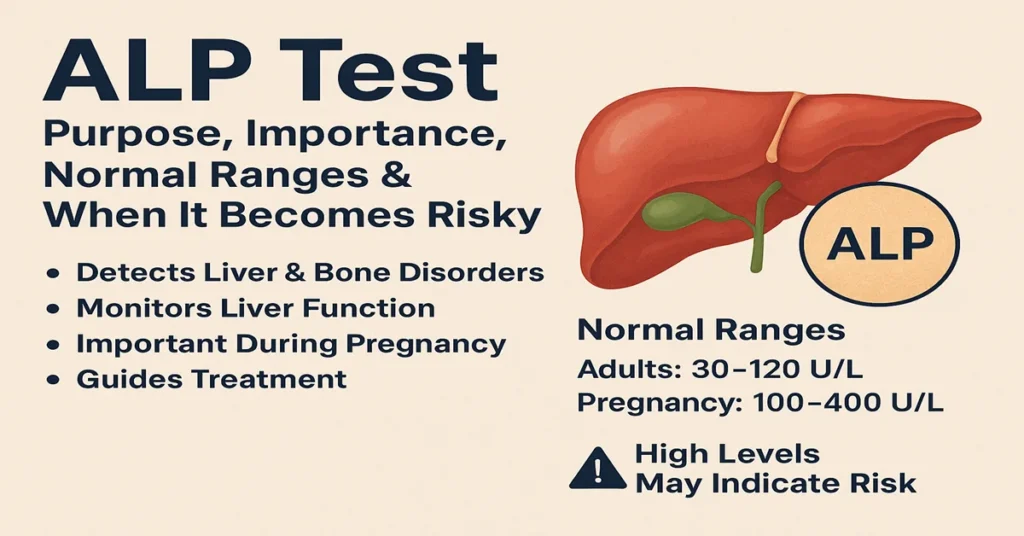
ALP Test: Purpose, Importance, Normal Ranges & When It Becomes Risky
What Is the ALP Test?
The ALP test measures the level of Alkaline Phosphatase, an enzyme mainly produced by the liver and bones. Smaller amounts also come from the intestines, kidneys, and—during pregnancy—the placenta.
In day-to-day lab practice, ALP gives doctors an idea about bile flow from the liver and bone activity.
Because this enzyme comes from more than one organ, a change in ALP does not point to a single problem. Clinically, this is where doctors pause and look at the full picture—symptoms, other blood tests, age, and medical history—before drawing conclusions.
ALP is usually included in a Liver Function Test (LFT), but it is also ordered separately when bone or bile duct problems are suspected.
Purpose of the ALP Test
To Detect Liver and Bile Duct Disorders
ALP rises when bile flow is reduced or blocked. This is commonly seen in conditions affecting the bile ducts or liver drainage system.
In routine practice, ALP is often the earliest enzyme to rise in bile duct obstruction, sometimes even before jaundice appears.
It helps doctors evaluate situations such as bile duct blockage, gallstones, liver inflammation, fatty liver disease, liver infections, and certain autoimmune bile duct disorders.
To Check Bone Health
Bone cells release ALP during bone formation and repair. Because of this, the test is useful in assessing bone-related activity such as vitamin D deficiency, weak or soft bones, fracture healing, or abnormal bone turnover.
Children and teenagers normally have higher ALP levels because their bones are actively growing. This is considered physiological, not abnormal.
To Monitor Fatty Liver Disease
In both non-alcoholic and alcohol-related fatty liver disease, ALP may rise when inflammation or bile flow disturbance develops. Doctors often follow ALP along with other liver enzymes to see whether the liver is improving or under stress.
To Evaluate Digestive and Absorption Issues
Certain intestinal or absorption problems can mildly influence ALP levels. In such cases, ALP acts as a supportive marker rather than a primary diagnostic test.
To Assess Pregnancy-Related Changes
During the second and third trimester of pregnancy, ALP increases due to placental production. This rise is expected and usually harmless.
However, unusually high values—especially with itching or jaundice—may prompt further evaluation.
To Monitor Medication Effects
Some medicines affect liver or bone metabolism. ALP helps doctors detect early stress caused by long-term or high-risk medications so adjustments can be made safely.
Why Is the ALP Test Important?
Early Detection of Bile Flow Problems
ALP is very sensitive to bile duct blockage. A rising ALP often alerts doctors before serious liver damage develops.
Identification of Bone Disorders
When bone activity is abnormal—either too fast or too weak—ALP levels change accordingly. This makes it useful in assessing bone metabolism.
Better Interpretation of Liver Inflammation
ALP is interpreted together with ALT, AST, GGT, and bilirubin. This combination helps doctors understand whether the issue is liver cell damage, bile blockage, or both.
Value During Pregnancy and Childhood
Age- and condition-specific interpretation of ALP helps avoid unnecessary concern in pregnancy and growing children.
Normal Ranges of ALP
ALP reference ranges vary with age and physiology. Slight differences between laboratories are common.
Adult Men
45–115 U/L
Adult Women
30–100 U/L
Women usually have slightly lower values due to hormonal and bone-mass differences.
Children (3–18 years)
100–350 U/L
Higher levels are normal because of active bone growth.
Toddlers (1–3 years)
150–420 U/L
Newborns
100–400 U/L
Levels are higher due to rapid bone and metabolic activity.
Pregnancy
ALP rises naturally in the second and third trimester because of placental contribution.
Values may reach 100–400 U/L or slightly higher. Persistent or very high levels need correlation with symptoms and other tests.
Symptoms Linked to Abnormal ALP Levels
ALP itself does not cause symptoms. Any symptoms come from the underlying condition.
Liver-related symptoms may include yellowing of eyes or skin, itching, dark urine, pale stools, right-sided abdominal discomfort, nausea, or loss of appetite.
Bone-related symptoms may include bone pain, joint discomfort, weakness, frequent fractures, or delayed healing.
Low ALP, when clinically relevant, may be associated with fatigue, muscle weakness, bone weakness, poor immunity, or brittle nails.
When Do ALP Levels Become Risky?
ALP becomes concerning when it is persistently elevated or rises sharply.
Values more than two to three times the normal range suggest significant liver or bone stress and require evaluation.
Very high levels, often above 400–500 U/L, may be seen in severe bile duct blockage, active liver inflammation, significant bone disease, or structural problems such as cysts or tumors.
High ALP with jaundice strongly points toward bile duct obstruction.
High ALP with bone pain suggests bone metabolism problems, often related to vitamin D deficiency.
During pregnancy, very high ALP with symptoms needs prompt medical review.
Tests Commonly Done Along With ALP
To understand the source of ALP elevation, doctors often correlate it with ALT, AST, GGT, bilirubin, calcium, vitamin D, and parathyroid hormone levels.
Imaging studies like ultrasound, bone X-ray, or DEXA scan may be advised if required.
Test Preparation
No fasting is required. Avoid alcohol for at least 48 hours, stay well hydrated, and avoid very heavy exercise before testing. Inform your doctor about all medications. These steps help prevent misleading results.
When to Consult a Doctor
Medical advice is important if ALP remains high on repeat tests, if jaundice or abdominal pain appears, if there is bone pain or frequent fractures, if ALP is abnormal during pregnancy, or if you have known liver, thyroid, or metabolic conditions.
Important Word Explanations
ALP (Alkaline Phosphatase): Enzyme mainly from liver and bones
Bile duct: Channel that carries bile from liver to intestine
Cholestasis: Reduced or blocked bile flow
Osteomalacia: Bone weakness due to vitamin D deficiency
Paget’s disease: Disorder causing abnormal bone remodeling
LFT: Liver Function Test panel
Metabolic bone disease: Conditions affecting bone strength
People Also Ask
Is a high ALP result always serious?
No. Mild or temporary elevations are common and often harmless.
Can ALP be high without liver disease?
Yes. Bone growth, healing fractures, or vitamin D deficiency can raise ALP.
Can ALP levels change temporarily?
Yes. Pregnancy, recent illness, bone healing, or medication effects can cause short-term changes.
When do doctors usually worry about ALP?
When levels stay high over time, rise sharply, or appear with symptoms like jaundice or bone pain.
Is repeat testing common for ALP?
Yes. Doctors often repeat the test to see if the change is persistent or resolving.
Can ALP return to normal on its own?
In many cases, yes—once the underlying liver or bone stress improves.
~END~
The way you explained high and low levels, causes, and when to see a doctor was so practical. This is my go-to resource now.