
Alkaline Phosphatase (ALP) Test: Meaning, Normal Range, High & Low Levels, Causes, Symptoms, and Complete Medical Guide
Introduction
The Alkaline Phosphatase (ALP) test is a commonly requested blood test used to assess the health of organs where ALP activity is highest—mainly the liver, bile ducts, and bones. In routine practice, ALP helps doctors identify whether a problem is more likely related to liver function, bile flow, or bone activity.
ALP levels can change quietly, often before clear symptoms appear. Because of this, the test is frequently included in health checkups and liver function panels. Understanding what ALP represents helps patients make sense of their reports without unnecessary worry.
What Is ALP?
Alkaline Phosphatase (ALP) is an enzyme that supports several normal processes in the body. Enzymes act as facilitators, allowing chemical reactions to occur efficiently. ALP is particularly active in tissues involved in growth, repair, and transport processes.
In everyday laboratory interpretation, ALP is mainly viewed as a marker, not because it causes disease, but because changes in its level reflect how certain organs are functioning. When ALP moves outside the usual range, doctors consider whether the liver, bile ducts, or bones are under stress.
Where Is ALP Produced in the Body?
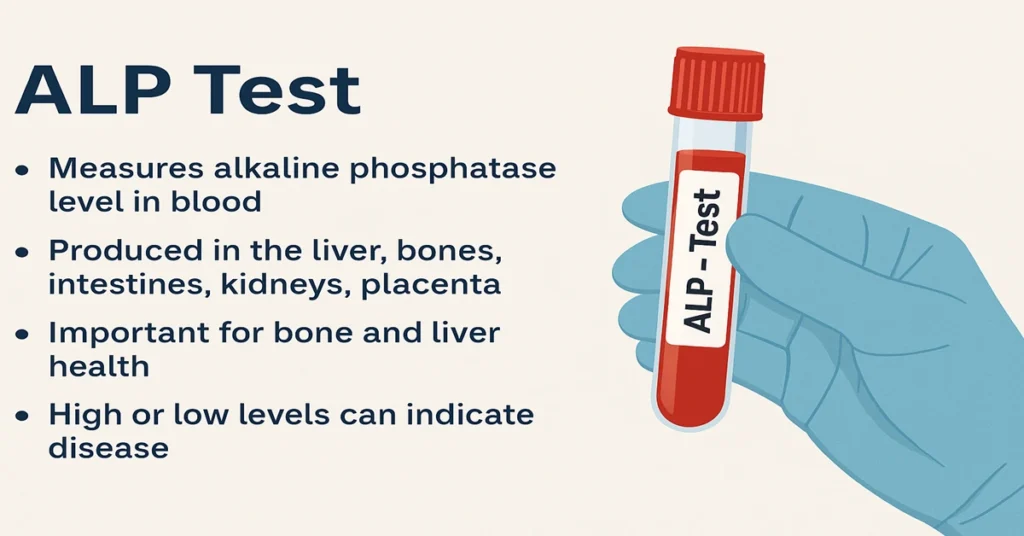
ALP is produced in multiple tissues, though the contribution from each source differs.
Main Sources of ALP
The liver contributes a significant portion of circulating ALP, especially from cells lining the bile ducts. Any disruption to bile flow tends to increase ALP levels.
Bones are another major source. Bone-forming cells release ALP during normal growth and repair, which explains why children and adolescents naturally have higher values.
Other Sources
Smaller amounts of ALP come from the intestines, kidneys, and the placenta during pregnancy. These sources usually contribute modestly and are considered during interpretation when relevant.
Types of ALP
From a diagnostic perspective, ALP can originate from different tissues. When levels are abnormal, doctors often use supporting tests to determine whether the source is liver-related or bone-related, rather than relying on ALP alone.
Main Functions and Importance of ALP
ALP plays supportive roles inside the body, but its clinical importance lies in what it tells doctors about organ activity.
Protein and Metabolic Support
ALP participates in reactions linked to protein processing and general metabolic balance.
Bone Activity Indicator
In bones, ALP reflects osteoblastic activity. Higher levels may simply indicate active bone formation, especially in growing individuals.
Bile Flow and Liver Monitoring
Within the liver and bile ducts, ALP rises when bile movement is impaired. This makes it particularly helpful in detecting bile duct–related conditions.
Why Doctors Check ALP
ALP is useful as an initial signal. When abnormal, it guides further testing to pinpoint whether the issue lies in the liver, bile ducts, or bones.
Causes of Low ALP Levels
Low ALP levels are less frequently encountered and are usually identified incidentally during routine testing.
In clinical settings, reduced ALP may reflect lowered enzyme production or reduced metabolic activity rather than direct organ injury. Doctors look at the broader clinical picture before drawing conclusions.
Symptoms of Low ALP
Low ALP itself does not produce symptoms. Any symptoms present are typically due to the underlying condition affecting metabolism or bone health, rather than the enzyme level alone.
Causes of High ALP Levels
High ALP levels are more common and usually prompt doctors to determine the source.
Liver and Bile-Related Patterns
When bile flow is slowed or obstructed, ALP rises because bile duct cells release more enzyme into the blood.
Bone-Related Patterns
Increased bone turnover—whether due to growth, healing, or disease—can also raise ALP.
Physiological Situations
Certain life stages, such as growth periods in children or pregnancy, naturally show higher ALP levels without indicating disease.
Because ALP comes from multiple tissues, interpretation always involves correlation with other tests.
Symptoms of High ALP
ALP elevation does not cause symptoms directly. Symptoms depend on the underlying condition.
When liver or bile duct involvement is present, people may notice changes such as jaundice or itching. When bone activity is the source, discomfort or structural changes may be reported. These patterns help doctors decide the next steps in evaluation.
Reference Range (Normal Values)
ALP reference ranges vary with age and laboratory method.
In adults, values typically fall within a defined range, while children and adolescents normally have higher levels due to active bone growth. Mild elevations during pregnancy are also expected.
Doctors interpret ALP alongside age, clinical findings, and other laboratory results.
Sample Type and Collection
The ALP test requires a standard blood sample.
Details
- Sample Type: Serum
- Tube Used: Red-top (plain) tube
The sample is collected from a vein and processed in the laboratory without delay.
Test Preparation
Most individuals do not require special preparation for ALP testing.
If the test is part of a broader liver panel, short fasting may be advised. Recent alcohol intake, medications, and supplements are considered during result interpretation, as they can influence enzyme levels.
When to Consult a Doctor
Medical consultation is recommended if ALP levels remain abnormal on repeat testing or if they are accompanied by symptoms such as jaundice, persistent bone pain, unexplained fatigue, or digestive discomfort.
Early evaluation helps clarify whether the change is temporary, physiological, or related to an underlying condition that needs monitoring.
Important Word Explanations
- Enzyme: A protein that speeds up chemical reactions in the body.
- Bile Ducts: Channels that transport bile from the liver to the intestine.
- Osteoblasts: Bone-forming cells responsible for bone growth and repair.
- Hypophosphatasia: A rare inherited condition associated with very low ALP.
- Paget’s Disease: A disorder involving abnormal bone remodeling.
- Serum: The liquid portion of blood after clotting.
~END~