
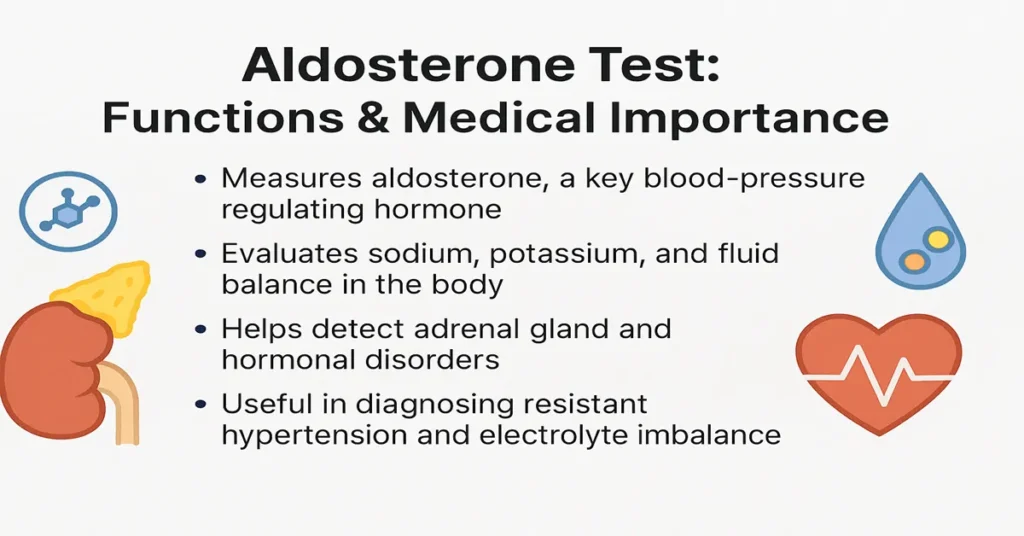
What Is Aldosterone Test
Why This Test Is Done
The aldosterone test is a blood or urine test used to measure the level of aldosterone, a hormone produced by the adrenal glands. In day-to-day clinical practice, this test is most often ordered to understand the cause of unexplained or difficult-to-control high blood pressure, abnormal potassium levels, or suspected adrenal gland problems.
Doctors usually think about this test when blood pressure starts at a young age, remains high despite multiple medications, or when blood tests repeatedly show low potassium without a clear explanation. Clinically, this is the point where doctors pause and consider whether the problem is not just “regular” hypertension, but something hormonal driving it.
Very often, the aldosterone test is done along with a renin test. Looking at both together helps doctors understand how the body is regulating salt, water, and blood pressure. This combined approach is important because aldosterone problems can easily be missed if only routine tests are done.
Biological Role and Functions of Aldosterone
Aldosterone plays a key role in maintaining the body’s internal balance. Its main action is on the kidneys, where it controls how much sodium is retained, how much water follows that sodium, and how much potassium is excreted in urine. When aldosterone levels rise, sodium and water are conserved, potassium is lost, and blood pressure tends to increase.
This hormone is part of the renin-angiotensin-aldosterone system, a tightly regulated system that responds to changes in blood pressure, blood volume, and salt levels. For example, when the body senses low blood pressure or dehydration, aldosterone secretion increases to restore balance.
Aldosterone also affects acid-base balance by influencing hydrogen ion excretion in the kidneys. While this role is less obvious, it becomes clinically relevant when aldosterone levels are significantly abnormal. Even mild disturbances in this hormone can affect the heart, muscles, and kidneys over time.
Medical Importance of Measuring This Parameter
Measuring aldosterone is medically important because abnormal levels can quietly cause long-term damage if not detected early. Excess aldosterone can lead to persistent high blood pressure, low potassium levels, and progressive strain on the heart and kidneys. On the other hand, low aldosterone levels may result in low blood pressure, dehydration, weakness, and electrolyte imbalance.
One of the most practical uses of this test is distinguishing essential hypertension from secondary hypertension caused by hormonal imbalance. This distinction matters because hormone-related blood pressure problems often need specific treatment approaches rather than standard medications alone.
From routine lab experience, identifying aldosterone imbalance early often explains why a patient’s blood pressure or potassium levels have been difficult to control for years. Proper testing can change the entire direction of management.
Conditions Diagnosed Using This Test
The aldosterone test helps in diagnosing several clinically important conditions. A common one is primary hyperaldosteronism, where the adrenal glands produce excess aldosterone independently. This is often related to adrenal nodules or adrenal gland enlargement.
The test is also useful in secondary hyperaldosteronism, where aldosterone increases as a response to other conditions such as kidney artery narrowing, chronic kidney disease, heart failure, or liver disease. In these cases, the adrenal glands are responding to signals rather than acting on their own.
Low aldosterone levels may suggest adrenal insufficiency, including conditions like Addison’s disease. In such situations, the body struggles to maintain normal salt and fluid balance, leading to fatigue, low blood pressure, and electrolyte abnormalities.
Clinically, the test is also valuable when potassium levels remain abnormal despite standard treatment and common causes have already been excluded.
Limitations of the Test
Although very useful, the aldosterone test has limitations. Aldosterone levels can vary with posture, time of day, salt intake, stress, and hydration status. This means test conditions matter a lot, and results must always be interpreted carefully.
Medications are another major factor. Blood pressure drugs, diuretics, and hormone-related medicines can significantly influence aldosterone levels. In routine practice, doctors often adjust medications before testing, but this is not always possible for every patient.
A single aldosterone value rarely gives the full answer. Most diagnoses require correlation with renin levels, electrolytes, clinical symptoms, and sometimes additional confirmatory tests. This is why the test should never be viewed in isolation.
Additional Information
The aldosterone test is usually part of a broader evaluation rather than a standalone investigation. The aldosterone-to-renin ratio is especially helpful for screening hormone-related causes of blood pressure disorders.
Reference ranges can differ between laboratories, sample types, and testing protocols. Mild abnormalities may not always indicate disease, especially if symptoms are absent. Clinical correlation remains essential.
When interpreted correctly, aldosterone testing can prevent years of ineffective treatment and reduce long-term complications affecting the heart and kidneys.
Test Preparation
Proper preparation improves the accuracy of aldosterone testing. Patients are often advised to maintain a normal salt intake for a few days before the test, as extreme salt restriction or excess can distort results.
Certain medications may need adjustment under medical supervision. Patients should never stop prescribed medicines without consulting their doctor.
Posture before sample collection is also important. Some tests require the patient to rest lying down, while others require standing for a fixed period. Following laboratory instructions carefully helps ensure meaningful results.
When to See a Doctor
A doctor should be consulted if blood pressure remains high despite treatment, especially when it starts early in life. Repeated low potassium levels, unexplained fatigue, muscle weakness, or frequent urination also deserve evaluation.
People with a family history of adrenal or hormonal disorders should seek medical advice if symptoms appear. Early assessment allows targeted treatment and helps prevent long-term complications.
Sample Type
The aldosterone test is most commonly performed using a blood sample drawn from a vein in the arm. In some cases, a 24-hour urine sample is collected to assess aldosterone production over time. The choice depends on clinical suspicion and doctor preference.
Important Word Explanations
Aldosterone: A hormone produced by the adrenal glands that regulates sodium, potassium, and blood pressure.
Adrenal Glands: Small glands located above the kidneys that produce several essential hormones.
Renin: An enzyme involved in regulating blood pressure and fluid balance.
Hyperaldosteronism: A condition marked by excessive aldosterone production.
Electrolytes: Minerals such as sodium and potassium essential for normal nerve, muscle, and heart function.
People Also Ask
Is an abnormal aldosterone result always serious?
Not always. Mild changes can be temporary or related to test conditions, but persistent abnormalities need evaluation.
Can aldosterone levels change on their own?
Yes. Levels can vary with posture, salt intake, stress, and medications.
Does a normal aldosterone level rule out hormonal problems?
No. Doctors usually assess aldosterone together with renin and electrolytes.
When do doctors usually worry about aldosterone results?
When results match symptoms like difficult-to-control blood pressure or abnormal potassium levels.
Is repeat testing common for aldosterone?
Yes. Repeat or confirmatory testing is often needed to be sure of the diagnosis.
Why is renin tested along with aldosterone?
Because the relationship between the two helps identify whether the problem is hormonal, kidney-related, or secondary to another condition.
~END~