
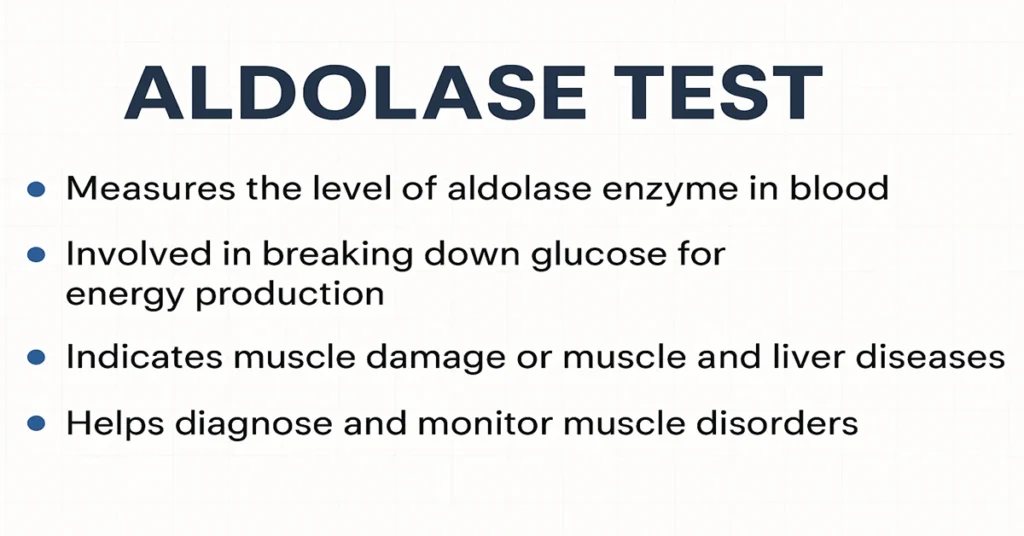
What is the Aldolase Test?
The Aldolase Test is a blood test that measures the level of aldolase, an enzyme involved in the body’s energy-producing processes. Aldolase plays a key role in breaking down glucose so that cells—especially muscle cells—can generate energy.
Clinically, this test is mainly used to assess muscle injury or inflammation. Because aldolase is also present in liver tissue, the test can sometimes support the evaluation of liver-related conditions as well. When muscle or liver cells are damaged, aldolase leaks into the bloodstream, leading to increased blood levels.
Where is Aldolase Produced in the Body?
Aldolase is naturally present in several tissues, with the highest concentration found in:
- Skeletal muscles (primary source)
- Liver cells
- Heart muscle
- Brain tissue (small amounts)
Under normal conditions, only a small amount of aldolase circulates in the blood. Injury, inflammation, or breakdown of these tissues allows more enzyme to enter the bloodstream, which is what the test detects.
Main Functions and Importance of Aldolase
1. Role in Energy Production
Aldolase is an essential enzyme in glycolysis, the metabolic pathway that converts glucose into usable cellular energy. This function is particularly important in muscle cells, which have high energy demands.
2. Importance of the Aldolase Test
From a clinical perspective, aldolase testing helps doctors:
- Evaluate suspected muscle diseases
- Support the assessment of muscle inflammation or degeneration
- Detect muscle-related causes of weakness
- Assist in identifying liver cell injury when interpreted with other tests
In some muscle conditions, aldolase levels may rise early, sometimes before significant weakness becomes obvious on examination.
Causes of Low Aldolase Levels
Low aldolase levels are uncommon and are usually seen in long-standing or advanced conditions rather than acute illness.
Situations associated with low aldolase activity include:
- Advanced muscle degeneration, where functional muscle tissue is largely replaced
- Severe liver failure, with reduced enzyme production
- Chronic malnutrition, affecting overall protein synthesis
Symptoms of Low Aldolase
Low aldolase itself does not cause symptoms. When present, it usually reflects underlying conditions that may be associated with:
- Progressive muscle weakness or loss of muscle mass
- Fatigue related to chronic illness
- Clinical features of advanced liver disease
Causes of High Aldolase Levels
Elevated aldolase levels usually indicate recent or ongoing muscle or liver cell injury.
Common clinical associations include:
Muscle Disorders
Inflammatory or degenerative muscle conditions can release aldolase into the blood, particularly when muscle fibers are actively damaged.
Muscle Injury or Overuse
Trauma, intense physical activity, or muscle strain may cause temporary increases due to muscle fiber breakdown.
Liver Diseases
Inflammatory or structural liver disorders may raise aldolase levels as damaged liver cells release enzymes.
Heart Conditions
Damage to heart muscle may cause mild elevations, reflecting muscle injury rather than a heart-specific process.
Certain Cancers
Rarely, tumors involving muscle or liver tissue may be associated with increased aldolase levels.
Symptoms of High Aldolase
Aldolase elevation itself does not produce symptoms. Any clinical features arise from the underlying condition.
Muscle-related features may include:
- Muscle pain or tenderness
- Stiffness or swelling
- Gradual or sudden muscle weakness
- Fatigue with minimal exertion
Liver-related features may include:
- Yellowing of skin or eyes
- Dark urine or pale stools
- Abdominal discomfort
- General fatigue or nausea
Reference Range
Reference ranges may vary slightly by laboratory and testing method.
- Adults: 1.0 – 7.5 U/L
- Children: May be slightly higher due to normal muscle growth
Values above the reference range suggest possible muscle or liver involvement and should be interpreted alongside other laboratory and clinical findings.
Sample Type and Handling
- Sample Type: Serum
- Collection Tube: Plain red-top or serum separator tube (SST)
- Fasting: Not usually required
- Handling: Serum should be separated promptly after clotting to maintain accuracy
How the Aldolase Test is Performed
A blood sample is drawn from a vein, typically from the arm. After clotting, the serum is separated and analyzed in the laboratory.
Aldolase activity is measured using standardized biochemical methods, and results are reported in Units per Liter (U/L).
Interpreting Aldolase Test Results
- Normal aldolase: No significant muscle or liver enzyme leakage
- Mildly elevated aldolase: May reflect recent muscle activity, injury, or mild inflammation
- Markedly elevated aldolase: Suggests active muscle or liver cell damage
- Low aldolase: May be seen in advanced tissue loss or reduced enzyme production
Doctors often interpret aldolase together with related tests such as creatine kinase (CK) or liver enzymes for a more complete picture.
Test Preparation
No special preparation is usually required.
To avoid temporary elevations:
- Intense physical activity before testing is best avoided
- Inform your doctor about medications that may affect muscle enzymes
For follow-up or monitoring, testing at the same laboratory helps maintain consistency.
When to Consult a Doctor
Medical evaluation is advised if you experience:
- Persistent muscle weakness, pain, or stiffness
- Difficulty walking, climbing stairs, or lifting objects
- Ongoing fatigue without a clear cause
- Yellowing of skin or eyes, or dark urine
Your doctor may use the aldolase test along with other investigations to identify the underlying cause.
Important Word Explanations
- Enzyme: A protein that speeds up chemical reactions in the body
- Aldolase: An enzyme involved in glucose breakdown for energy
- Glycolysis: The metabolic process that converts glucose into cellular energy
- Muscular Dystrophy: A genetic condition causing progressive muscle weakness
- Polymyositis: An inflammatory muscle disorder
- Serum: The clear liquid portion of blood used for many laboratory tests
~END~