
Introduction
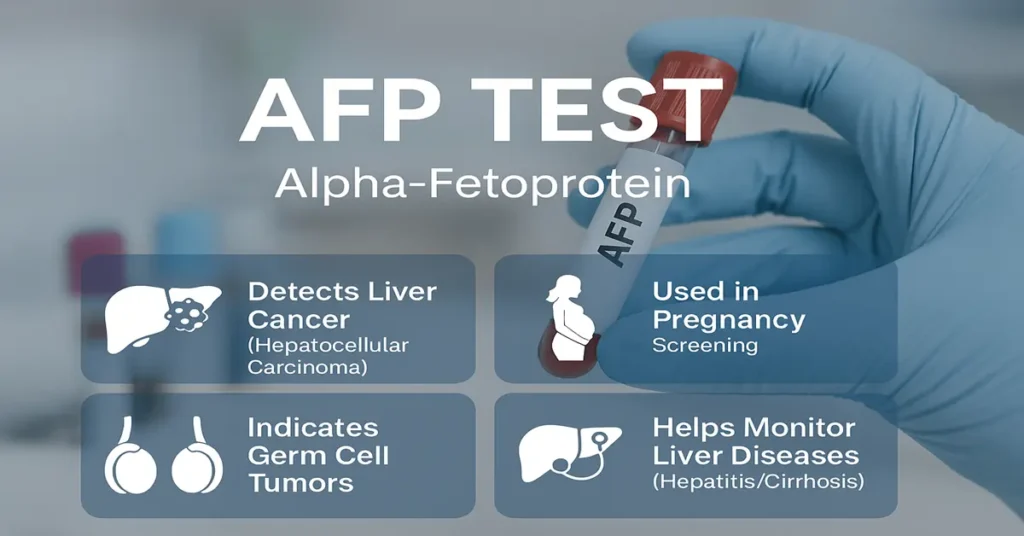
Alpha-Fetoprotein (AFP) is a protein that plays an essential role during fetal development and later becomes clinically significant as a diagnostic marker in adults. In medical practice, AFP testing is most commonly associated with the evaluation of liver cancer, certain germ cell tumors, and prenatal screening during pregnancy.
The AFP test helps doctors assess liver activity, monitor specific tumors, and identify potential fetal developmental concerns. Importantly, AFP results are never interpreted in isolation. They are always reviewed alongside clinical findings, imaging studies, and, when relevant, pregnancy details.
What is AFP (Alpha-Fetoprotein)?
AFP (Alpha-Fetoprotein) is a protein produced in large amounts by the developing fetus, mainly by the fetal liver and yolk sac. After birth, AFP levels fall rapidly and remain very low in healthy adults.
In adults, AFP may reappear in measurable amounts when certain cells—particularly liver cells—undergo abnormal regeneration or malignant transformation. This phenomenon, often referred to as re-expression, explains why AFP is widely used as a tumor marker, especially in liver-related conditions.
Clinical Importance
AFP testing is clinically useful for:
- Supporting diagnosis and monitoring of hepatocellular carcinoma (HCC)
- Detecting and following certain germ cell tumors of the testes and ovaries
- Prenatal screening to assess the risk of specific fetal abnormalities during pregnancy
Where is AFP Produced in the Body?
In Fetuses
During fetal development, AFP is produced primarily by:
- The fetal liver
- The yolk sac
AFP circulates in the fetal bloodstream and crosses into the mother’s blood in small amounts. This transfer allows AFP to be measured in maternal serum during pregnancy.
In Adults
In healthy adults, AFP production is minimal. Detectable AFP levels in adulthood are most often linked to:
- Liver cancer or marked liver cell injury
- Germ cell tumors of the testis or ovary
- Certain chronic, non-cancerous liver conditions such as hepatitis or cirrhosis
Functions and Importance of AFP
In the Fetus
AFP functions similarly to albumin in adults. It helps:
- Maintain fluid balance within the fetal circulation
- Transport substances such as fatty acids, hormones, and bilirubin
- Support nutrient exchange between mother and fetus
In Adults (Clinical Importance)
Although AFP has no known physiological role in healthy adults, it carries significant diagnostic value.
Tumor Marker
AFP is strongly associated with hepatocellular carcinoma and selected germ cell tumors. Serial AFP measurements are often used to assess disease activity, treatment response, and possible recurrence.
Liver Disease Indicator
AFP may rise moderately in chronic liver conditions such as hepatitis or cirrhosis due to ongoing liver cell regeneration, even in the absence of cancer.
Prenatal Screening Tool
During pregnancy, AFP testing contributes to screening programs that assess the risk of:
- Neural tube defects
- Certain chromosomal abnormalities
- Multiple pregnancies or gestational age discrepancies
Causes of Low AFP Levels
During Pregnancy
Lower-than-expected maternal AFP levels may raise suspicion for:
- Chromosomal conditions such as Trisomy 21 (Down syndrome)
- Trisomy 18 (Edwards syndrome)
- Incorrect estimation of gestational age
These findings usually prompt further evaluation rather than immediate conclusions.
In Non-Pregnant Adults
Low AFP levels in adults are normal and generally have no clinical significance.
Symptoms of Low AFP
Low AFP levels do not cause symptoms.
In pregnancy, low AFP is not a symptom but a laboratory signal that may lead to additional imaging or diagnostic tests to better understand fetal development.
Causes of High AFP Levels
Cancer-Related Causes
AFP can be significantly elevated in:
- Hepatocellular carcinoma (most characteristic association)
- Non-seminomatous testicular germ cell tumors
- Certain ovarian germ cell tumors
- Cancers that involve the liver secondarily
Non-Cancerous (Benign) Causes
Moderate AFP elevations may also be seen in:
- Chronic hepatitis B or C
- Liver cirrhosis
- Pregnancy (physiological increase)
- Newborns, where AFP is naturally high and gradually declines
During Pregnancy
High maternal AFP levels may signal:
- Neural tube defects
- Multiple gestation
- Abdominal wall defects in the fetus
Such findings always require confirmation with ultrasound and other prenatal assessments.
Symptoms of High AFP Levels
AFP itself does not produce symptoms. Any symptoms arise from the underlying condition.
When related to liver disease or cancer, symptoms may include:
- Abdominal discomfort or swelling
- Jaundice
- Reduced appetite or unexplained weight loss
- Fatigue
During pregnancy, abnormal AFP levels do not cause symptoms but may indicate developmental concerns identified through further testing.
Reference Ranges (Normal AFP Levels)
- Adults (non-pregnant):
Typically < 10 ng/mL (some laboratories use < 20 ng/mL) - Pregnancy:
Values vary with gestational age, peaking around 15–20 weeks and interpreted accordingly - Chronic liver disease with very high levels:
Markedly elevated AFP values, especially > 400 ng/mL, are considered highly suggestive of hepatocellular carcinoma when supported by clinical findings
Reference ranges may differ slightly between laboratories.
Sample Type and Collection
- Sample Type: Blood (serum)
- Tube Used: Red-top (plain) tube
- Test Type: Routine blood test
- Fasting: Usually not required
Test Preparation
No specific preparation is needed before AFP testing.
It is important to inform the doctor if you are pregnant or have a known liver condition, as these factors significantly influence result interpretation. Accurate gestational age is essential when AFP is measured during pregnancy.
When to Consult a Doctor
Medical consultation is recommended if:
- You have chronic liver disease such as hepatitis or cirrhosis
- You experience symptoms like jaundice, abdominal swelling, or unexplained weight loss
- You are pregnant and AFP screening results are outside the expected range
- You have a personal or family history of liver or germ cell tumors
AFP testing is most valuable when used as part of regular monitoring and early evaluation in at-risk individuals.
Important Word Explanations
- AFP (Alpha-Fetoprotein): A protein produced by the fetal liver, used as a tumor and prenatal marker
- Tumor Marker: A substance measured in blood to support cancer detection or monitoring
- Hepatocellular Carcinoma (HCC): The most common primary cancer of the liver
- Neural Tube Defects: Birth defects involving the brain or spinal cord
- Trisomy 21 / 18: Chromosomal conditions known as Down syndrome and Edwards syndrome
- Cirrhosis: Long-term liver damage leading to scarring
- Amniocentesis: A diagnostic test analyzing amniotic fluid to assess fetal health
~END~
Related Posts
None found