
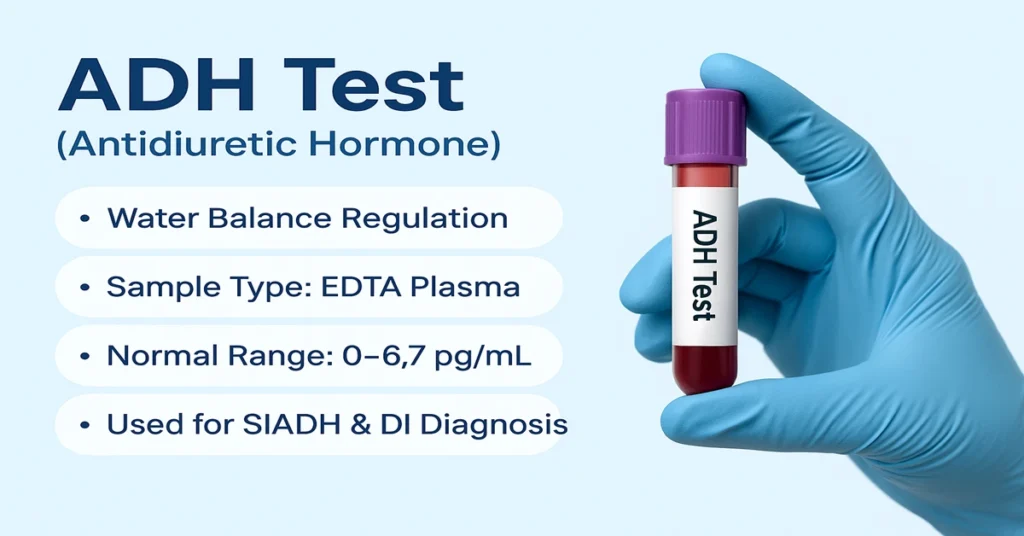
What is ADH (Antidiuretic Hormone)?
ADH, or Antidiuretic Hormone, also known as vasopressin, is a hormone that plays a central role in regulating the body’s water balance. Its primary function is to control how much water the kidneys conserve and how much is passed out as urine. By doing so, ADH helps maintain stable blood volume, proper hydration, and normal blood pressure.
The ADH test measures the level of this hormone in the blood. Clinically, it is used when doctors are evaluating unexplained dehydration, excessive urination, fluid retention, or abnormal sodium levels. The test is never interpreted in isolation and is always assessed alongside other laboratory and clinical findings.
Where is ADH Produced in the Body?
ADH is produced in the hypothalamus, a small but vital region of the brain responsible for regulating many essential body functions.
More specifically:
- ADH is synthesized in the supraoptic and paraventricular nuclei of the hypothalamus.
- After synthesis, it is transported and stored in the posterior pituitary gland, from where it is released into the bloodstream when needed.
This tightly regulated system allows the body to respond quickly to changes in hydration, blood volume, and blood pressure.
Main Functions and Importance of ADH
ADH has several interconnected roles that help maintain internal balance:
1. Regulates Water Balance
ADH acts on the kidneys, particularly the collecting ducts, increasing water reabsorption. This reduces urine volume and helps prevent excessive water loss when the body is dehydrated.
2. Maintains Blood Pressure
In situations such as dehydration or blood loss, ADH can cause mild narrowing of blood vessels. This effect supports blood pressure stability when circulating volume is reduced.
3. Controls Urine Concentration
When ADH levels are higher, urine becomes more concentrated and darker. When ADH levels fall, the kidneys release more water, producing dilute, pale urine.
4. Balances Electrolytes
By regulating water retention, ADH indirectly influences electrolyte concentration—especially sodium—helping maintain a healthy balance between fluids inside and outside the body’s cells.
Causes of Low ADH Levels
Low ADH activity leads to reduced water reabsorption by the kidneys and increased urine output. This pattern is commonly associated with diabetes insipidus, a condition involving impaired water regulation.
Situations linked with low ADH activity include:
- Reduced production of ADH by the hypothalamus or pituitary
- Reduced kidney response to circulating ADH
- Structural injury affecting ADH regulation
- Rare inherited disorders affecting hormone synthesis
- Suppression of ADH release due to excessive water intake
Symptoms of Low ADH Levels
Low ADH levels do not cause symptoms directly, but the resulting water imbalance may lead to recognizable clinical features such as:
- Passing unusually large volumes of dilute urine
- Persistent or intense thirst
- Signs of dehydration, including dry mouth or fatigue
- Elevated blood sodium levels due to water loss
These symptoms often prompt further evaluation of fluid balance and kidney function.
Causes of High ADH Levels
Excess ADH leads to increased water retention and reduced urine output. This pattern is commonly associated with conditions that disrupt normal hormone regulation.
Situations linked with elevated ADH include:
- Inappropriate or excessive hormone release
- Stress, pain, or recent surgery
- Certain tumors capable of producing ADH
- Effects of specific medications
- Severe infections or physical trauma
In these settings, water retention rather than fluid loss becomes the primary concern.
Symptoms of High ADH Levels
Symptoms related to high ADH levels arise mainly from water overload and dilution of sodium, not from the hormone itself. These may include:
- Reduced urine output
- Fluid retention or swelling
- Headache, confusion, or altered alertness
- Nausea or vomiting
In more severe cases, neurological symptoms can occur due to low sodium levels.
Reference Ranges
Plasma ADH levels vary depending on hydration status and laboratory methods.
Under normal resting conditions, ADH levels usually remain within a low reference range. During dehydration, stress, or illness, levels may rise naturally as part of the body’s protective response.
Because of this variability, ADH values must always be interpreted together with blood sodium levels, plasma osmolality, urine osmolality, and clinical findings.
Sample Type and Handling
The ADH test requires careful sample handling due to the hormone’s instability.
- Sample Type: Plasma (blood)
- Collection Tube: EDTA tube
- Handling: The sample must be kept chilled and transported on ice
- Fasting: Usually not required unless specified by the clinician
Proper handling is essential to avoid falsely low results.
How the ADH Test is Performed
A blood sample is drawn from a vein, typically in the morning to reduce natural hormonal variation. The sample is collected in a chilled EDTA tube and processed quickly.
Laboratories measure ADH using sensitive immunoassay techniques. In most cases, doctors request additional tests—such as plasma and urine osmolality—to place the ADH result in proper clinical context.
Interpreting ADH Test Results
ADH values are interpreted by comparing hormone levels with sodium concentration, urine output, and hydration status.
- Low ADH with high sodium levels suggests impaired water conservation.
- High ADH with low sodium levels points toward excessive water retention.
- Normal ADH with balanced electrolytes reflects appropriate fluid regulation.
Isolated ADH results are not diagnostic on their own and always require correlation with other data.
Test Preparation
No special preparation is usually needed.
Patients should inform their doctor about all medications, as several drugs can influence ADH release or action. Excessive fluid intake before testing should be avoided unless medically advised.
Strict temperature control of the sample is essential for reliable results.
When to Consult a Doctor
Medical evaluation is recommended if you experience:
- Persistent excessive thirst or urination
- Unexplained fluid retention or reduced urine output
- Confusion, headache, or drowsiness
- Signs of dehydration despite adequate fluid intake
- Abnormal sodium or electrolyte levels
These findings may indicate a disturbance in water regulation where ADH testing can provide valuable insight.
Important Word Explanations
- Hormone: A chemical messenger that regulates body functions
- Vasopressin: Another name for ADH, reflecting its effect on blood vessels
- Osmolality: A measure of how concentrated blood or urine is
- SIADH: A condition marked by excessive ADH and water retention
- Diabetes Insipidus: A disorder causing excessive urination due to low or ineffective ADH
- EDTA Tube: A blood collection tube used to preserve plasma samples
~END~