
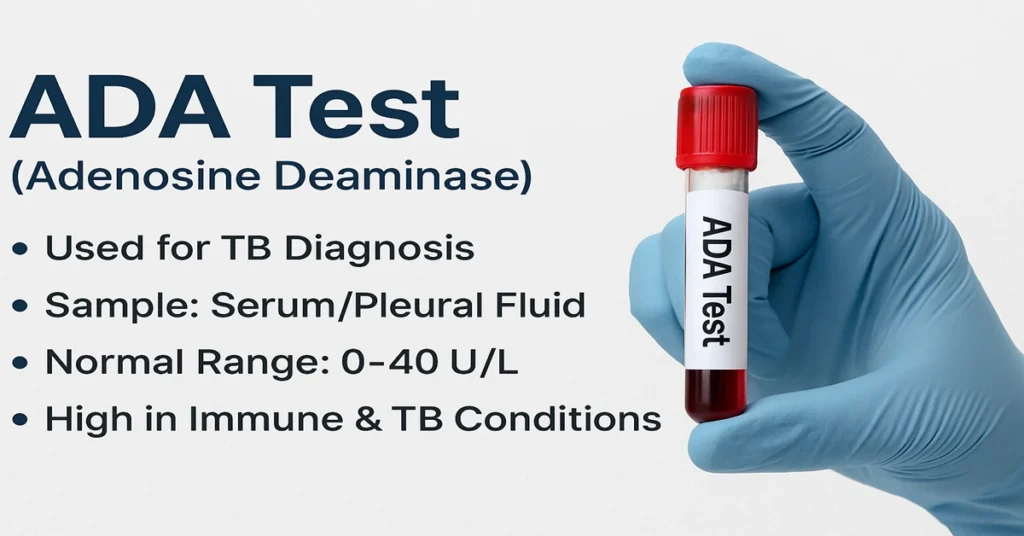
What is ADA (Adenosine Deaminase)?
ADA, or Adenosine Deaminase, is an enzyme involved in purine metabolism, a fundamental process required for energy balance and the formation of genetic material such as DNA and RNA. Its primary biochemical role is converting adenosine into inosine, which helps regulate cellular activity and immune responses.
From a clinical perspective, the ADA test measures the activity of this enzyme, most often in body fluids rather than blood alone. It is especially valuable in evaluating pleural fluid, where it serves as an important supportive marker in the diagnosis of tuberculosis (TB), particularly tuberculous pleuritis.
Where is ADA Produced in the Body?
ADA is predominantly produced in tissues associated with the immune system. The highest activity is seen in lymphocytes, which are white blood cells essential for controlling infections. In addition, ADA is present in the liver, small intestine, and macrophages — immune cells that engulf bacteria and damaged tissue.
When immune activation increases, such as during infections like tuberculosis, ADA activity rises in the affected tissues and surrounding fluids. This is why ADA becomes measurable at higher levels in pleural fluid during TB-related inflammation.
Main Functions and Importance of ADA
ADA has both biological importance and practical diagnostic value.
At the cellular level, it supports purine metabolism by breaking down adenosine, which helps maintain normal energy use and cellular turnover. From an immune standpoint, ADA is closely linked to T-lymphocyte activity, playing a role in their growth and activation.
Clinically, its most important role is as a supportive diagnostic marker, particularly in pleural effusions. Elevated ADA levels in pleural fluid strongly suggest a TB-related immune response, making the test especially useful in settings where rapid, cost-effective evaluation is needed.
Causes of Low ADA Levels
Low ADA activity generally reflects reduced immune or enzyme activity rather than a disease by itself.
This pattern may be seen in rare inherited conditions such as Severe Combined Immunodeficiency (SCID), where ADA deficiency leads to profound immune dysfunction. It may also occur in advanced liver disease or conditions associated with markedly reduced lymphocyte counts.
Symptoms of Low ADA Levels
Low ADA levels do not cause symptoms on their own. When symptoms are present, they are related to the underlying immune condition rather than the enzyme level itself.
These may include frequent or severe infections, poor growth in infants, prolonged illnesses, or weak responses to routine vaccinations in cases of severe immune compromise.
Causes of High ADA Levels
Elevated ADA levels reflect heightened immune activation, particularly involving lymphocytes and macrophages.
The most common and clinically relevant cause is tuberculosis, especially tuberculous pleuritis, where ADA levels rise significantly in pleural fluid. Other infections, inflammatory conditions, certain cancers involving immune cells, autoimmune diseases, and chronic liver disorders can also be associated with increased ADA activity.
In clinical practice, the pattern of elevation and the type of sample tested are essential for correct interpretation.
Symptoms of High ADA Levels
ADA itself does not produce symptoms. Any symptoms observed are due to the underlying condition driving immune activation.
In tuberculosis, patients may present with persistent cough, fever, night sweats, or weight loss. When pleural fluid is involved, chest pain or breathing difficulty may occur. Other causes may present with symptoms related to infection, inflammation, or organ involvement rather than the enzyme elevation itself.
Reference Ranges
Reference values vary depending on the laboratory and the sample type used.
In general, serum ADA levels fall within a normal range when immune activity is balanced. In pleural fluid, higher ADA levels are clinically significant, with values above established cut-offs supporting a diagnosis of tuberculous pleuritis when interpreted alongside clinical findings.
ADA results should always be assessed in context, rather than used in isolation.
Sample Type and Handling
ADA testing can be performed on serum or body fluids, most commonly pleural fluid. Samples are collected in plain tubes and handled promptly to preserve enzyme activity.
No fasting is required. Proper sample collection and timely laboratory processing are important for accurate measurement.
How the ADA Test is Performed
A blood or body fluid sample is collected under sterile conditions and sent to the laboratory. ADA activity is measured using a biochemical colorimetric method that quantifies enzyme function rather than enzyme quantity.
Results are reported in Units per Liter (U/L) and compared with laboratory reference ranges appropriate to the sample type.
Interpreting ADA Test Results
Normal ADA levels generally indicate balanced immune activity. Elevated levels in pleural fluid strongly support TB-related inflammation, especially when clinical features and imaging findings are consistent.
Very high values suggest intense immune activation, while unusually low levels may point toward immune deficiency or reduced enzyme production. Final interpretation always requires correlation with clinical findings and additional investigations.
Test Preparation
No special preparation or fasting is needed.
Patients should inform their doctor about any ongoing antibiotic or anti-TB treatment. Fluid sample collection must be performed under proper medical supervision to avoid contamination.
ADA results are best interpreted by clinicians experienced in respiratory or infectious diseases.
When to Consult a Doctor
Medical evaluation is advised for persistent cough, chest pain, breathing difficulty, unexplained fever, night sweats, weight loss, or fluid accumulation in the chest or abdomen.
These symptoms may indicate tuberculosis or other inflammatory conditions, and ADA testing can help guide further investigation.
Important Word Explanations
- Enzyme: A protein that speeds up chemical reactions in the body
- Purine Metabolism: The process involved in recycling energy and genetic material
- Lymphocytes: White blood cells that coordinate immune defense
- Macrophages: Immune cells that engulf bacteria and damaged tissue
- Pleural Fluid: Fluid between the lungs and chest wall
- Pleuritis: Inflammation of the lung lining
- SCID: A rare genetic disorder causing severe immune deficiency
~END~