
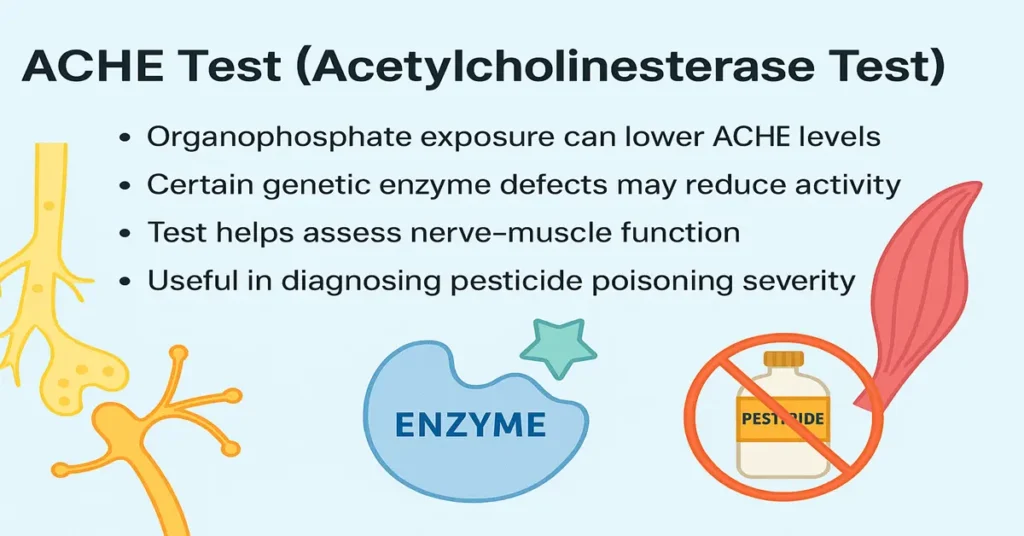
What Is AChE Test
Why This Test Is Done
The Acetylcholinesterase (AChE) test measures the activity of an enzyme called acetylcholinesterase, usually in the blood and, in specific situations, in other body fluids. In everyday lab practice, this enzyme is important because it directly controls how nerve signals stop after they have done their job. It breaks down acetylcholine, the chemical that carries messages between nerves and muscles.
Doctors usually request an AChE test when they want to understand whether nerve–muscle communication is being disrupted. One of the most common clinical situations is suspected exposure to organophosphate or carbamate chemicals, which are widely used in pesticides. These substances inhibit the enzyme, and when that happens, acetylcholine builds up and overstimulates nerves and muscles.
Outside poisoning cases, the test may be used as part of a broader evaluation of neuromuscular problems or inherited enzyme variations. In routine hospital settings, anesthesiologists also pay attention to AChE-related results because abnormal enzyme activity can explain unexpected reactions to muscle-relaxing drugs during surgery. In selected prenatal cases, especially in the past, AChE testing of amniotic fluid helped in assessing certain fetal neural tube defects, although this role has reduced with better imaging and screening tools.
Biological Role and Functions of AChE
Acetylcholinesterase plays a continuous and fast-acting role in the body. Every time a nerve sends a signal to a muscle, acetylcholine is released into the small gap between them. This causes the muscle to contract. Once the signal has passed, acetylcholinesterase quickly clears acetylcholine so the muscle can relax and be ready for the next signal.
Clinically, this balance is critical. If acetylcholine is not broken down properly, muscles and glands remain overstimulated. This can lead to muscle twitching, stiffness, breathing difficulty, sweating, and excess secretions. On the other hand, if acetylcholine is cleared too quickly, nerve signals may become weak or inefficient.
Beyond muscles, AChE also supports normal functioning of the nervous system, including attention and memory pathways. Because the enzyme works silently in the background, problems are usually noticed only when its activity is significantly reduced or altered.
Medical Importance of Measuring This Parameter
Measuring AChE activity gives doctors indirect insight into nerve–muscle function and toxic exposure. In suspected poisoning, low AChE levels act as a clinical warning sign. In emergency practice, this helps confirm enzyme inhibition and supports decisions about monitoring, hospital admission, and supportive care.
In non-emergency situations, AChE testing helps explain unexpected clinical findings. For example, some people have inherited enzyme patterns that cause prolonged muscle weakness after anesthesia. In such cases, the test does not diagnose a disease but explains why the body reacts differently to certain drugs. This information is especially valuable before planned surgeries.
In prenatal medicine, elevated AChE in amniotic fluid has historically been linked with open neural tube defects. While newer screening methods are now preferred, understanding this role helps clinicians interpret older reports or specific referral cases.
Conditions Diagnosed Using This Test
The AChE test does not usually stand alone as a diagnostic tool. Instead, it supports diagnosis and clinical decision-making in several situations.
In organophosphate or carbamate poisoning, enzyme inhibition is the central problem. Reduced AChE activity supports the diagnosis and helps track recovery over time.
In genetic enzyme deficiencies, testing helps identify individuals who may have unusual responses to anesthetic or muscle-relaxing medications. This is often discovered incidentally rather than through symptoms.
In neuromuscular disorders, AChE levels may provide supportive information but are rarely diagnostic by themselves. Doctors usually correlate results with symptoms, examination findings, and other tests.
In prenatal assessment, AChE measurement may still appear in selected diagnostic pathways, although its routine use has declined.
Limitations of the Test
Like many enzyme tests, AChE results must be interpreted carefully. Enzyme activity can vary depending on whether it is measured in plasma, serum, or red blood cells. Timing also matters. In poisoning cases, levels can change as exposure progresses or as treatment begins.
Another important limitation is that the test does not identify the exact cause of enzyme inhibition. It shows that the enzyme is affected, not which chemical or condition is responsible. For neuromuscular disorders, AChE levels alone are not sufficient for diagnosis.
In prenatal testing, AChE measurement has largely been replaced by ultrasound and genetic screening, which provide more direct information. Because of these factors, clinicians use the AChE test as part of a broader diagnostic picture rather than relying on it in isolation.
Additional Information
In many hospitals, AChE testing is paired with plasma cholinesterase testing. Although related, these enzymes behave differently in various conditions. Measuring both helps clinicians understand the pattern and extent of enzyme inhibition, especially in suspected toxic exposure.
Follow-up testing is common. In poisoning cases, rising AChE levels over time usually indicate recovery of enzyme activity. However, this recovery can be slow, and full normalization may take weeks depending on the severity and type of exposure.
Test Preparation
Most patients do not need special preparation for an AChE test. Normal eating and drinking are usually allowed unless the test is combined with other investigations.
For planned evaluations, patients should inform their doctor about all medications, supplements, recent anesthesia, or possible exposure to pesticides or chemicals. This background information helps avoid misinterpretation of results. In emergency situations, testing is done immediately without preparation.
When to See a Doctor
Urgent medical attention is required if symptoms suggest enzyme inhibition. These may include sudden muscle weakness, breathing difficulty, excessive sweating, drooling, confusion, or known exposure to pesticides or toxic chemicals.
People who recover unusually slowly after anesthesia or experience unexplained muscle weakness should also seek medical evaluation. Pregnant individuals should follow standard prenatal screening advice and discuss any abnormal findings with their healthcare provider.
Sample Type
The AChE test is most commonly performed on a blood sample taken from a vein. In selected prenatal cases, amniotic fluid may be tested. Tissue-based testing is rare and limited to specialized or research settings.
Important Word Explanations
Acetylcholine: A chemical messenger that carries signals between nerves and muscles.
Enzyme Inhibition: Reduction or blocking of an enzyme’s normal activity.
Organophosphates: Chemicals often used in pesticides that interfere with nerve signaling.
Neuromuscular Junction: The connection point where a nerve activates a muscle.
Anesthetic Sensitivity: An altered response to anesthesia due to enzyme or metabolic differences.
People Also Ask
Is the AChE test mainly for poisoning cases?
It is commonly used for poisoning, but it also helps in anesthesia assessment and selected neuromuscular evaluations.
Does an abnormal AChE result always mean disease?
No. It may reflect exposure, genetic variation, or temporary enzyme changes.
Can AChE levels return to normal over time?
Yes. In many cases, enzyme activity gradually recovers once the underlying issue resolves.
Is repeat testing common with this test?
Yes. Repeat testing helps doctors track trends rather than relying on a single value.
Do symptoms always match the test result?
Not always. Doctors correlate results with symptoms and clinical findings before drawing conclusions.
~END~