
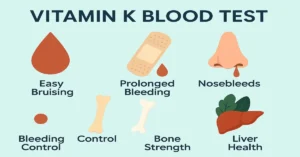
Vitamin K Blood Test – Purpose, Normal Range, Deficiency & Symptoms
The Vitamin K blood test measures Vitamin K levels to assess bleeding risk, bone strength, and liver function. It helps...
Read More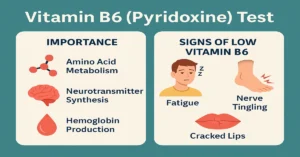
Vitamin B6 (Pyridoxine) Test – Normal Range, Deficiency, and Health Importance
Vitamin B6 (Pyridoxine) is a vital B-complex vitamin needed for energy, brain function, and red blood cell production. Learn about...
Read More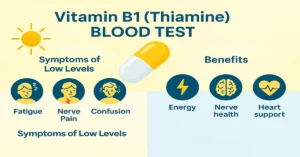
Vitamin B1 (Thiamine) Blood Test – Importance, Normal Range, and Deficiency Symptoms
The Vitamin B1 (Thiamine) blood test checks levels essential for energy and nerve health. It helps detect deficiency linked to...
Read More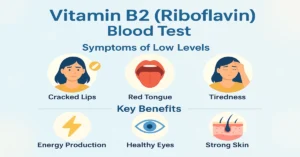
Vitamin B2 (Riboflavin) Blood Test – Importance, Normal Range, and Deficiency Symptoms
The Vitamin B2 (Riboflavin) blood test helps detect deficiency affecting energy, skin, and eye health. It measures riboflavin levels in...
Read More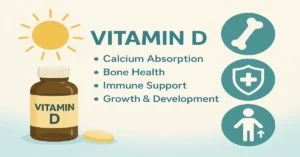
Vitamin D Test – Purpose, Normal Range, Deficiency & High Level Symptoms
The Vitamin D blood test measures 25-hydroxyvitamin D levels to detect deficiency or excess. It helps monitor bone health, immunity,...
Read More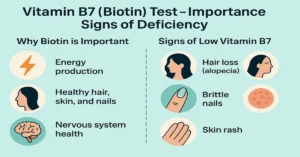
Vitamin B7 (Biotin) Test – Normal Range, Deficiency, and Importance
Vitamin B7 (Biotin), also known as Vitamin H, is essential for energy metabolism, healthy hair, skin, and nerve function. Learn...
Read More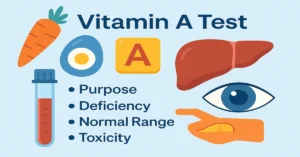
Vitamin A Test – Purpose, Deficiency, Toxicity, Normal Range, and Preparation
The Vitamin A Test helps evaluate how much Vitamin A (Retinol) is present in your blood. Both deficiency and excess...
Read More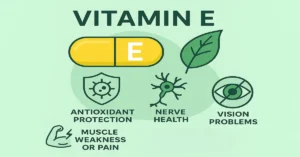
Vitamin E Test – Purpose, Normal Range, Deficiency & Toxicity Symptoms
The Vitamin E blood test measures alpha-tocopherol to detect deficiency or excess levels. It helps assess antioxidant status, nerve and...
Read More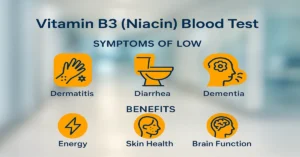
Vitamin B3 (Niacin) Blood Test – Importance, Normal Range, and Deficiency Symptoms
The Vitamin B3 (Niacin) blood test measures niacin levels to assess energy, skin, and nervous system health. It helps detect...
Read More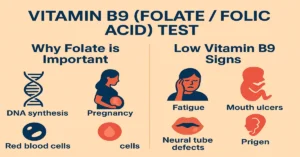
Vitamin B9 (Folate / Folic Acid) Test – Normal Range, Function, and Deficiency
Vitamin B9 (Folate or Folic Acid) is a vital B-complex vitamin needed for DNA synthesis, red blood cell production, and...
Read More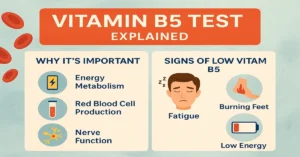
Vitamin B5 (Pantothenic Acid) Test – Normal Range, Function, and Deficiency Symptoms
Vitamin B5 (Pantothenic Acid) is a water-soluble B-complex vitamin essential for energy production, fat and protein metabolism, red-blood-cell formation, and...
Read More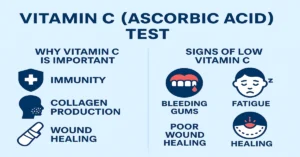
Vitamin C (Ascorbic Acid) Test – Normal Range, Deficiency, and Importance
Vitamin C (Ascorbic Acid) is a water-soluble antioxidant vital for immunity, collagen production, wound healing, and iron absorption. Learn about...
Read More